



Reimagining research through zines
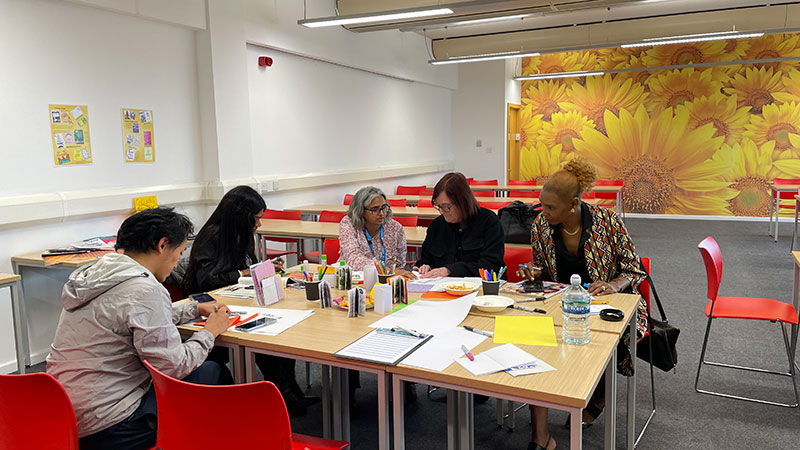
Earlier this month, staff from the library’s scholarly communications and collection development teams ran a zine workshop at the university’s Research Student Conference part of the Beyond Futures Festival of Research and Innovation. The ‘Reimagine your research: make a zine!’ workshop provided a space for attendees to take time out and explore the basics of zine-making, using a range of materials to experiment and create their own zine.
What are zines?
If you’re not familiar with what zines are, a good definition comes from Stephen Duncombe (1997) who refers to zines as “noncommercial, nonprofessional, small-circulation magazines which their creators produce, publish, and distribute by themselves”.
The roots of zines stretch back to the late 19th century and encompass the output of amateur press associations, sci-fi fandom, and underground counter-cultural newspapers and comics (a good summary is provided in this podcast by Tulane University). Zines have provided safe spaces for the expression of voices often excluded from mainstream media and publishing, including those from subcultures (e.g. punk), LGBT and minority ethnic communities. Self-publishing is empowering in that it gives control to individual creators not publishers and as low-cost publications, zines have made communication in print accessible to many. Recently zines have been undergoing a revival as people look for alternatives to digital culture that has reduced the physical connections between people and cultural objects. Zines have moved with the times however, and now many zines exist in digital formats which make distribution quicker and easier than print; they also help to overcome issues with accessibility of physical zines for people with disabilities.
Sharing research
Zines are creative outputs that can be the subject of studies in themselves, but they can also be highly useful tools for academics and researchers.
One of their strongest uses is as a way of disseminating research with non-academic audiences. As visual media, zines provide an opportunity to translate research findings into clear, engaging and eye-catching formats that are free of jargon. Using them can make knowledge more accessible to lay audiences and increase research impact by allowing researchers to engage with the publics in ways that are more meaningful (Sou & Hall 2023).
There are many great examples of how researchers have used creative self-publication to share their research findings, including Sonya Atalay and Jen Shannon’s NAGPRA comics about the Native American Graves Protection and Repatriation Act regulations. Gemma Sou is another researcher who has used comics to communicate the findings of several projects in the field of critical disaster geography. These examples illustrate how alternative ways of presenting research findings can help to reach audiences who are unlikely to read scholarly publications.
Creative method
Zines can also be used as a creative data collection method. In qualitative studies, zines can be used to explore participants experiences, perceptions and feelings. Like other visual and creative methods, zine-making can provide spaces for exploring topics where participants may have difficulty expressing verbally, e.g. mental health and sexual intimacies. Participatory research in particular, benefits from the use of zine-making as a method as zines have offered up spaces for collaboration and transformation with racially marginalised communities and as an action research tool in the museums sector . Through zines, research participants have the potential to ‘subvert power dynamics’ in research relationships as they become “active collaborators in the process of knowledge production and communication” (Sou & Hall 2023).
Facilitating learning
Zines also have a role in teaching and learning. Zine-making promotes active learning as it requires students to engage more deeply with subject matter, actively interpreting and communicating knowledge rather than just reproducing it. In social work education for example, zine-making has been found to facilitate “process, active criticism and imagination” among students (Anderson & Spandler, 2025). Zine workshops can be spaces in which participants consider what they have learned and provide opportunities for reflective practice and, for research students, reflexivity.
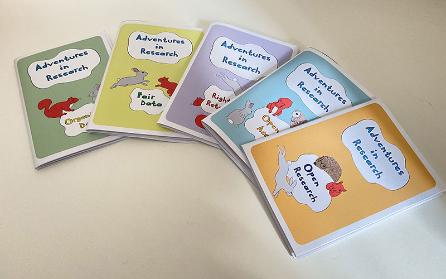
Zines can be created as teaching materials to increase the accessibility of knowledge. A recent study found that zines have a greater impact on learning than online materials in relation to learners’ confidence, engagement and understanding. The Scholarly Communications Team has created a set of ‘Adventures in Research’ zines to introduce PGRs and researchers to a range of scholarly communications topics, including open research, rights retention, and FAIR data. The zines are available at the Harrison Library in the zine collection.
A tool for wellbeing
Zine-making, like painting, knitting or any other creative practice, is a great way for people to express their feelings and supports positive mental health. The act of creating a zine- folding a page into a booklet, drawing a picture or writing text, cutting and pasting images from a magazine- is an immersive activity which transports the maker (or ‘zinester’) to another place. Switching off your computer or phone screen and making a zine can be therapeutic: it helps to reduce stress, promote mindfulness, and provide a relaxing break from a hard day’s work. Additionally, creating zines alongside others in a group setting allows people to connect and share with others, which is also fantastic for our wellbeing. One of the best things about zine-making with others is that it can be a lot of fun for both students and staff- so there’s really no good reason not to do it!
Summary
Zines are a versatile resource for research and teaching staff and students in higher education. By using them we can add a bit of creativity to the way we research, share knowledge and findings within academia and beyond. When knowledge is made more engaging, accessible and fun, it can be taken to a more diverse range of audiences for even greater impact.
Sarah Dar, Scholarly Communications Officer
References
Anderson, J. and Spandler, H. (2026) ‘Mad Zine pedagogy: using zines in critical mental health learning and education’, Social Work Education, 45(2), pp. 401–419. Available at: https://doi.org/10.1080/02615479.2025.2469586
Duncombe, S. (1997) Notes from Underground: Zines and the Politics of Alternative Culture. London and New York: Verso.
French, J. and Curd, E. (2022) ‘Zining as artful method: Facilitating zines as participatory action research within art museums’, Action Research, 20(1), pp. 77–95. Available at: https://doi.org/10.1177/14767503211037104
Reschiglian, R. and Scarcelli, C.M. (2025) ‘Zine-making as site of research brave space: From ethical challenges to transformative opportunities in the study of digital sexual intimacies’, The Qualitative Report, 30(4), pp. 3494–3514. Available at: https://doi.org/10.46743/2160-3715/2025.8166
Seoror, L.H. (2024) ‘Zines support learning enabling factors in the Design Center as demonstrated through a survey-based study’, IJAMM. Available at: https://ijamm.pubpub.org/pub/y4iow1wi
Sou, G. and Hall, S.M. (2023) ‘Comics and Zines for Creative Research Impact: Ethics, Politics and Praxis in Geographical Research’, ACME: An International Journal for Critical Geographies, 22(1), pp. 817–841. Available at: https://doi.org/10.14288/acme.v22i1.2120
Spandler, H., Anderson, J. and Walker, T. (2026) ‘Doing it Ourselves: Crafting a Mad Zine Methodology’, Qualitative Inquiry, 0(0). Available at: https://doi.org/10.1177/10778004261416954
Tulane University (2025) Zine Your Research: The Podcast. Episode 1: What is a Zine? Available at: https://www.youtube.com/watch?v=ZmvHb2IWuyU
Wong, M., Mishra, A. and Quyoum, A. (2026) ‘Zine-ing research otherwise: care, joy, and creative co-design with racially marginalised communities’, Journal of Creative Research Methods, 2(1), pp. 132–165. Available at: https://doi.org/10.1332/30502969Y2025D000000011
Image credits: Sarah Dar
For more information please contact the Corporate Communications Team.