

/prod01/wlvacuk/media/departments/digital-content-and-communications/submitted-news-images/nss2026_800x400-1.jpg)
/prod01/wlvacuk/media/departments/digital-content-and-communications/images-2024-25/240404-Digital-Humanities-Training-Resized.jpg)
/prod01/wlvacuk/media/departments/digital-content-and-communications/submitted-news-images/Indian-weightlifting-team.JPG)
/prod01/wlvacuk/media/departments/digital-content-and-communications/submitted-news-images/Women-in-Engineering-Day.JPG)
/prod01/wlvacuk/media/departments/digital-content-and-communications/images-18-19/220207-Midwives-Resized.jpg)
This practice-based course provides access to purpose-built clinical and rehabilitation facilities, allowing you to work with industry-standard equipment and digital technologies. You will be taught by experienced lecturers actively working in Sports Therapy, using applied, industry-relevant tasks to develop your professional practice and clinical decision-making skills. From the start, a structured and progressive course design supports your academic development, building confidence in higher-level learning. You will study in an inclusive environment with personalised assessment options, accessible digital resources, and a collaborative community that values shared learning experiences.
School of Health and Wellbeing
BSc (Hons) BSc (Hons) Sports Therapy and Rehabilitation
BSc (Hons) Part-time 6 years, Full-time 3 years
The BSc Sports Therapy and Rehabilitation degree is designed to equip you with the professional attributes valued by employers across sport, health and wellbeing sectors. You will gain skills in health and injury prevention, clinical assessment and rehabilitation practice
The BSc Sports Therapy and Rehabilitation degree is designed to equip you with the professional attributes valued by employers across sport, health and wellbeing sectors. You will gain skills in health and injury prevention, clinical assessment and rehabilitation practice
Award
BSc (Hons)
Start date(s)
14 September 2026
UCAS Code
C623
Course specifications
Course length
Part-time (6 years),Full-time (3 years)
Campus location
University: Walsall Campus
UCAS points calculator
What happens on the course?
Placements on the course
Across the course you will build a portfolio of practice-based learning that gives you the real-world exposure and proven experience your CV needs, while building the industry networks essential for your career.
These structured experiences include:
- Academic integration: always linked to coursework, assessments or professional development modules
- Problem-based learning: Work on specific tasks or research that are reflective of industry-based scenarios
- Skill development: Enhance workplace skills like communication, teamwork and clinical decision making.
- Experiential learning: Apply practical knowledge and skills within clinical environments, within the University’s Sports Injury and Massage clinics or with our external partnerships.
Employability on the course
Our courses are designed from day one to prepare you for your future career. You will benefit from:
- Extended induction:a period to familiarise yourself with your new university
- Practice-based learning: Projects and practical activities designed around real-world activities
- Embedded professional development: CV writing, networking skills and business planning.
- Industry-informed modules: course content is kept up-to-date with industry standards through our industry links, staff's research and work in the field
Course Modules
Potential Career Paths
- Sports Therapist in Grassroot or Academy environments
- Sports Therapist in Elite Sport
- Exercise Rehabilitation Instructor
- Musculoskeletal Clinician (Community healthcare)
- Sports Therapist in private practice
- Lecturing in Further and Higher Education
Additional Information
Everything you need to know about this course!
This course is accredited by the Society of Sports Therapists, ensuring you meet industry standards and employer expectations while preparing you for a successful career. It combines practical, applied teaching with industry-focused assessments and placement opportunities to help you develop a strong professional identity. You will graduate as a confident, reflective practitioner, equipped to showcase your skills to employers and turn your passion for exercise, health and rehabilitation into a specialised career in Sports Therapy. Throughout the course, you will gain expertise in the prevention, assessment, management and rehabilitation of musculoskeletal conditions, alongside a strong foundation in patient-centred and ethical practice. This prepares you to work inclusively across a wide range of settings, from community healthcare and private practice to performance sport.
Alongside practical competencies, you will develop strong clinical reasoning and evidence-informed decision-making abilities. You will cultivate reflective and critical thinking skills to support lifelong professional development, alongside key business planning competencies that prepare you for employment.
| Location | Mode | Sep intake Fee | Year |
|---|---|---|---|
| Home | Full-time | £9790 per year | 2026-27 |
| Home | Part-time | £4895 per year# | 2026-27 |
| International | Full-time | £17600 per year | 2026-27 |
Additional Course Costs
Mandatory Costs
- The University will fund an initial enhanced DBS check (where your course requires) GOV.UK / Disclosure and Barring Service. Some placement settings will require a refreshed certificate every 12 months. You are therefore encouraged to register for the Update Service within 30 days of the certificate being issued. This costs £13 per year and you can pay by debit or credit card.
- Uniform is provided for this course, however the University of Wolverhampton reserves the right to make a charge.
- You will be required to provide appropriate foot wear at a cost of approximately £50-£60
Optional Costs
- Various Sporting professional body memberships *prices will vary depending on body.
- Various industry standard courses are available via the School of Sport's Earn and Learn employability initiative. You may be asked to contribute £0 - £200 toward these.
Further information on these additional costs will be provided prior to the start of your studies
The University is committed to a transparent fee structure, with no hidden costs, to help you make an informed decision. This includes information on what is included in the fee and how fees are calculated and reviewed.
If a tuition fee is not showing, we may not offer this intake for this course. Please check the start date information on the course finder for start dates.
# Undergraduate part-time fees for 50% rate of study
Typical entry requirement: 96 UCAS points
- A Levels - grades CCC (at least one A Level should normally be in a Science subject (e.g. Applied Science; Biology; Human Biology; Physics; Chemistry; Environmental Science, Psychology, Health and Social Care or PE)
- BTEC L3 Extended Diploma or OCR Cambridge L3 Technical Extended Diploma - grades MMM in a Sport and/or Science subject
- BTEC L3 Diploma - grades DD in a Sport and/or Science subject
- Access to HE Diploma (60 credits) of which a minimum of 45 must be at Level 3 (96 UCAS point equivalence, minimum 45 credits at merit)
- 1st4sport Level 3 Diploma in Sport and Physical Activities or 1st4sport Level 3 Diploma in Sports Performance and Excellence - grade Distinction
- T Levels - T Levels - Pass (C and above)
Use the UCAS Tariff calculator to check your qualifications and points
- If you've got other qualifications or relevant experience, please contact The Gateway for further advice before applying.
- International entry requirements and application guidance can be found at http://www.wlv.ac.uk/international/apply
- Successful completion of the International Foundation Year in Education, Health and Wellbeing
Other Requirements
Entry to this course requires a Disclosure and Barring Service (DBS) Check and an Occupational Health Check.
Free Disclosure and Barring Service (DBS) and Occupational Health Check:
Due to the professional nature of some of our courses you may also be required to complete a Declaration of Health and Disclosure and Barring Service (DBS) Check. We will coordinate both of these non-academic conditions with you should your course require this and you receive an offer from us
There will be no cost for the DBS this is free to applicants who have secured an offer and have chosen to study at the University of Wolverhampton.
Students must usually have studied for a minimum of two years post GCSE level. However, we will consider applications from mature students who do not have two years of post-16 study, where they have relevant work experience. Please see http://wlv.ac.uk/mature for further information.
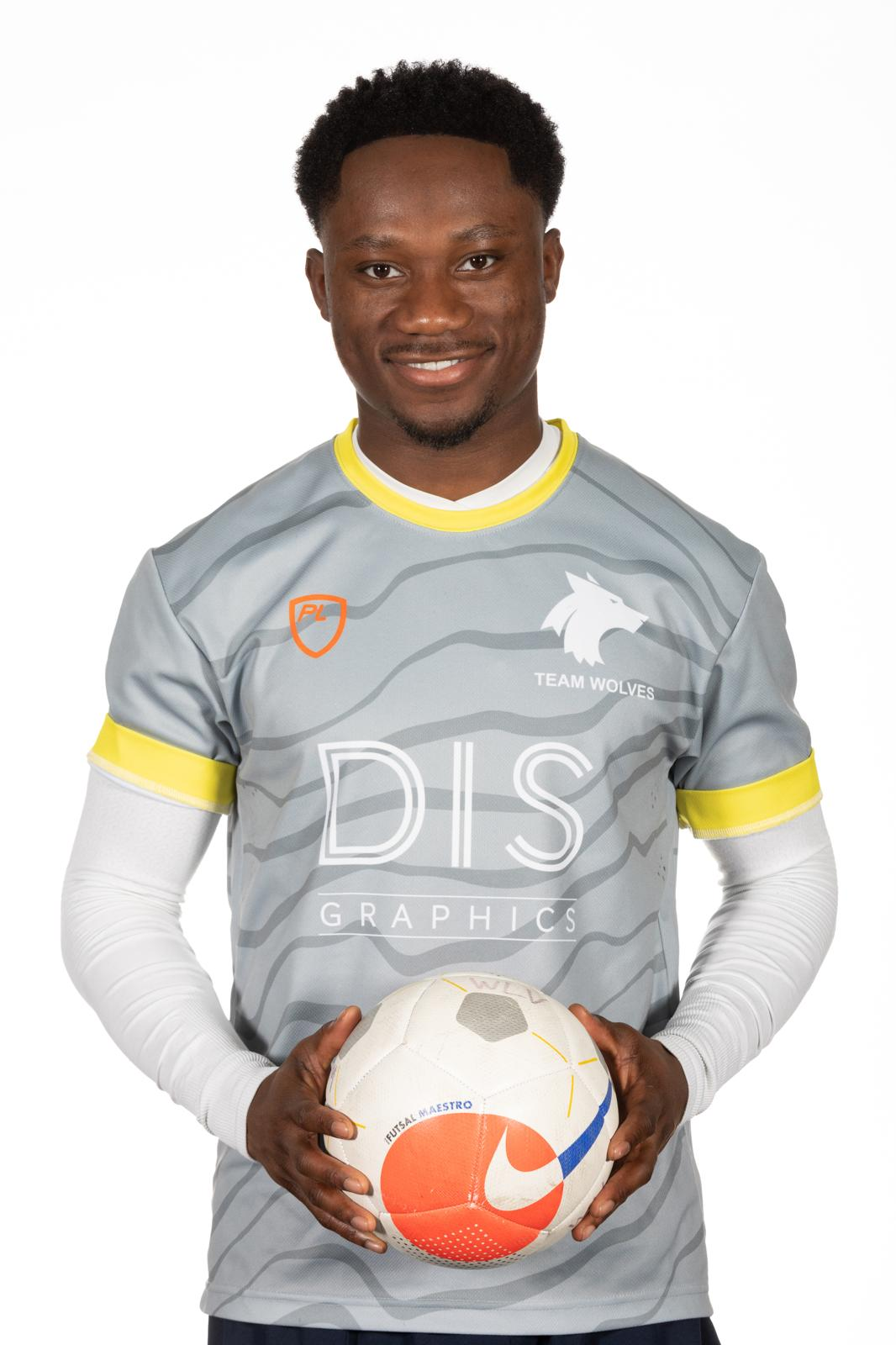
"I’ve felt incredibly supported and privileged to be part of such a compassionate and dedicated academic team. They encourage curiosity and ensure every student feels valued." (Marvin, Asiamah, 2025 graduate)
Chartered Institute for the Management of Sport and Physical Activity (CIMSPA)
Endorsed by the Chartered Institute for the Management of Sport and Physical Activity (CIMSPA).
"Society of Sports Therapists, the"
Accredited by the Society of Sports Therapists.
Tuition Fees Loan (Home Fee Status):
Most students will be able to apply for a loans to pay for these subject to eligibility. To find out more information please refer to the government Student Finance website.
Changes for EU students:
The UK government has confirmed that EU students starting courses from 1 August 2021 will normally be classified as having Overseas Fee status. More information about the change is available at UKCISA:EU citizens living in the UK with 'settled' status, and Irish nationals living in the UK or Ireland, will still be classified as Home students, providing they meet the usual residency requirements, for more information about EU Settlement Scheme (EUSS)
Self-funding:
If you don’t want to take out a loan to pay your fees or if you aren’t eligible to receive a loan, you might want to take advantage of the University’s scheme to pay by instalments: See How to pay.
For more information please contact the Gateway.Your employer, embassy or organisation can pay for your Tuition fees:
If your employer, embassy or organisation agrees to pay all or part of your tuition fees; the University will refer to them as your sponsor and will invoice them for the appropriate amount.
We must receive notification of sponsorship in writing as soon as possible, and before enrolment, confirming that the sponsor will pay your tuition fees.
Financial Hardship:
Students can apply to the Dennis Turner Opportunity Fund.
for help with course related costs however this cannot be used for fees or to cover general living costs.Bursaries and Scholarships:
In addition the University also offers a range of Bursaries and Scholarships packages
You can find more information on the University’s Funding, cost, fee and support pages.
How we compare
Find out how our course is rated on Discover Uni, the official website for comparing UK higher education courses.
Find out how our course is rated on Discover Uni, the official website for comparing UK higher education courses.
