School of Architecture, Computing and Engineering

BEng (Hons) Chemical Engineering with Foundation Year

BEng (Hons) Part-time 8 years, Full-time 4 years

Award
BEng (Hons)
Start date(s)
14 September 2026
UCAS Code
H811
Course specifications
Course length
Part-time (8 years),Full-time (4 years)
Campus location
University: Springfield Campus
UCAS points calculator

Why choose this course?

On the course, you will learn how raw materials can be transformed into useful products in a safe and cost effective way. For example petrol, plastics and synthetic fibres such as polyester and nylon, all come from oil. Chemical engineers understand how to alter the chemical, biochemical or physical state of a substance, to create a range of products as diverse as cosmetics and fuels.


The course covers energy resource exploitation and management, industrial practices and processes, chemical thermodynamics and reaction engineering, process design and control, health and safety and protection of the environment, and petroleum and chemical refining.


Watch our video below featuring staff and students from Chemical Engineering here at the University of Wolverhampton.


What happens on the course?

Chemical Engineering at Wolverhampton is industry focused and aims to prepare students to tackle challenges facing chemical and allied industries in the 21st century.   There are modules in the programme reviewing specialist issues of sustainability and life cycle engineering of products and processes addressed holistically and concurrently. The programme will also teach Materials Engineering and Manufacturing Technology and Processes providing opportunity to address topics on resource efficiency management, material utilisation principle, energy management and waste minimisation which are topical in the present day Process and Manufacturing Engineering environments.   1st Year Principles of Chemical Engineering Engineering Mathematics Principles of Physical Chemistry Engineering Materials Thermodynamics and Fluids Unit Operations and Separation Processes   2nd Year Fluid Mechanics and Multiphase Systems Process Operations and Separation Processes Environmental Sustainability and Life Cycle Engineering Reaction Engineering Mathematical Modelling   3rd Year Safety and Engineering Practice Petroleum Chemistry and Refining Design Project Process Design and Control   Specialist subject option: Food Engineering Manufacturing Processes and Technology Energy - Conventional and Renewable Structured Products and Soft Solids Computational Fluid Dynamics Oil and Gas Management.

Placements on the course

We’ve built professional placements into every degree, every student will be guaranteed a professional placement. Our placements give you the real-world exposure and proven experience your CV needs, while building the industry networks essential for your career.

These short-term, structured experiences include:

  • Short duration: condensed work-like experience in professional environments
  • Academic integration: always linked to coursework, assessments or professional development modules
  • Project-based learning: students work on specific tasks or research with an organisation
  • Flexible format: can be in-person, remote, hybrid or virtual
  • Skill development: enhances workplace skills like communication, teamwork and problem-solving
  • Experiential learning: helping to close the gap between knowledge gained and the skills needed to succeed

Employability on the course

Our courses are designed from day one to prepare you for your future career. You will benefit from:

  • Extended induction: a period to familiarise yourself with your new university
  • Structured learning pathways: courses are crafted with a focus on preparing students for future careers
  • Hands-on project experience: projects and practical activities designed around real-world activities
  • Embedded professional development: all courses are designed with workplace skills development and professional placements as part of the course
  • Industry-informed modules: course content is kept up-to-date with industry standards through our industry links, staff's research and work in the field
  • Placement opportunities: professional development placements for every student

Course Modules

Potential Career Paths

Design and assess systems to prevent accidents and ensure compliance with health, safety, and environmental regulations. This includes hazard analysis (e.g. HAZOP), risk assessments, and safety system design.

Additional Information

Everything you need to know about this course!

Under the direction of the IChemE, The University of Wolverhampton established a new chemical engineering degree programme in 2015.  The new course is set within the Science base of subjects at the Wolverhampton’s City Campus and offers exceptional resources and support for would be chemical, petroleum and process engineers.


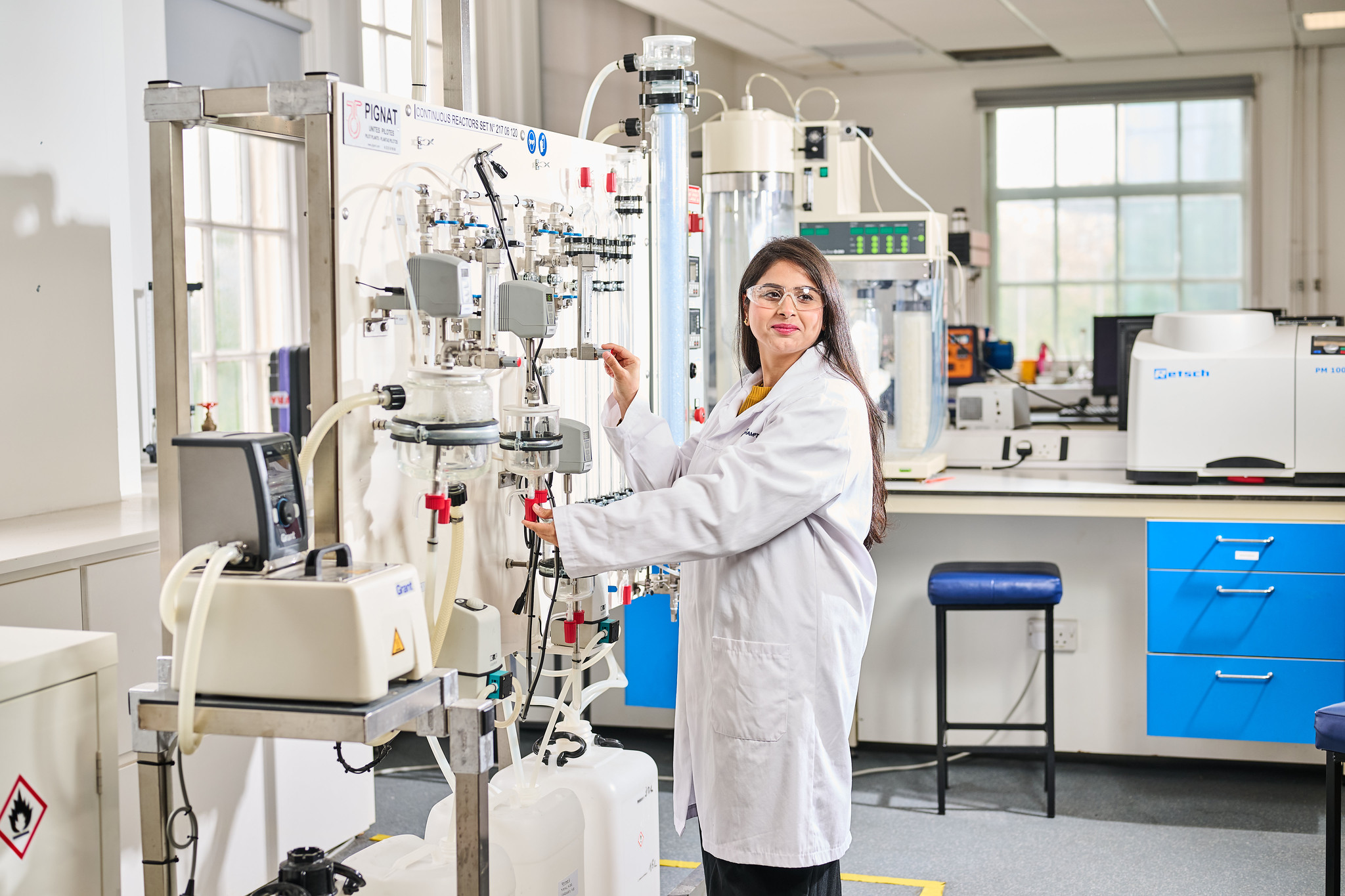
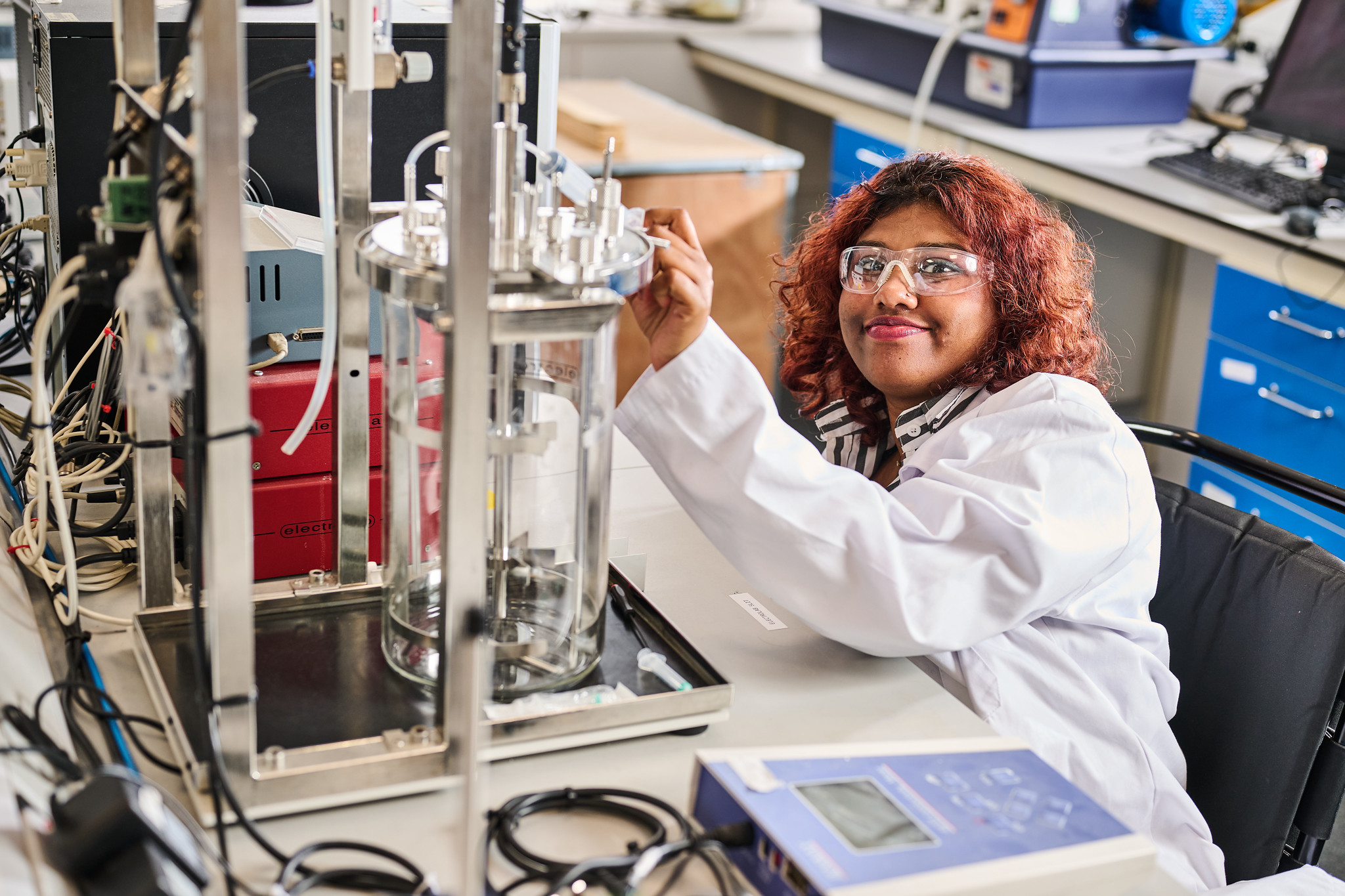
The establishment of the course, one of only a handful of new courses in the whole of the UK, was a real coup for Wolverhampton and helps form a real powerhouse of chemical engineering education in the West Midlands.  The new department is embedded within the School of Engineering, which is currently receiving an injection of £10m for new facilities and laboratories.  However, Chemical Engineering also sits along side other new courses in Chemistry and Physics and has strong teaching and research links with the Mathematics department.  These strongly allied subjects now deliver a coordinated scheme of Physical Sciences education to the region and the country. To help the delivery of our STEM courses we have just completed new Chemical Engineering Design Centre, along side brand new specialist laboratories. The design centre offers Chemical and Petroleum Engineering students a dedicated space with industry standard software, technology and support. More developments to extend the specialist laboratories are planned for 2016/17. In addition to the facilities in Engineering Chemical, and our site in Telford, our students are also taught in the new £25m Rosalind Franklin building which is a regional centre of excellence in science teaching and research. 


Our aim is for graduates to be ready for employment. We provide additional opportunities for students to gain employability skills, with employability workshops and awards as part of the course.  In addition, we are constantly building and maintaining links with regional, national and international employers and regularly have speakers from prominent industries and other academic partners. Indeed, several highly experienced industrial experts hold honorary and visiting positions with us; and regularly share their experience and knowledge with our students.


Wolverhampton offers a vibrant, up to date learning environment, which is supported by the community, the University plus a dedicated and enthusiastic staff who want to see our students succeed. This along with the latest polls of salary scales for petroleum and chemical engineering make Wolverhampton the place to be. “Engineers took seven of the top ten spots in NACE’s April survey, which is based on data from 400,000 US employers. Petroleum engineers earned the most with an average starting salary of £60,323. Chemical engineering graduates were ranked third, after computer engineers, with a healthy starting salary of £43,612.”


We believe in supporting our students whilst they learn.  This means we offer:

  • All core textbooks for first and second year are available electronically and in the university learning centres
  • Software licences for industry standard software are available across the campus
  • All Personal Protective Equipment equipment provided free of charge
  • Free UK field trips
  • For every student, up to four years of student membership/associate entry for the IChemE is paid for by the department 

  • Lectures which are research and case study based.
  • Tutorials which focus understanding gained at lectures and to underpin understanding by making it relevant to contextual / industrial situations.
  • Seminars to enable exchange of ideas and knowledge with peers and with tutors.
  • Workshops which develop practical skills such as information and data-handling.

Design / Research projects enhancing practical research skills, problem-solving abilities and competencies to analyse, evaluate and present research data.

Location Mode Foundation Year Fee Sep intake Fee Year
Home Full-time £9535 £9535 per year 2025-26
Home Full-time £9790 £9790 per year 2026-27
Home Part-time N/A £4895 per year# 2026-27
International Full-time N/A £15995 per year 2025-26
International Full-time £17600 £17600 per year 2026-27

The University is committed to a transparent fee structure, with no hidden costs, to help you make an informed decision. This includes information on what is included in the fee and how fees are calculated and reviewed.


If a tuition fee is not showing, we may not offer this intake for this course. Please check the start date information on the course finder for start dates.

# Undergraduate part-time fees for 50% rate of study

Academic Pathway:-

GCSE English and Mathematics at grades 4/C+ or an acceptable equivalent qualification.

Please note we do NOT accept GCSE Short Courses

PLUS EITHER

    Typical entry requirement: 48 UCAS points

    • A Levels - grades DD / EEE
    • BTEC L3 Extended Diploma or OCR Cambridge L3 Technical Extended Diploma - grades PPP
    • BTEC L3 Diploma - grades MP
    • Access to HE Diploma (60 credits) of which a minimum of 45 must be at Level 3 (48 UCAS point equivalence, minimum 45 credits at merit)
    • T Levels with an overall grade of Pass and a minimum grade of D or E in Core
  • International entry requirements and application guidance can be found here

Use the UCAS Tariff calculator to check your qualifications and points

Prepare for Foundation Pathway: - We will consider applicants who have not achieved level 3 qualifications if you have a keen interest in this subject area or hold relevant experience. To receive an offer through this route you will be required to successfully attend and pass a Prepare for Foundation event. This is a one-day programme which is designed to assess your keen interest or recent experience in the subject, through a written assessment and a variety of activities. During the event you will have the opportunity to ask questions, be introduced to studying a higher education foundation course and meet staff and fellow students. If you would like more advice and guidance about this admissions pathway, please contact Gateway to discuss and support you making an application to us.

Other Requirements: Applicants must be 18 years old or above at the start of the course.

Tuition Fees Loan (Home Fee Status):

Most students will be able to apply for a loans to pay for these subject to eligibility. To find out more information please refer to the government Student Finance website.

Changes for EU students:

The UK government has confirmed that EU students starting courses from 1 August 2021 will normally be classified as having Overseas Fee status. More information about the change is available at UKCISA:

EU citizens living in the UK with 'settled' status, and Irish nationals living in the UK or Ireland, will still be classified as Home students, providing they meet the usual residency requirements, for more information about EU Settlement Scheme (EUSS)


Self-funding:

If you don’t want to take out a loan to pay your fees or if you aren’t eligible to receive a loan, you might want to take advantage of the University’s scheme to pay by instalments: See How to pay.

For more information please contact the Gateway.


Your employer, embassy or organisation can pay for your Tuition fees:

If your employer, embassy or organisation agrees to pay all or part of your tuition fees; the University will refer to them as your sponsor and will invoice them for the appropriate amount.

We must receive notification of sponsorship in writing as soon as possible, and before enrolment, confirming that the sponsor will pay your tuition fees.


Financial Hardship:

Students can apply to the Dennis Turner Opportunity Fund.

for help with course related costs however this cannot be used for fees or to cover general living costs.


Bursaries and Scholarships:

In addition the University also offers a range of Bursaries and Scholarships packages

You can find more information on the University’s Funding, cost, fee and support pages.

Telephone

01902 32 22 22

Email

enquiries@wlv.ac.uk

Online

Order a prospectus

How we compare

Find out how our course is rated on Discover Uni, the official website for comparing UK higher education courses.

Find out how our course is rated on Discover Uni, the official website for comparing UK higher education courses.

Full-time Course

Part-time Course