

/prod01/wlvacuk/media/departments/digital-content-and-communications/submitted-news-images/nss2026_800x400-1.jpg)
/prod01/wlvacuk/media/departments/digital-content-and-communications/images-2024-25/240404-Digital-Humanities-Training-Resized.jpg)
/prod01/wlvacuk/media/departments/digital-content-and-communications/submitted-news-images/Indian-weightlifting-team.JPG)
/prod01/wlvacuk/media/departments/digital-content-and-communications/submitted-news-images/Women-in-Engineering-Day.JPG)
/prod01/wlvacuk/media/departments/digital-content-and-communications/images-18-19/220207-Midwives-Resized.jpg)
/prod01/wlvacuk/media/departments/research/soren-h-omfN1pW-n2Y-unsplash.jpg)
Led by Dr Kiran Gulia, Senior lecturer in Engineering, Green Loops is an innovative project addressing the growing challenge of solar panel waste. Using advanced AI, the project transforms end-of-life solar panels and electronic waste into valuable materials for next-generation technologies.
Through its AI platform, ECOMAT AI, Green Loops is helping turn waste into a resource, supporting a more circular, sustainable and resilient clean technology economy.
 The challenge
As solar adoption accelerates globally, a new sustainability challenge is emerging: what happens to solar panels at the end of their operational life?
Millions of photovoltaic panels installed over the past two decades are now approaching retirement, creating a rapidly growing stream of electronic waste. While many panels still contain highly valuable materials - including silicon, silver, copper, aluminium, gallium and polymers - much of the current infrastructure is not designed to recover or reuse these materials efficiently.
At the same time, industries developing next-generation clean technologies face increasing pressure from shortages and geopolitical dependency on critical raw materials.
Green Loops was established to address both challenges simultaneously: reducing solar and electronic waste while unlocking new value from materials already circulating within the economy.
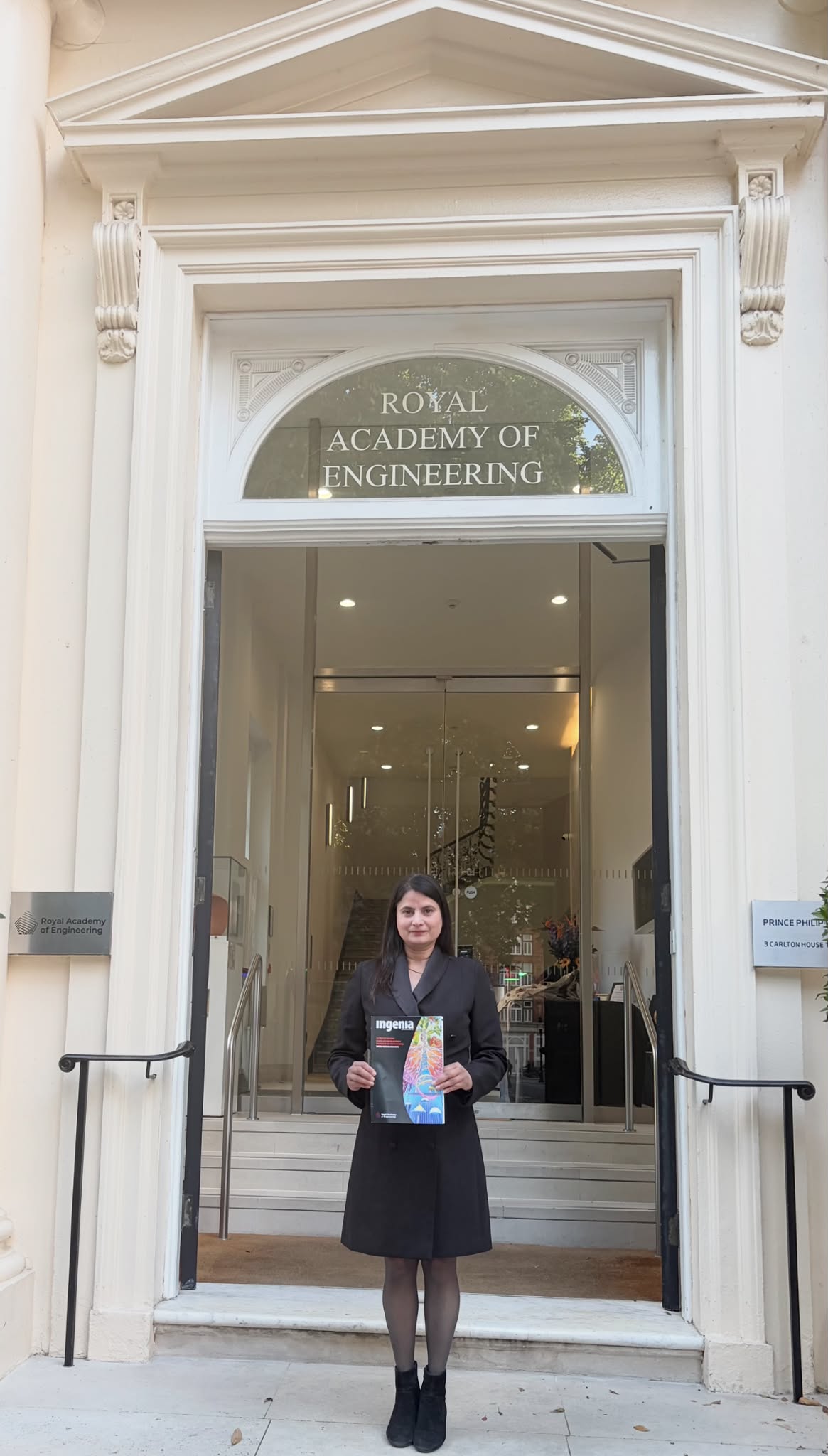
Recently featured in The Royal Academy of Engineering’s Ingenia magazine, Green Loops’ work highlights the growing importance of circular economy thinking within the renewable energy and electronics sectors. The full article is available for you to read 'Giving solar panels a second life'.
Conducting the research
Green Loops is developing an AI-enabled materials recovery and recombination platform designed to transform end-of-life solar panels and electronic waste into new high-value materials and technologies.
At the centre of the project is ECOMAT AI, an AI system that analyses the optical and electronic properties of recovered materials and predicts how they can be recombined into advanced metamaterials.
The platform uses AI across multiple stages of the process:
- Analysing recovered material characteristics
- Predicting viable new material combinations
- Identifying synthesis methods for metamaterials
- Assessing overall energy efficiency throughout extraction and reuse
Unlike conventional recycling methods that often require intensive refining and purification, the Green Loops approach focuses on reusing recovered materials “as is” wherever possible, significantly reducing energy demand and waste.
The system draws upon a database containing millions of material property records to help accelerate the development of sustainable alternatives for future electronics and clean energy technologies.
Green Loops is currently applying this approach across several prototype technologies, including:
- Flexible next-generation solar cells
- Lithium-ion battery components
- Green hydrogen electrocatalysts
- Flexible e-skin sensors
Our real world impact
Green Loops’ work demonstrates how AI and circular economy innovation can help create more sustainable and resilient supply chains for future technologies.
By recovering and repurposing critical materials from solar panels and wider electronic waste streams, the project aims to:
- Reduce dependence on virgin raw material extraction
- Minimise electronic and photovoltaic waste
- Lower the environmental impact of advanced manufacturing
- Extend the lifecycle value of critical materials
- Support the UK’s transition to a circular clean technology economy
The project has already gained national recognition, including being shortlisted for the Manchester Prize, which supports UK-led AI innovation for public good applications.
Green Loops’ inclusion in Ingenia magazine reflects growing industry recognition of the role AI can play in enabling scalable, sustainable solutions for renewable energy and advanced materials development.
As demand for clean technologies continues to grow, initiatives like Green Loops are helping shape a future where waste materials become valuable resources for the next generation of innovation.