/prod01/wlvacuk/media/departments/digital-content-and-communications/images-2026/Claire-Macdonald-graduate---courtyard-2-wolf-resized.jpg)
/prod01/wlvacuk/media/departments/digital-content-and-communications/submitted-news-images/nss2026_800x400-1.jpg)
/prod01/wlvacuk/media/departments/digital-content-and-communications/images-2026/University-research-helps-shape-Malaysias-dementia-future.jpg)
/prod01/wlvacuk/media/departments/digital-content-and-communications/submitted-news-images/Indian-weightlifting-team.JPG)
/prod01/wlvacuk/media/departments/digital-content-and-communications/Adopting-AI-for-Business.jpg)
/prod01/wlvacuk/media/departments/digital-content-and-communications/submitted-news-images/54505138639_670536a9d0_c.jpg)
/prod01/wlvacuk/media/departments/digital-content-and-communications/images-2024-25/240328-Lenovo-Motorsport-Students-Resized.jpg)
Rated #1 in the UK for Aerospace Engineering (NSS 2026).
9th in the UK for Aeronautical and Aerospace Engineering (Daily Mail University Guide 2027)
Your first year is about getting you ready, not getting you flying — that comes later. You'll build your maths and physics from the ground up, get hands-on with the computing tools engineers use every day, and sharpen your professional writing and communication skills, alongside a dedicated engineering module that brings the theory together with practical experience.
Most aerospace-and-pilot-studies degrees treat flying as something you bolt on yourself: external flying hours, arranged and funded separately, often putting your 'Pilot Studies' award at risk if you don't complete them. This course is different from the ground up — and this route also removes the second common barrier, needing the grades to get started at all.
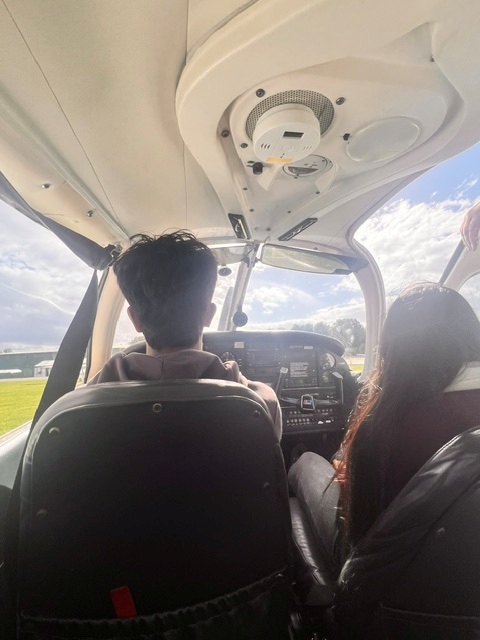
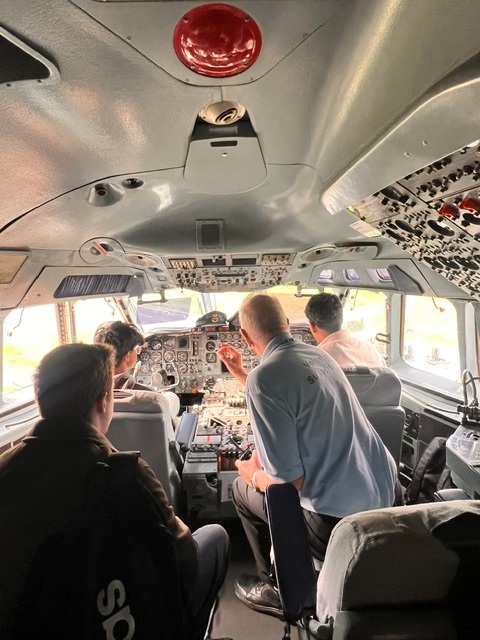
Your Private Pilot Licence theory is aligned directly with your engineering modules once you reach Year One, so the two strands reinforce each other rather than competing for your time and budget. You'll get hands-on with real aircraft systems and cockpit layout using the University's own training aircraft, use professional flight simulation environments that mirror real cockpit operations, and benefit from our flight school partnership at Wolverhampton Airport, with the opportunity for real flying hours as part of that relationship.
The academic core matches our standard aerospace degree in ambition: you'll use industry-standard CFD and FEA tools for airframe design, aerodynamic optimisation and structural analysis, in labs backed by over £7m of investment at our Springfield Campus. Our relationships with RAF Cosford, MOOG and Collins Aerospace bring live industry projects into your degree, and you'll have access to Royal Aeronautical Society (RAeS) engagement and student membership opportunities.
This route keeps two genuine career pathways open from day one: graduates go on to aerospace engineering roles with employers including Airbus, BAE Systems, Rolls-Royce and Leonardo, or continue toward commercial pilot training — you don't need to choose between the two, and you don't need to already have the grades to start.
Foundation Year modules include:
- Communication and Study Skills
- Foundation Mathematics I and II
- Fundamentals of Computing
- Practical Engineering Science for Electro-Mechanical Design
- Problem Solving in Science and Technology
Once you move into Year One, you'll focus on building a solid understanding of fundamental engineering concepts, alongside your first introduction to airframes and aircraft propulsion — exactly the same starting point as students who met the direct-entry grades.
This route is built for students who don't yet hold the direct-entry qualifications, including a dedicated Prepare for Foundation pathway for those without formal Level 3 qualifications but with a genuine interest in or experience of the subject, assessed through a one-day Prepare for Foundation event rather than grades alone.