Back to courses

MA Digital and Visual Communications

MA Part-time 2 years, Full-time 12 months

The course provides an opportunity to develop your creative practice, enhance your portfolio of practical work and explore a broad range of digital and visual communication theory.

The course provides an opportunity to develop your creative practice, enhance your portfolio of practical work and explore a broad range of digital and visual communication theory.

Award
MA
Start date(s)
13 September 2027
Course specifications
Course length
Part-time (2 years),Full-time (12 months)
Campus location
University: City Campus

Why choose this course?

Push your creative practice further and define what makes your work distinctive with the MA Digital and Visual Communications at the University of Wolverhampton. Designed for designers, artists, photographers and makers, the course brings together students from disciplines including graphic design, advertising, illustration, photography, animation, games design and multimedia. Standout modules such as Experimental Processes in Digital and Visual Communications Practice encourage you to challenge established approaches, test new ideas and develop an ambitious body of work, while Contemporary Contexts in Digital and Visual Communication helps you explore the theories and debates shaping creative practice today. 

As your practice develops, you will become more focused on your own creative direction and professional ambitions. Developmental Processes in Digital and Visual Communications Practice helps you refine your ideas and establish the strategies needed to take them forward. Industry engagement is part of the wider experience, with opportunities connected to company consultancy, freelance work and live projects, alongside visiting speakers and professional designers who bring industry knowledge and insight into your studies. 

The course culminates in Realisation in Digital and Visual Communications, where you undertake a substantial self-directed project that showcases your specialist approach at Masters level. Students have opportunities to present work to external audiences, including industry professionals, practitioners, researchers and organisations, helping you strengthen both your portfolio and professional profile. Career possibilities include working as an illustrator, graphic designer, animator, photographer, web designer, games designer or video maker and producer, as well as roles across education, the public sector and the wider creative industries. The MA can also provide a foundation for progression to MPhil or PhD study. 

Are you a designer, artist, photographer or maker that relishes a challenge? If so, studying MA Digital and Visual Communications at the University of Wolverhampton will help enhance your career prospects and creative potential.

The course attracts students from a wide range of disciplines including (but not limited to):

  • Graphic Design

  • Advertising Design

  • Illustration

  • Photography

  • Animation

  • Computer Games Design

  • Multimedia Design

The combination of international and UK students on the course creates a dynamic environment where you can advance your creative practice and build a greater appreciation of visual communications theory.

The course helps students to develop their creative design abilities while also gaining knowledge essential for a career in the competitive marketplace of international visual communications.
 

What's unique about this course?

  • Flexible multidisciplinary study across graphic design, illustration, photography, animation, games design, advertising and multimedia.

  • Strong emphasis on experimentation, helping you test new processes, challenge conventions and develop a distinctive creative identity.

  • Industry engagement through live projects, freelance opportunities, consultancy activity, visiting speakers and contact with professional practitioners.

  • A substantial self-directed final project that allows you to specialise in your chosen area and build a strong Masters-level portfolio.

  • Career progression across the creative industries, with routes into design, illustration, animation, photography, web, games and video production, as well as opportunities for further MPhil or PhD study.

What happens on the course?

The course provides an opportunity to develop your creative practice, enhance your portfolio of practical work and explore a broad range of digital and visual communication theory.

Typical modules on the course include:

  • Creative Methodologies in Context

  • Experimentation in Digital and Visual Communications Practice

  • Developmental Processes in Digital and Visual Communications Practice

  • Contemporary Contexts in Digital and Visual Communications

  • Realisation in Digital and Visual Communications

MA Show

On completion of the course, students have an opportunity to exhibit their final major project as part of the MA Show providing a great culmination to their studies. We are currently partnering with Wolverhampton Art Gallery and the New Art Gallery Walsall in hosting our MA Degree Shows. 

Watch a reel from our 2024 show here.

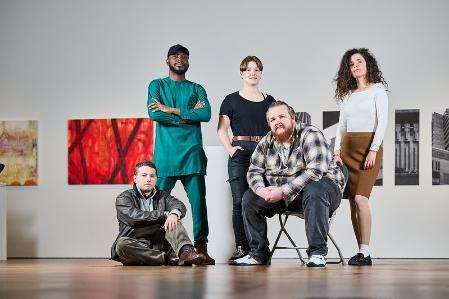
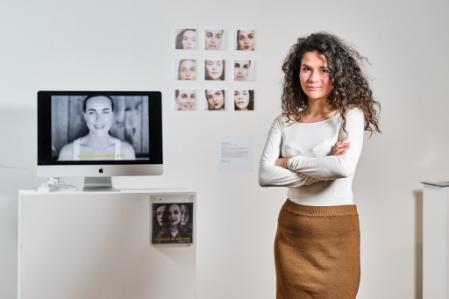
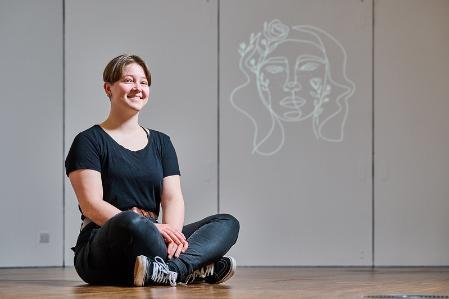
a female student stands in front of her work which is displayed in an art gallerya student sits crossed legged in front of a projection of their work

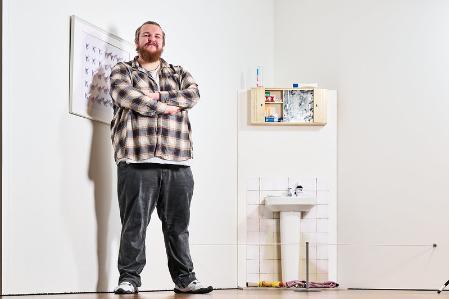
a group of students stand in an art gallerya male students stands in front of his work

How will I be assessed?

Portfolio of practical work, presentation, essays and coursework.

Employability on the course

Our courses are designed from day one to prepare you for your future career. You will benefit from:

  • Extended induction: a period to familiarise yourself with your new university
  • Structured learning pathways: courses are crafted with a focus on preparing students for future careers
  • Hands-on project experience: projects and practical activities designed around real-world activities
  • Embedded professional development: all courses are designed with workplace skills development and professional placements as part of the course
  • Industry-informed modules: course content is kept up-to-date with industry standards through our industry links, staff's research and work in the field
  • Placement opportunities: professional development placements for every student

Course Modules

Additional Information

Everything you need to know about this course!

This course is designed to develop your creative and intellectual abilities through the investigation of a bespoke project aligned to your own particular interests and aspirations. The course is intended to promote ‘Thinking practitioners’ who will be well positioned to take advantage of the opportunities available within the growing global industry of Digital & Visual Communication.

The course attracts students from all over the world as well as from the UK. Current students hail from China, India, Nigeria, Saudi Arabia, Malaysia, Germany and Greece. This course has a truly international perspective reflecting the global nature of the visual communications sector 

The members of academic staff who lead this course are Louise Fenton & Jane Webb

You will gain the intellectual and creative confidence to enable you to embrace the challenges and rewards of the global Digital and Visual Communications industry. Through the investigation of a personally designed project you will have the opportunity to develop skills and knowledge to Masters Level, culminating in a showcase exhibition and portfolio.

Location Mode Sep intake Fee Year
Home Full-time £11015 per year 2026-27
Home Part-time £5508 per year 2026-27
International Full-time £18645 per year 2026-27

These fees relate to new entrants only for the academic year indicated for entry onto the course, any subsequent years of study may be subject to an annual increase, usually in line with inflation.

You should have a good Honours Degree (2:2 or above) or equivalent in a relevant subject.

A good standard of written and spoken English (IELTS 6.5 or equivalent) is required.

You are also encouraged to apply if you have significant professional experience in a relevant subject.

Offers are subject to an interview and portfolio review.

International Applicants

Your qualifications need to be deemed equivalent to the above entry requirements.

  • “The course gave me a strategy to think beyond my first ideas and to dig deeper into my research for unique results.”

Oana Maries, MA Digital and Visual Communications

  • “The balance of guidance and level of independent research helped me to broaden my horizons and improve my work.”

Yvonne John, MA Digital and Visual Communications

  • “Thanks to my time here I made new friends from all over the world and learned a lot.”

Philipp Debatin, MA Digital and Visual Communications

Postgraduate Loan (Home Fee Status):

You may be able to get a postgraduate student loan from Student Finance England of up to £13,206 to help pay for a Master’s degree. Applications are made through Student Finance England and more information on the regulations and eligibility criteria can be found at Masters Loans gov.uk.

* Any RPL will invalidate your eligibility as you must study a minimum of 180 credits


Changes for EU students:

The UK government has confirmed that EU students starting courses from 1 August 2021 will normally be classified as Overseas (International) students for fee purposes. More information about the change is available at UKCISA:

EU citizens living in the UK with 'settled' status, and Irish nationals living in the UK or Ireland, will still be classified as Home students, providing they meet the usual residency requirements, for more information about EU Settlement Scheme (EUSS)


Postgraduate Loyalty Discount:

You can get 20% discount on a taught on-site postgraduate course if you’re a University of Wolverhampton Graduate.

The University offers a generous 20% Loyalty Discount to students progressing from an undergraduate programme to a taught postgraduate programme, where both courses are University of Wolverhampton Awards.

There is no time limit on how long ago you completed your degree as long as this is your first Masters level qualification.

The discount applies to the first year of enrolment only. Students who receive a loyalty discount are not entitled to any further tuition discount or bursary. For full terms and conditions click here.


Self-funded:

If you are paying for the fees yourself then the fees can be paid in 3 instalments: November, January and April. More information can be found by clicking here.


Sponsored - Your employer, embassy or organisation can pay for your Tuition fees:

Your employer, embassy or organisation agrees to pay all or part of your tuition fees; the University will refer to them as your sponsor and will invoice them for the appropriate amount.

We must receive notification of sponsorship in writing as soon as possible, and before enrolment, confirming that the sponsor will pay your tuition fees.


Financial Hardship:

Students can apply to the Dennis Turner Opportunity Fund for help with course related costs however this cannot be used for fees or to cover general living costs.


Charitable Funding:

You might also want to explore the possibility of funding from charitable trusts. Please contact Association of Charitable Foundations, Directory of Social Change or Family Aid. Most charities and trust funds offer limited bursaries targeted to specific groups of students so you will need to research whether any of them are relevant to your situation.


You can find more information on the University’s Funding, cost, fee and support pages.

Telephone

01902 32 22 22

Email

enquiries@wlv.ac.uk

Online

Order a prospectus