Black Country Medical School

MBChB Medicine

MBChB Full-time 5 years

The University of Wolverhampton's five-year MBChB Medicine programme gives you everything you need become a confident and compassionate doctor and launch your medical career. Join a forward-looking university with a proven track record of educating healthcare professionals.

The University of Wolverhampton's five-year MBChB Medicine programme gives you everything you need become a confident and compassionate doctor and launch your medical career. Join a forward-looking university with a proven track record of educating healthcare professionals.

Award
MBChB
Start date(s)
13 September 2027
Course specifications
Course length
Full-time (5 years)
Campus location
University: City Campus

Why choose this course?

A diverse city. A different medical school

Our MBChB programme has been designed to prepare tomorrow's doctors for the realities of modern medicine. We are committed not only to helping you achieve academic success but also to supporting your future career.

With partnerships across the NHS, local communities and wider health and care sectors, you'll learn from experienced clinicians, researchers and healthcare professionals who are shaping the future of patient care - not from a textbook, but from people doing the job.

Our strong employer links, industry partnerships and focus on real-world learning help ensure graduates are well prepared for employment and professional progression.

As you embark on your journey towards becoming a doctor, you will join a university with a proud healthcare heritage, a clear vision for the future and an unwavering commitment to transforming lives through education.

Right from the first year of the course, you’ll work with patients in clinical placements across primary care, community settings and excellent NHS hospitals in Wolverhampton and across the West Midlands, one of the UK’s most diverse and dynamic regions. Throughout the course, you will learn about the impact of disease and long-term conditions, how to address health inequalities and improve health and wellbeing.

The Black Country Medical School (BCMS) has been established at the University of Wolverhampton to build on long-standing expertise in healthcare education and close partnerships with the NHS and healthcare providers across the West Midlands. Healthcare has been at the heart of the University of Wolverhampton’s contribution to society for generations. Through decades of educating nurses, midwives, pharmacists, paramedics, physiotherapists, occupational therapists, social care professionals and other healthcare practitioners, we have built a strong reputation for developing skilled, compassionate professionals who improve lives and communities.

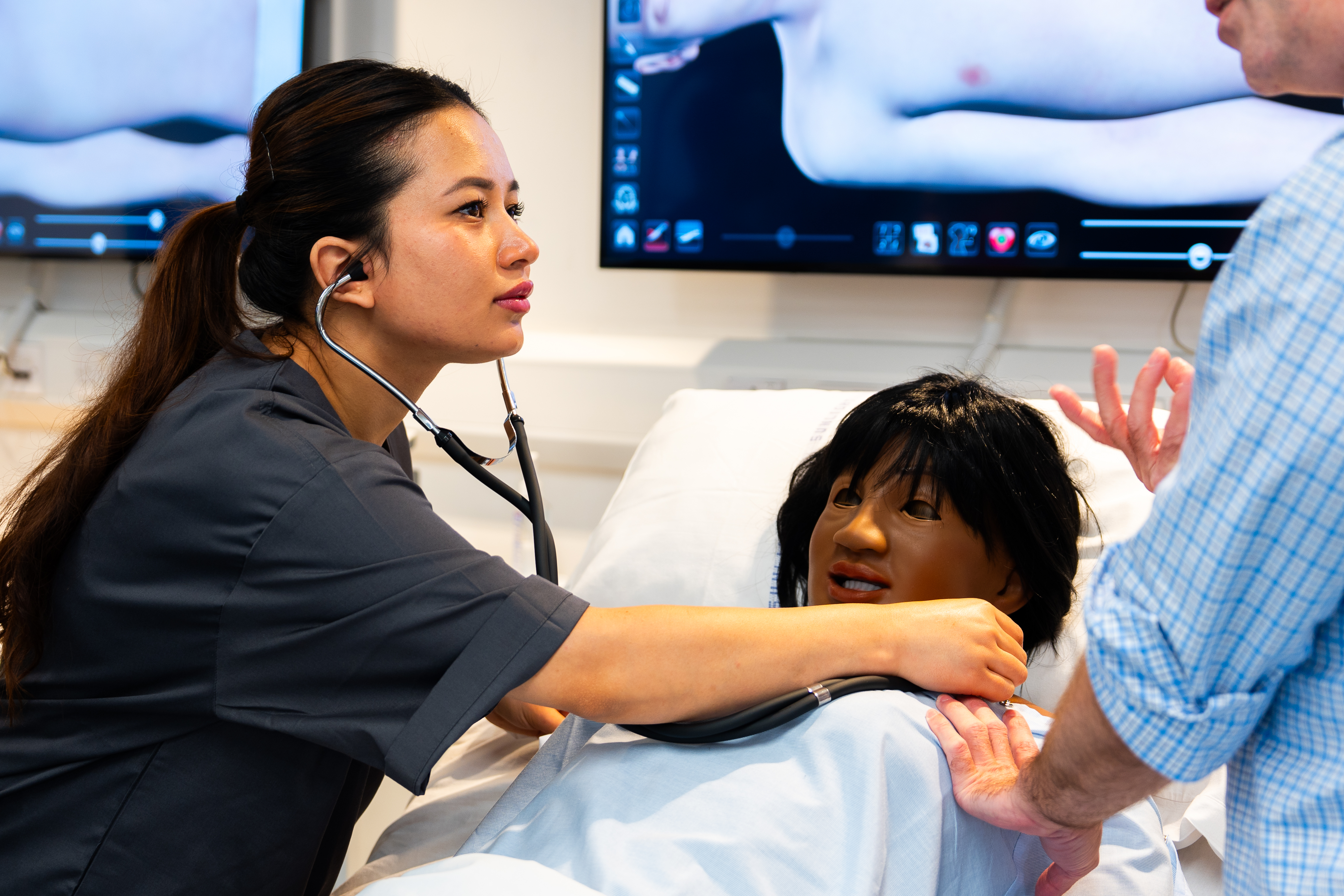
You will learn alongside other health and care students, taught by doctors, health professionals and biomedical and social scientists, and you will study in our brand-new facilities, including high fidelity simulation, anatomy, and clinical skills suites.

What's unique about this course?

  • Join a top 10 UK University, 1st in the West Midlands (Whatuni Student Choice Awards, 'University of the Year' category), awarded QS Rating Five Stars: Excellent in QS Top Universities 2026.
  • The Black Country Medical School is based at our vibrant City Campus, benefitting from excellent transport links both locally and nationally, the campus is easily accessible by road, as well as bus, tram and rail.
  • World-class facilities, real-world learning - study in brand-new, purpose-built medical education facilities, featuring high-tech anatomy resources, advanced clinical skills suites and high-fidelity simulation technology designed to replicate real healthcare environments.
  • Right from the first year of the course, you'll work with patients in clinical placements across primary care, community settings and excellent NHS hospitals.
  • First year medical students are guaranteed a place in University of Wolverhampton-owned accommodation, voted a Top 4 University Hall by students in the WhatUni Student Choice Awards 2026.
  • Alongside academic staff and world-class support services, the MBChB Student Success Coach will support you in settling into university life, making the most of your time with us and ensuring you can thrive and reach your potential.

What happens on the course?

At the University of Wolverhampton, our patient-focused and learner-centred Medicine MBChB programme is built around a set of core commitments to you and to the patients and communities you will one day serve. You will be taught by medical professionals and biomedical and social scientists from a wide range of practice, industry, and research backgrounds.

From your very first year, you'll be building the knowledge, clinical skills, and professional mindset that modern medicine demands - with patient-centred care, compassionate communication and effective teamwork and collaboration at the heart of everything you do.

Through a series of integrated clinical placements running throughout your degree, you'll move beyond simulated practice and into real healthcare environments, gaining practical experience that shapes you into a well-rounded and capable clinician.

The programme unfolds over five years in two carefully structured phases. You'll begin by strengthening your scientific foundations, exploring how the body works, how disease develops, and how infection, lifestyle, environmental factors and pathological processes affect health.

Alongside clinical expertise, we'll help you develop into a confident, competent, thoughtful, independent professional - someone who thinks critically, leads with empathy, and never stops learning. By graduation, you won't just be ready for your Foundation Doctor role, you'll be equipped to truly excel in it. 

Our distinctive human condition curriculum focusses on both the art and science of medicine, ensuring you graduate with more than clinical expertise - you'll leave with a deep understanding of the people and communities you will serve, built around four core themes:

  • Life Path: Birth, Growth, Maturity and Death - learning about how health and disease impacts on patients at all stages of life.
  • Healthy Living - understanding the importance of how school, work, play, lifestyle, retirement and planetary health affects wellbeing.
  • Healthy Emotions - discovering how emotions (e.g., joy, sadness, fear, anger) shape and influence healthcare and responses to diagnoses.
  • Human Interactions - appreciating the role of the doctor in teamwork and compassionate care and understanding the nature of peace and conflict.

Right from the start, our innovative curriculum bridges the gap between scientific theory and clinical reality, through:

  • Case-based and small-group learning - actively solving clinical scenarios in collaborative teams, supported by lectures and tutorials.
  • Anatomy and pathology training - utilising cutting-edge digital 3D anatomy tables and digital resources alongside traditional models to master human structure.
  • High-fidelity simulation - practising procedures and emergency scenarios in our state-of-the-art clinical skills and simulation suites, featuring advanced manikins and immersive environments.
  • Compassionate communication course - helps you become the sort of doctor you would want to take care of you and your family.
  • Interprofessional learning - collaborating and learning with, from and about other health professionals and students in university and clinical settings to help you become a valued member of the healthcare team.
  • Integrated placements - learning from doctors and health professionals in hospitals, primary care and community settings, seamlessly connecting classroom topics to real-world patient care.

Placements on the course

A substantial part of the MBChB programme is spent working with and learning from doctors and other health professionals in a wide range of clinical settings. Building on your university-based studies, you will spend time each year on a series of clinical placements. You'll work under the supervision of a range of medical and healthcare professionals from our network of carefully selected community and primary care providers and local partner NHS trusts, including the Royal Wolverhampton NHS Trust.

In years 1 and 2 you will work in primary care with general practitioners (GPs or family doctors) and the multidisciplinary healthcare team, learning about how patients access healthcare in their local communities and the sort of conditions they present with. You will also undertake visits to hospitals and community care settings.

From Year 3 onwards, you will extend your learning through a series of structured clinical placements across primary care, community settings and excellent NHS hospitals in Wolverhampton and across the West Midlands, one of the UK’s most diverse and dynamic regions. Reflecting how healthcare is provided in the UK, in addition to working in primary care, you will undertake hospital and community-based placements that include general medicine and medical specialities (such as cardiology and endocrinology); paediatrics; general surgery and surgical specialties (such as orthopaedics and neurosurgery); obstetrics and gynaecology; psychiatry; public health; occupational health; radiology; pathology; anaesthetics; and emergency medicine. You will also have opportunities to select placements in areas of particular interest or to explore career options.

Our placements provide an exceptionally diverse range of communities and settings, including inner-city areas, towns and rural locations. Each placement is designed to support you to work with a wide range of patients, health and care professionals and settings. This broad and varied set of experiences will provide you with an excellent foundation for your future medical career.

Employability on the course

We are committed to help you achieve academic success and flourish as a future doctor. Tailored pastoral and academic support and careers support, including optional clinical placements, specialist guest lectures and intercalated BSc opportunities, help you match your strengths and interests across the full breadth of medical careers. Our strong employer links, industry partnerships and focus on real-world learning help prepare you for employment and professional progression - and, on graduation, you'll hold a Primary Medical Qualification recognised by the General Medical Council (UK).

On graduation, you will be eligible to provisionally register with the General Medical Council (providing you meet all the GMC's Fitness to Practice requirements) and apply for Year 1 of the UK Foundation Programme (UKFPO). On successful completion of Foundation Year 1, you can then apply for full registration.  UK Foundation Training is a competitive two-year integrated programme for newly qualified doctors eligible for provisional registration with the GMC. You can register your interest in a variety of rotations and settings.

Currently, non-UK/non-EEA nationals who graduate from a UK medical school wishing to undertake a recognised, two-year full-time Foundation programme (including academic programmes) can extend their Tier 4 visa to cover the duration of the training programme. Our qualified visa team will provide you with advice and support should you wish to take this career path.

Following the Foundation programme, career prospects in medicine are very varied and generally require further postgraduate medical training in the UK or overseas. UK doctors work across health services in primary, community and hospital settings.

Career opportunities include:

  • Core medical specialties, including general practice/ family medicine, internal medicine (e.g., cardiology, gastroenterology), paediatrics.
  • General surgery and specialties e.g., orthopaedics, urology, neurosurgery.
  • Hospital and emergency specialties, e.g., emergency medicine, anaesthetics, intensive care, obstetrics and gynaecology.
  • Diagnostic and community focused specialties (e.g., radiology, public health, pathology, psychiatry).
  • Research and medical education.

Taking your career overseas

MBChB graduates can choose to continue their training overseas, subject to meeting the necessary entry criteria of the host country. If you decide to continue your training outside of the UK, you will need to refer to that country's government body guidelines for details on eligibility, application and processes.

Course Modules

Additional Information

Everything you need to know about this course!

As a new medical school, we've built our partnerships from the ground up - designed specifically around your success as a student and future doctor, with some of the most progressive NHS collaborations in the region.

Through our collaboration with The Royal Wolverhampton NHS Trust - a partnership spanning over two decades - you'll benefit from direct clinical placements, co-produced care pathways, and working and learning alongside like-minded colleagues who enhance your education with evidence-based clinical practice and contemporary research.

The Black Country Medical School's partnership with Aston University means you'll be part of a bold regional mission: training the next generation of doctors to serve and reflect the communities of the Black Country and West Midlands - one of the most diverse and medically underserved regions in England.

Located in the heart of the UK, just 15 minutes from Birmingham, Wolverhampton offers excellent transport connections to Birmingham, London and major international airports, while maintaining a cost of living that is more affordable than many other university cities. The region is culturally rich, diverse, and welcoming, providing students with opportunities to engage with a wide variety of communities and healthcare settings.

Contingency arrangements

As a new medical school, we are required to undergo quality assurance by the General Medical Council (UK) to ensure that our medical education is of a high standard and that we meet the requirements for all UK medical schools set out in "Promoting excellence: standards for medical education and training". The Black Country Medical School is currently progressing through the various stages of the GMC's quality assurance process, which will culminate in approval for the University of Wolverhampton to award a Primary Medical Qualification (PMQ).

New medical schools across the UK operate with a contingency partner as a normal part of medical education regulation. This collaborative arrangement is a safeguard for students and ensures continuity of study if exceptional circumstances were ever to occur. The University of Wolverhampton’s contingency partner is Aston University.

Location Mode Sep intake Fee Year
International Full-time £47000 per year 2027-28

The University is committed to a transparent fee structure, with no hidden costs, to help you make an informed decision. This includes information on what is included in the fee and how fees are calculated and reviewed.


If a tuition fee is not showing, we may not offer this intake for this course. Please check the start date information on the course finder for start dates.

The University reserves the right to increase tuition fees annually in accordance with its terms and conditions. Any annual increase will not exceed 6% year on year.

In 2027, we are offering 50 places for international students.

Applications open in September 2026 for the September 2027 intake; application is by direct entry, not through UCAS.

Applicants must meet a combination of:

  • Academic requirements (set out below).
  • We do not take predicted grades into consideration when ranking applicants for interview invitations or when making offers following interview.
  • Applicants with re-sits for GCSEs, A-levels, or equivalent qualifications, and/or those repeating an academic year, will be considered. Applicants undertaking re-sits must achieve their final qualification profile for consideration within no more than three academic years, allowing for one re-sit year only.
  • The minimum threshold mark in the UCAT (University Clinical Aptitude Test) Medicine admissions test. The UCAT total score is used both to rank applicants for interview invitations and when making offers following interview. We accept applications from candidates with SJT Bands 1-4. Please note that minimum threshold scores change annually and are set above the national mean.

Please note that we do not accept online versions of the qualifications listed below unless otherwise specified. For tests that include multiple components (for example, speaking, writing, reading, and listening), all components must be taken within the same test sitting. Individual components taken separately cannot be accepted.

Qualification Requirements GCSEs (or equivalent) At least six GCSEs at grade 6/B or above, including English Language, Mathematics, Biology, Chemistry, or Double Science (or overseas equivalent).

Scottish Nationals: at least six grade Bs. English Language, Mathematics, Chemistry, and Biology are compulsory. A-levels Minimum AAA, including Chemistry and Biology. The third subject must not be General Studies or Critical Thinking. If more than three A-levels are taken, the best three (including Chemistry and Biology) will be considered.

Predicted grades are not used. International Baccalaureate (IB) 37 points overall, with grades of 7,6,6 in three subjects. These must include Chemistry (HL6 or HL7) and Biology (HL6 or HL7) at Higher Level. Remaining points can be achieved through Standard Level subjects and the Diploma Programme Core. Either Chemistry or Biology must be achieved at Higher Level grade 7. BTEC DDD in Applied Science, plus A-level Chemistry and Biology at grades AA (in any order). T Levels Not accepted for this programme. Applicants combining T Levels with A-levels should contact admissions for advice. Scottish Advanced Highers Typically AAA, including Chemistry and Biology. Foundation Programmes Some UK-based medical foundation programmes may be considered. Contact admissions for details. Access Courses Not currently accepted. Graduate Applicants Minimum 2:1 degree from a UK ENIC-recognised institution in any discipline, plus ABB at A-level (or equivalent), including Chemistry and Biology, with at least one subject at grade A.

Applicants must also meet GCSE requirements. No transfers or accelerated entry routes are available. All graduates must complete the full five-year programme. Non-academic Requirements

These include:

  • Personal Statement - the personal statement is not used for scoring or ranking applicants but may be used during Multiple Mini Interviews (MMIs).
  • Interview - Multiple Mini Interviews (MMIs) are conducted online and normally take place between December and March in the year of application. These are designed to assess communication skills, empathy, critical thinking, and alignment with NHS values and the General Medical Council's expectations of a medical student.
  • Work Experience - clinical work experience is not mandatory. We understand that obtaining healthcare work experience can be difficult for some candidates; however, applicants are expected to have explored the online work experience opportunities available.
  • English Language Requirements - if English is not your first language, you must demonstrate a high level of proficiency. We require an IELTS Academic score of 7.5 overall, with no individual component below 7.0 (or an equivalent recognised qualification).
  • Occupational Health - all medical students must meet UK visa and occupational health requirements, including immunisation and screening standards required by the UK Department of Health.
  • Disclosure and Barring Service (DBS) - applicants must obtain an Enhanced DBS check, payable by the applicant. International applicants will need to provide the relevant criminal record documentation from their country of residence, following guidance available on the DBS website.

Tuition fees for international students include payments to clinical placement providers.

For further information, please contact: InternationalAdmissions@wlv.ac.uk

Self-funding:

If you intend to self fund, you might want to take advantage of the University’s scheme to pay by instalments: see How to pay.

Gateway.


Your employer, embassy or organisation can pay for your Tuition fees:

If your employer, embassy or organisation agrees to pay all or part of your tuition fees; the University will refer to them as your sponsor and will invoice them for the appropriate amount.

We must receive notification of sponsorship in writing as soon as possible, and before enrolment, confirming that the sponsor will pay your tuition fees.


Financial Hardship:

Students can apply to the Dennis Turner Opportunity Fund for help with course related costs however this cannot be used for fees or to cover general living costs.


Bursaries and Scholarships:

In addition the University also offers a range of Bursaries and Scholarships packages

You can find more information on the University’s Funding, cost, fee and support pages.

Please note that this course does not attract the NHS Learning Support Fund

Telephone

01902 32 22 22

Email

enquiries@wlv.ac.uk

Online

Order a prospectus