School of Health and Wellbeing

MSc Occupational Therapy

MSc Part-time 2 years

A future‑focused, hands‑on MSc Occupational Therapy (Pre-Registration) that transforms you into a confident, practice‑ready Occupational Therapist through immersive simulation, interprofessional learning and real‑world placements.

A future‑focused, hands‑on MSc Occupational Therapy (Pre-Registration) that transforms you into a confident, practice‑ready Occupational Therapist through immersive simulation, interprofessional learning and real‑world placements.

Award
MSc
Start date(s)
14 September 2026
UCAS Code
Course specifications
Course length
Part-time (2 years)
Campus location
University: Walsall Campus
UCAS points calculator

Why choose this course?

Transition Support - How has my course been designed to support my progression and success?  
Please use the below prompt questions to complete this section in 200–400 words in total. Your answers should be written in clear, accessible language suitable for students. All support described should be embedded within the course experience — not offered as optional or extra-curricular.  
 
The MSc Occupational Therapy (Pre-registration) course is designed to support students in their transition to postgraduate study while fostering their professional identity from the outset. An induction week introduces academic expectations, unconscious bias awareness, research skills, critical thinking, and reflective practice. Each student is allocated a Personal Tutor, ensuring access to guidance and support. Academic staff also provide orientation to university resources, including the library, online platforms, and student services. The library offers tailored sessions on study skills, referencing, and academic writing, equipping students with essential tools for success. 

Inclusive teaching practices underpin the course, enabling students from diverse educational and professional backgrounds to thrive. Assessment workshops are embedded within modules, offering drop-in sessions, one-to-one support, formative submissions, and in-class feedback. A variety of assessment types allow students to develop a broad skillset, while additional support for academic writing, referencing, and critical analysis is available through the library. The university’s disability and wellbeing services ensure reasonable adjustments are made, and collaborative learning activities encourage students to share perspectives and experiences. This emphasis on equity and inclusivity builds confidence and nurtures professional growth. 

Formative opportunities are integrated early in the programme, allowing students to practice academic skills. Tasks such as reflective essays, case studies, and interactive presentations provide meaningful opportunities to demonstrate understanding. Feedback is detailed, timely, and constructive, highlighting strengths and areas for improvement. Staff employ feed-forward strategies, guiding students on how to apply feedback to future work. This approach reduces anxiety, builds confidence, and ensures students develop the critical and professional skills required for later stages of the course. 

Practice Placements form a vital part of the programme. Each student participates in pre-placement and post-placement meetings, receives supervisor support during placements, and is assigned a university link tutor to oversee their development. These structures ensure students are well supported in applying theory to practice. 

Feedback is a continuous feature of the course. Each module incorporates opportunities for reflection and review, while semester evaluations capture student experiences. The course team responds to feedback through “you said, we did” updates, demonstrating how student input shapes ongoing improvements. Student representatives further amplify the student voice, ensuring learners are active partners in the development of the programme. 

Overall, the MSc Occupational Therapy (Pre-registration) course combines academic rigor, inclusivity, and strong support systems to prepare students for professional success .

Personalisation opportunities - What opportunities are they for me to personalise my learning to my ambitions, interests and lived experiences?  

Please use the below prompt questions to complete this section in 200–400 words in total. Your answers should be written in clear, accessible language suitable for students.  

Personalisation is at the heart of the MSc Occupational Therapy (Pre Registration) programme, giving you the freedom to shape your learning around your interests, ambitions and lived experiences. Throughout the course, you will have opportunities to choose topics, projects and assessment formats that reflect what matters most to you as a developing occupational therapist. 
 
Many modules allow you to select your own case studies or draw directly on your placement experiences, helping you connect academic learning with real world practice. Several assessments also offer flexibility in format—such as choosing between written work or presentations—so you can demonstrate your understanding in a way that best suits your strengths and learning style. 
 
You will also have choice in how you engage with learning across the programme. Modules such as the service improvement proposal or those exploring emerging areas of practice allow you to focus on topics you are passionate about. A wide range of resources are available, including academic literature, multimedia materials, e learning content and practical workshops, enabling you to tailor your study approach, and learn new approaches that suit you. Learning activities vary from simulation and hands on practical sessions to flipped learning, where you take the lead in teaching back to your peers—an approach that builds confidence, communication skills and professional identity. 

Inclusivity is embedded throughout the programme, ensuring that diverse perspectives, backgrounds and identities are valued and reflected in the learning environment. This helps make your studies meaningful, relevant and connected to the communities you will eventually serve. 
 
Reflection is a key part of your development. You will take part in end of semester reflection sessions, pre  and post placement reviews and ongoing feedback opportunities. Many modules include reflective components, and during placements you will maintain a professional development portfolio to document your growth, insights and achievements. These structured opportunities help you understand your progress, identify areas for development and make informed decisions about your future practice. 
 
Learning and Teaching - How will I be taught?  
Please use the below prompt questions to complete this section in 200–400 words in total. Your answers should be written in clear, accessible language suitable for students.  

Your learning on the MSc Occupational Therapy (Pre Registration) course is designed to build your confidence step by step, using a spiral curriculum that introduces foundational knowledge before gradually progressing to more complex skills. You will learn through a blend of teaching styles, including lectures, seminars, workshops, group activities, problem based learning, and hands on simulated practice sessions. These approaches help you understand core concepts before applying them in increasingly realistic and challenging scenarios. 

As you move through the course, your practice placements provide structured, graded opportunities to develop your skills in real world settings. Each placement increases in length and responsibility, helping you grow from observing practice to confidently contributing as part of a professional team. You will be supported throughout by a dedicated placement supervisor and a university link tutor. 
Teaching takes place in person, creating an interactive and engaging classroom environment. This is complemented by online learning through CANVAS, where you will access weekly digital materials, readings, videos and activities to deepen your understanding. This combination of face to face and online learning supports flexibility, inclusivity and different learning preferences. 


You will develop strong academic and digital skills through a variety of learning activities and assessments, including group work, research tasks, independent study, presentations, group interventions and digital posters. These experiences help you become confident in communicating your ideas, working collaboratively and using digital tools effectively. 

Digital fluency is embedded throughout the programme. You will learn about the ethical use of digital tools, AI and data through sessions delivered by the Skills for Learning

team, and you will encounter digital technologies within your modules to prepare you for modern occupational therapy practice. 
Overall, the course is structured to support your growth as a reflective, skilled and adaptable practitioner, ready to apply your learning confidently in real world health and social care environments. 
 
 Assessments - How will I be assessed?  
Please use the below prompt questions to complete this section in 200–400 words in total. Your answers should be written in clear, accessible language suitable for students.  


Assessment on the MSc Occupational Therapy (Pre Registration) course is designed to support your learning, challenge you, and prepare you for real world professional practice. As this is an accelerated programme, the workload is demanding, but assessments are varied, engaging and carefully structured to help you succeed. You will experience a balanced mix of assessment types, including written assignments, presentations, practical assessments, group interventions and reflective work, allowing you to demonstrate your strengths in different ways. 


To help you feel confident and prepared, every module includes scheduled assessment workshops. These sessions give you the chance to explore expectations, ask questions and practice key skills. You will also have opportunities for 1:1 feedback, written formative feedback on draft work, and engage in group feedback discussions. Each assessment is supported by a clear rubric that links directly to the learning outcomes, helping you understand exactly what is required and how your work will be marked. After each summative assessment, you will receive strengths based feedback and feedforward guidance to support your progress. 
Developing intellectual skills is central to the assessment design. Across the course, you will be encouraged to think critically, analyse evidence and problem solve—essential abilities for working in complex healthcare environments. Assessments such as interviews, case based tasks, written analyses and reflective pieces help you apply theoretical knowledge to realistic scenarios and demonstrate your ability to make informed, evidence based decisions. 


Inclusivity and accessibility are built into the assessment approach as some modules offer a choice of assessment format, and many allow you to select case studies or topics that align with your interests, lived experiences or placement learning. This flexibility helps you personalise your assessment journey; while ensuring you can engage meaningfully with the tasks. 
Assessments also reflect real occupational therapy practice. You will work with authentic case studies, draw on placement experiences and apply professional models and interventions. This ensures that what you learn in the classroom directly connects to the skills and reasoning you will use as a qualified occupational therapist. 


Overall, the assessment strategy is designed to challenge you, support you and help you grow into a confident, reflective and capable practitioner. 
 
Currency - How is my course kept up to date?  
Please use the below prompt questions to complete this section in 200–400 words in total. Your answers should be written in clear, accessible language suitable for students.  


The MSc Occupational Therapy (Pre Registration) course is designed to stay current, relevant and responsive to the fast changing world of health and social care. The module content is regularly reviewed and updated to reflect new research, emerging theories and contemporary issues affecting the profession. Staff actively draw on new data, national policies, professional guidance and trends in healthcare to ensure your learning reflects the realities of modern practice. Furthermore, we also have guest speakers deliver sessions from varying professions to demonstrate the current climate of healthcare first hand. 


Research informed teaching helps you understand how evidence shapes practice, while assessments and learning activities encourage you to develop your own inquiry skills. Through critical reading, discussion, and applied tasks, you will learn to question assumptions, evaluate evidence and make informed decisions—key abilities for any occupational therapist. 


The course also prepares you to think creatively and critically about real world challenges. You will explore issues such as sustainability, health inequalities, equity and social responsibility, and consider how occupational therapists can contribute to positive change. Case based learning, simulation, and placement experiences help you apply your knowledge to complex situations and develop innovative, person centred solutions. 


The University’s Graduate Attributes are embedded throughout your learning. You will become a Global Citizen by exploring diverse perspectives and understanding the social, cultural and political factors that influence health. You will grow as a Knowledgeable and Professional practitioner through evidence based learning, reflective practice and real world experience. Digital tools, online resources and teaching on the ethical use of AI support your development as a Digitally Fluent graduate ready for contemporary practice. 
Interdisciplinary collaboration is a core part of the programme. You will learn alongside students from other allied health professions, helping you understand different roles and work effectively within integrated teams. This, combined with a strong emphasis on reflection and continuing professional development, supports you in becoming a lifelong learner—someone who can adapt to future challenges and continue growing throughout their career. 


 Professional Development - How am I being supported in professional development?  
Please use the below prompt questions to complete this section in 200–400 words in total. Your answers should be written in clear, accessible language suitable for students.  
Your professional development is built into every stage of the MSc Occupational Therapy (Pre Registration) course, helping you grow into a confident, capable and future ready practitioner. From the beginning, you will explore a wide range of career pathways and through your practice placements. These can take place in diverse settings such as mental health, physical health, community services, private practice and emerging areas of occupational therapy. These experiences allow you to discover what areas of practice excite you most while building the practical skills employers look for.


You will be supported to develop a strong professional identity. You will build a portfolio of skills, reflections and achievements—supported by your CPD folder during placements - which helps you evidence your growth and prepares you for future job applications. Learning activities, assessments and placement expectations are all aligned with the professional standards set by the Health and Care Professions Council (HCPC) and the Royal College of Occupational Therapists (RCOT), ensuring you understand what is required of you as a safe, ethical and effective practitioner.


Employability skills are also woven throughout the programme. You will practice communication, teamwork, leadership and problem solving in both academic and practice based settings. Year 2 workshops and guidance on CV writing, interview preparation and professional networking help you feel confident when applying for roles. 


As you progress, you will be encouraged to make informed choices about topics, case studies and areas of focus that align with your career ambitions. Modules that allow topic selection - such as service improvement proposals or emerging practice areas—give you the freedom to explore specialisms that interest you. 
 
Student Support Statement 
IMPORTANT: This section need only be completed if there is additional course-specific support provided to students beyond the University-Wide offering detailed in the statement contained below AND if this course-specific support has not already been covered in your narrative up until this point. 


The University provides a wide range of academic and pastoral support to help students succeed in their studies and personal development. This includes access to the Library and Skills for Learning service, academic coaching for Level 3 and 4 students, and tailored advice from the Careers and Enterprise teams. Students also benefit from 24/7 wellbeing support through WLV Student Life Connect, pastoral care via the Multi-faith Chaplaincy, and assistance from the Mental Health and Wellbeing team. Those living in university accommodation have additional access to Residential Life support, and all students can engage with the Students’ Union for advocacy, societies, and further peer-led services. 
What's unique about this course?

The MSc Occupational Therapy blends interprofessional learning, real‑world simulation, service‑user involvement and leadership development into a tight‑knit, highly supportive learning community—giving you the skills, confidence and professional identity to thrive as an Occupational Therapist.

The distinctive features of this course include: 

  • Inter‑professional learning (IPL) throughout both years, with selected modules shared with other allied health students such as Physiotherapy. You will learn with, from and about other professions, preparing you for the increasingly integrated and complex health and social care environments you’ll work in after graduation.  
  • Extensive hands‑on simulation learning, using specialist equipment, dedicated lab spaces and a fully equipped mock house to recreate real‑world scenarios. You will practice assessment, communication and clinical reasoning skills in a safe, supportive environment before applying them in practice. 
  • Direct involvement of service users and carers, who contribute to teaching, assessment and curriculum design. Their lived experience helps you understand the real impact of occupational therapy and keeps your learning grounded in authentic perspectives. 
  • A small, close‑knit cohort of just 20 MSc students per year, creating an intimate learning community where collaboration, peer learning and meaningful interaction are central. This environment allows practical skills, confidence and communication to flourish, offering richer opportunities for feedback than larger programmes typically provide.  
  • Diverse practice placement opportunities across mental health, physical health and community settings. Placements may take place within NHS organisations, private providers or emerging services, helping you build confidence, adaptability and professional networks. 

What happens on the course?

Learning and Teaching - How will I be taught?  

Your learning on the MSc Occupational Therapy (Pre Registration) course is designed to build your confidence step by step, using a spiral curriculum that introduces foundational knowledge before gradually progressing to more complex skills. You will learn through a blend of teaching styles, including lectures, seminars, workshops, group activities, problem based learning, and hands on simulated practice sessions. These approaches help you understand core concepts before applying them in increasingly realistic and challenging scenarios.

As you move through the course, your practice placements provide structured, graded opportunities to develop your skills in real world settings. Each placement increases in length and responsibility, helping you grow from observing practice to confidently contributing as part of a professional team. You will be supported throughout by a dedicated placement supervisor and a university link tutor.

Teaching takes place in person, creating an interactive and engaging classroom environment. This is complemented by online learning through CANVAS, where you will access weekly digital materials, readings, videos and activities to deepen your understanding. This combination of face to face and online learning supports flexibility, inclusivity and different learning preferences.

You will develop strong academic and digital skills through a variety of learning activities and assessments, including group work, research tasks, independent study, presentations, group interventions and digital posters. These experiences help you become confident in communicating your ideas, working collaboratively and using digital tools effectively.

Digital fluency is embedded throughout the programme. You will learn about the ethical use of digital tools, AI and data through sessions delivered by the Skills for Learning team, and you will encounter digital technologies within your modules to prepare you for modern occupational therapy practice.

Overall, the course is structured to support your growth as a reflective, skilled and adaptable practitioner, ready to apply your learning confidently in real world health and social care environments.


Transition Support - How has my course been designed to support my progression and success?  

The MSc Occupational Therapy (Pre-registration) course is designed to support students in their transition to postgraduate study while fostering their professional identity from the outset. An induction week introduces academic expectations, unconscious bias awareness, research skills, critical thinking, and reflective practice. Each student is allocated a Personal Tutor, ensuring access to guidance and support. Academic staff also provide orientation to university resources, including the library, online platforms, and student services. The library offers tailored sessions on study skills, referencing, and academic writing, equipping students with essential tools for success. 

Inclusive teaching practices underpin the course, enabling students from diverse educational and professional backgrounds to thrive. Assessment workshops are embedded within modules, offering drop-in sessions, one-to-one support, formative submissions, and in-class feedback. A variety of assessment types allow students to develop a broad skillset, while additional support for academic writing, referencing, and critical analysis is available through the library. The university’s disability and wellbeing services ensure reasonable adjustments are made, and collaborative learning activities encourage students to share perspectives and experiences. This emphasis on equity and inclusivity builds confidence and nurtures professional growth. 

Formative opportunities are integrated early in the programme, allowing students to practice academic skills. Tasks such as reflective essays, case studies, and interactive presentations provide meaningful opportunities to demonstrate understanding. Feedback is detailed, timely, and constructive, highlighting strengths and areas for improvement. Staff employ feed-forward strategies, guiding students on how to apply feedback to future work. This approach reduces anxiety, builds confidence, and ensures students develop the critical and professional skills required for later stages of the course. 

Practice Placements form a vital part of the programme. Each student participates in pre-placement and post-placement meetings, receives supervisor support during placements, and is assigned a university link tutor to oversee their development. These structures ensure students are well supported in applying theory to practice. 

Feedback is a continuous feature of the course. Each module incorporates opportunities for reflection and review, while semester evaluations capture student experiences. The course team responds to feedback through “you said, we did” updates, demonstrating how student input shapes ongoing improvements. Student representatives further amplify the student voice, ensuring learners are active partners in the development of the programme. 

Overall, the MSc Occupational Therapy (Pre-registration) course combines academic rigor, inclusivity, and strong support systems to prepare students for professional success 

Request a call back from a course leader.

Placements on the course

The MSc Occupational Therapy (pre-registration) programme is structured so that you spend 1000 hours in practice in order to meet the World Federation of Occupational Therapists registration requirements.

Your 1000 hours of practice placement hours are encompassed within the below placement pattern on this course:

  • Year 1: 1 Placement
    - 8 week​s
  • Year 2: 2 Placements 
    -9 weeks
    -10 weeks

You will undertake a placement in a variety of placement settings, including mental health, physical health and community as stipulated by RCOT.

  • You may be placed in a wide range of typical practice settings such as acute hospital wards, stroke and neurorehabilitation units, mental health inpatient services, community mental health teams, paediatrics, older adult services and general rehabilitation units, where they work directly under the supervision of an on‑site Occupational Therapist as part of the core multidisciplinary team.
  • The course offers placements in the NHS, private sectors, private healthcare services, charities, schools, care home and many more.
  • You may be offered a “long‑arm placement,” which means you’ll be supervised by a qualified Occupational Therapist who is not physically based within your day‑to‑day placement setting. Instead, your on‑site support may come from another professional, while your OT supervisor provides regular guidance, reflection and oversight from a distance.
  • Whilst on placement, you will be working full timehours/equivalent of 37.5-40 hours per week and the work pattern of the service that you are placed in.
  • You are entitled to 0.5 days per week of self directed study time.
  • For all placements, there is a need to travel. Access to a car is preferred for placements as this enables a larger pool of placements being available to you.
  • For all placements, you will be willing to travel up to 50 miles or approximately 1 hour to your placement from your regular home address.
  • You will have a link tutor from the University whilst on placement to support your placement journey alongside your allocated practice educator who is based on your placement.
  • You are entitled to 1 hour supervision a week.
  • You will have supernumerary status in practice which means that you will be additional to the workforce requirement and staffing figures.
  • During the course you will make an evolving contribution to the work of the placement area to enable you to learn how to care for clients/patients and meet the professional competence requirements of their programme.
  • Any absence taken during your course, for example due to sickness, special leave or compassionate leave, will need to be retrieved. Any delay in completing the required hours can delay your completion of the course and influence the timing of your registration.  
  • Completed hours of a failed practice-based learning placement do not count toward the overall minimum requirement of 1000 practice-based learning hours.   

Additional Information:

  • You must complete the programme within 4 years of its start (the duration of the programme + 2 years).  
  • Successful completion of the two-year MSc Occupational Therapy (Pre-Registration) programme will provide eligibility for you to apply to register as an Occupational Therapist with the Health and Care Professions Council (HCPC) and to become a member of the Royal College of Occupational Therapists (RCOT) and the World Federation of Occupational Therapists (WFOT).   

Employability on the course

Your professional development is built into every stage of the MSc Occupational Therapy (Pre‑Registration) course, helping you grow into a confident, capable and future‑ready practitioner. From the beginning, you will explore a wide range of career pathways and through your practice placements. These can take place in diverse settings such as mental health, physical health, community services, private practice and emerging areas of occupational therapy. These experiences allow you to discover what areas of practice excite you most while building the practical skills employers look for. 

You will be supported to develop a strong professional identity. You will build a portfolio of skills, reflections and achievements—supported by your CPD folder during placements—which helps you evidence your growth and prepares you for future job applications. Learning activities, assessments and placement expectations are all aligned with the professional standards set by the Health and Care Professions Council (HCPC) and the Royal College of Occupational Therapists (RCOT), ensuring you understand what is required of you as a safe, ethical and effective practitioner 

Employability skills are also woven throughout the programme. You will practice communication, teamwork, leadership and problem‑solving in both academic and practice‑based settings. Year 2 workshops and guidance on CV writing, interview preparation and professional networking help you feel confident when applying for roles. 

As you progress, you will be encouraged to make informed choices about topics, case studies and areas of focus that align with your career ambitions. Modules that allow topic selection—such as service improvement proposals or emerging practice areas—give you the freedom to explore specialisms that interest you. 

Course Modules

Potential Career Paths

Occupational therapists see beyond diagnoses and limitations to hopes and aspirations. ​They look at relationships between the activities people do every day – occupations – alongside the challenges they face and their environment. ​​They then create a plan of goals and adjustments targeted at achieving a specific set of activities. The plan is practical, realistic and personal to the individual; to help people achieve the breakthroughs they need to elevate everyday life. ​​This support can give people a renewed sense of purpose. It can also open new opportunities and change the way people feel about the future (RCOT, 2026)​

View more by visiting: What is occupational therapy | RCOT.

We work in physical health, mental health and everything in between!

Schools

Hospitals (all types)

Prisons​/Forensics

Physical Health

Social Work

Housing associations

Mental health services

Learning Disability/Autism services

Older Adults​ (Mental health or Physical health)

Neurology

Trauma and orthopaedics

Corporate settings

Higher education

Equipment based settings

Private practice

Prenatal/maternal

Eating disorders

End of life/palliative

Charities/non profit​ Sectors

Assisted living

Long term care/ COVID/ MSK/ Chronic conditions

Substance Abuse

Ergonomics and Injury Prevention

Wellness Clinics

Vocational rehabilitation

Additional Information

Everything you need to know about this course!

Distinctive features of the course include:

  • Leadership, coaching and mentoring embedded throughout the programme. You will learn how to manage caseloads, support others and navigate the responsibilities of an allied health professional. Final‑placement students even have the opportunity to mentor peers on earlier placements. 
  • Development of key professional skills, including service development, writing business proposals and managing projects—valuable preparation for roles in the NHS, private practice or emerging areas of occupational therapy.  
  • A strong focus on applying occupational therapy to real‑world contexts, ensuring you graduate with the practical skills and professional insight needed to succeed in contemporary practice. 
  • Teaching delivered by a team committed to Royal College of Occupational Therapists and World Federation of Occupational Therapists standards, ensuring high‑quality, evidence‑based education. 
  • Input from visiting lecturers and honorary speakers from a wide range of health and social care fields, bringing current, real‑world examples directly into your learning. 
  • Links to local, national and international research initiatives, giving you access to contemporary thinking, innovation and emerging developments within occupational therapy and wider health research.

By the end of this two year MSc Occupational Therapy (Pre-Registration) course, you will graduate with the confidence, clinical skill and professional mindset to step straight into practice as a capable, reflective and adaptable Occupational Therapist.

You’ll build a powerful blend of clinical, analytical and professional skills that prepare you for real‑world OT practice. Each skill below links directly to what you’ll actually be able to do as a student and future practitioner.

  • Deep professional understanding — You’ll learn how Occupational Therapy works in real settings, including how to navigate uncertainty, make informed decisions and recognise the limits of current knowledge.
  • Clinical reasoning — You’ll develop the ability to assess, plan and deliver interventions confidently, using structured thinking to guide every clinical decision you make.
  • Critical evaluation of evidence — You’ll learn to analyse research, question assumptions and use evidence to shape your judgement when working with complex health and social care needs.
  • Applied technical skills — You’ll gain hands‑on experience completing assessments, interventions and evaluations across a range of environments—from simulation labs to real placements.
  • Professional communication — You’ll learn to communicate clearly and confidently with service users, carers, colleagues and wider teams, adapting your message for both specialist and non‑specialist audiences.
  • Evidence‑based practice — You’ll become skilled at using research and clinical data to justify your decisions, explain your reasoning and improve outcomes.
  • Self‑management and independent learning — You’ll develop the ability to manage your own learning, reflect on your progress and take responsibility for your professional growth.
  •  Leadership and Management— You’ll build confidence in managing caseloads, supporting peers and contributing to service development - skills that prepare you for future leadership roles. Furthermore, you will undertake a service improvement proposal as part of your dissertation module on this course.
  • Professional identity and employability — You’ll learn how to apply OT values, maintain professionalism and engage in lifelong learning, demonstrating readiness for employment from day one.
  •  Sustainable and future‑focused practice — You’ll understand how to deliver care that is ethical, person‑centred and sustainable, aligning with the evolving needs of modern health and social care.

This course has the below learning objectives:

1.       MSc Course Learning Outcome 1  

Demonstrate a systematic understanding of the key aspects of Occupational Therapy practice, including the uncertainty, ambiguity and limits of knowledge within your practice. 

2.       MSc Course Learning Outcome 2   

Demonstrate clinical reasoning skills within Occupational Therapy practice to initiate, review and carry out assessments and interventions within your scope of practice. 

3.       MSc Course Learning Outcome 3 

Reflect upon and critically evaluate evidence to inform professional judgement in the identification and assessment of health and social care needs in complex situations within the Occupational Therapy field. 

4.       MSc Learning Outcome 4 

Demonstrate a comprehensive and diverse range of applied technical skills to effectively carry out Occupational Therapy assessments, interventions and evaluations in a range of environments. 

5.       MSc Course Learning Outcome 5  

Demonstrate the ability to manage your own learning, use Evidence Based Practice   to communicate information, ideas, problems and solutions to both specialist and non-specialist audiences.   

6.  MSc Course Learning Outcome 6  

Evidence readiness for employability by applying Occupational Therapy practice values and skills that foster lifelong learning through the engagement of continuous professional development and sustainability. 


Location Mode Sep intake Fee Year
Home Full-time £9790 per year 2026-27
Home Part-time £4895 per year 2026-27
International Full-time £17600 per year 2026-27

These fees relate to new entrants only for the academic year indicated for entry onto the course, any subsequent years of study may be subject to an annual increase, usually in line with inflation.

Feedback from students studying this course includes enjoying:

  • regular use of SUCCESS members
  • use of simulation suites to aid and facilitate learning
  • use of other MDT professionals, such as psychology and mental health nursing to support teaching
  • the external guest lecturers and we have had talks around positive behavioural support and also transgender awareness
  • supportive teaching team
  • support on assessments and find the feedback useful
  • the learning and teaching styles on the modules and different modes of teaching also
  • the inclusivity in assessments and the range of assessment styles provided
  • it being a course accredited to 20 students as this helps build strong connections within the course with peer mates.
  • leading on group sessions also within the course.

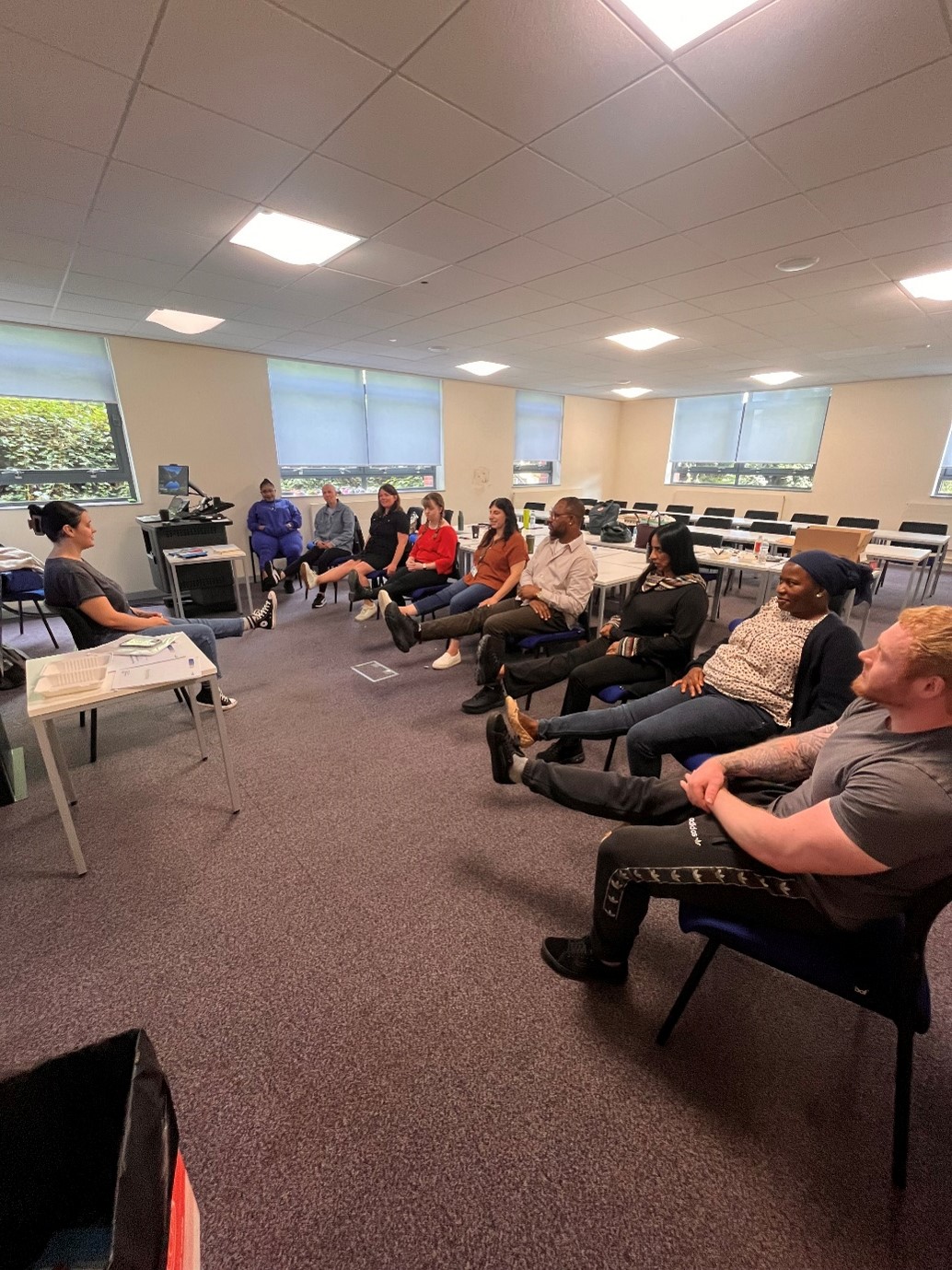
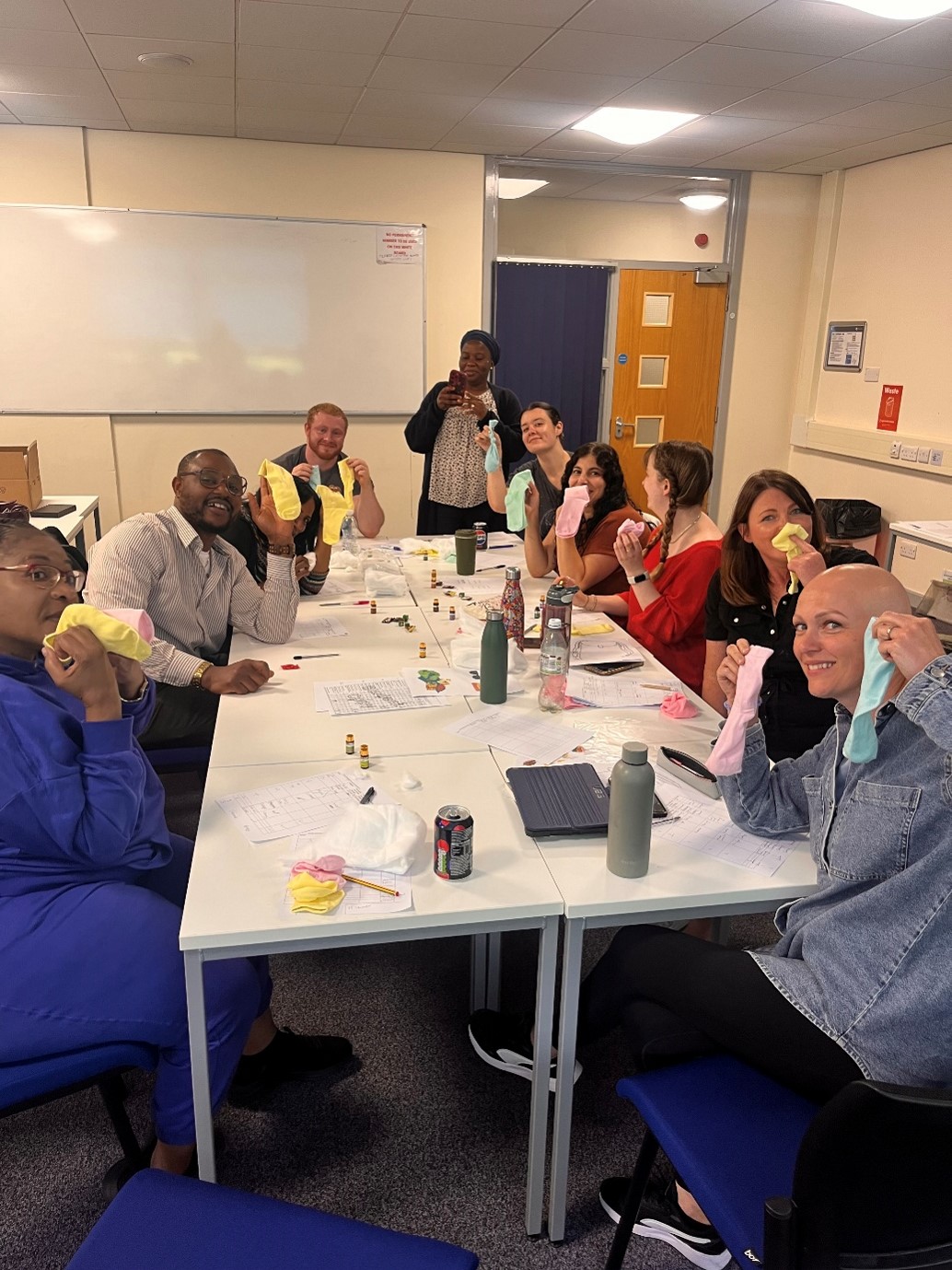
Students sitting around table   Students sitting on chairs  Students sitting around table

I really enjoyed my time studying at Wolverhampton university. The MSc Occupational Therapy programme provided me with a strong foundation in both the theory and practice of occupational therapy. The supportive lecturers and varied placement experiences helped me develop the confidence and skills needed to transition into professional practice. The smaller class sizes also provided a more personal and supportive environment. I would highly recommend the course to anyone considering a rewarding career in occupational therapy.

– Ella Roberts - (MSc OT alumni)

Be the Best Version of Yourself - your Best could be small steps in the right direction - and that is still a Win, But Never relent.

- Abi Oni - (MSc OT alumni)

Comments from the MSc Occupational Therapy 2025 final year cohort

"The past two years have been unforgettable—filled with learning, laughter, challenges, and growth. I’ve met the most amazing people and developed the skills and confidence to begin my career as an occupational therapist. I would encourage any prospective student to make the most of every opportunity; it truly flies by."


"The MSc Occupational Therapy course at Wolverhampton has been one of the most challenging and rewarding things I've done. What's struck me most is how the learning builds on itself - as my knowledge has grown, so has my confidence in applying it. Now on my final placement, I can genuinely feel everything coming together. I don't have all the answers, and I know there's always more to learn, but I have a solid foundation that I'm proud of. The tutors have been brilliant throughout - knowledgeable, approachable, and genuinely invested in your development. If you're considering this course, know that it will push you, but the support is there every step of the way."

"Enjoyable, accommodating and supportive."

"Occupational therapy is not just about recovery,  it is rediscovering possibilities."

"Health and Care Professions Council, the (HCPC)"

Approved by the Health and Care Professions Council (HCPC) for the purpose of providing eligibility to apply for registration with the HCPC as an occupational therapist.

College of Occupational Therapists (COT)

Accredited by the Royal College of Occupational Therapists (RCOT) for the purpose of ensuring graduates are fit for the profession.

Tuition Fees Loan (Home Fee Status):

By studying an undergraduate or postgraduate pre-registration programme you are eligible for a Tuition Fee loan. of up to £9,535. The loan will support your studies and enable you to start a rewarding career in healthcare.


Changes for EU students:

The UK government has confirmed that EU students starting courses from 1 August 2021 will normally be classified as Overseas (International) students for fee purposes. More information about the change is available at UKCISA:

EU citizens living in the UK with 'settled' status, and Irish nationals living in the UK or Ireland, will still be classified as Home students, providing they meet the usual residency requirements, for more information about EU Settlement Scheme (EUSS) .


NHS Learning Support Fund

All eligible nursing , midwifery and most allied health professionals' students on pre-registration courses will also receive a Training Grant of at least £5,000 per year that is not means-tested and will not have to be repaid.

An additional payment of up to £3,000 per academic year will be available to eligible students;

• £2,000 for students with children towards childcare costs

• £1,000 Special Subject Payment on certain shortage specialism courses

Among others, the shortage specialisms have been confirmed to include:

• Mental health nursing

• Learning disability nursing

• Podiatry

Please note that this additional NHS funding is not available for students on the Foundation Year of a 4-year degree


Additional funding:

The Learning Support Fund also offers students additional support while studying for their degree. This includes:

• Additional travel and accommodation costs to clinical placements over their normal daily travel costs

• An exceptional hardship fund of up to £3,000 per student per academic year


You can find more information on the NHS Business Services pages.

Telephone

01902 32 22 22

Email

enquiries@wlv.ac.uk

Online

Order a prospectus