School of Architecture, Computing and Engineering

BSc (Hons) Architecture with Foundation Year

BSc (Hons) Full-time 4 years

Start your journey into architecture, even if you don't have the standard entry grades — a foundation year built to prepare you for the UK's only RIBA-accredited degree that teaches every stage of a building's life, from first sketch to demolition.

Start your journey into architecture, even if you don't have the standard entry grades — a foundation year built to prepare you for the UK's only RIBA-accredited degree that teaches every stage of a building's life, from first sketch to demolition.

Award
BSc (Hons)
Start date(s)
14 September 2026
UCAS Code
K10F
Course specifications
Course length
Full-time (4 years)
Campus location
University: Springfield Campus
UCAS points calculator

Why choose this course?

7th in the UK for Architecture, Building and Planning (Daily Mail University Guide 2027)

93% Student Satisfaction with teaching on this course (National Student Survey, 2026)

Not every future architect arrives at university with three top grades already banked — and this course exists for exactly that reason. If you're just short of the standard entry requirements, or you're coming to architecture from a non-traditional background, the foundation year gives you a structured, supported route in: one extra year built around maths, communication and orientation to the built environment, before you join the same design studio as every other architecture student at Wolverhampton.

Once you progress beyond the foundation year, you're on the same RIBA-accredited, ARB-prescribed degree as our direct-entry students — ranked 7th in the UK for Architecture (The Daily Mail University Guide 2027) — studying inside the only school in the world offering dedicated degree courses for every stage of a building's life, from design to demolition.

You'll have the same access to VR, AR, 3D laser scanning and 3D printing, and the same international study trips — past destinations include London, Berlin, Rome, Paris and Dubai. Professional placements are offered on this course too, giving you real industry exposure alongside your studies.

This course is accredited by:

Logo for Royal Institute of British Architects ARB logo

Take your first step towards becoming a professional architect by completing this degree, which is prescribed by the Architects Registration Board (ARB) and validated by RIBA as a Part 1 qualification.*


*The Architects Registration Board (ARB) will discontinue the prescription of all Part 1 qualifications (including all UK undergraduate Architecture degrees) from 31 December 2027. This is a nationwide change affecting all university Architecture qualifications in the UK and is not specific to Wolverhampton. If you are scheduled to complete your course in June 2028 or thereafter, you will still obtain a BSc (Hons) Architecture degree; however, the 'Part 1' exemption will no longer be applicable or necessary for progression in your architectural career. Consequently, ARB recognition will be granted upon the attainment of a subsequent master’s qualification, facilitating alternatives routes into the profession.
 

What's unique about this course?

Four things set this route apart from applying directly to the three-year degree:

  • A lower, more flexible entry point. Typical offers start from 48 UCAS points (for example DD/EEE at A-level, or a BTEC Diploma at MP) — around a third of the 128 points needed for direct entry.
  • An assessment day, not just a grades check. If you don't hold Level 3 qualifications at all, the Prepare for Foundation Pathway considers you through a one-day event — a written task and a series of activities — rather than UCAS points alone.
  • A foundation year built for confidence, not just content. Maths, communication, problem-solving and an orientation to the built environment are taught through weekly lectures alongside small, team-based sessions specifically designed to help you work through anything you find difficult.
  • The same destination as everyone else. Once you're through the Foundation Year, you're on the only school in the world teaching every stage of a building's life, from design to demolition — ranked 7th in the UK for Architecture (Daily Mail University Guide 2027).

What happens on the course?

This is a four-year route into the same BSc (Hons) Architecture degree, with your first year dedicated to building the foundations everyone needs before specialist design study begins.

Year 1 - Foundation Year. Rather than starting straight in the design studio, you'll build the core skills that underpin everything that follows:

  • Problem Solving in Science and Technology — tackling practical, real-world problems from across science and engineering, using appropriate IT tools to develop and implement solutions
  • Foundation Mathematics I & II — the numeracy and mathematical grounding every construction-related course needs, taught through weekly lectures and small team-based sessions
  • Communication and Study Skills — the reading, writing and research skills you'll rely on for the rest of your degree
  • Orientation to Infrastructure and the Built Environment — your first grounding in how design and construction projects actually come together
  • Practical Engineering Science for Electro-Mechanical Design — a hands-on look at the science behind structures and systems, from why bridges don't collapse to how buildings are powered

From Year 2 onwards, you join the same three-year journey as every other architecture student at Wolverhampton: human-scale design projects in Year 2, urban-scale challenges in Year 3, and a holistic major project and dissertation in Year 4 — all built around the design studio, real client-driven briefs, and the same international study trips and industry technology.


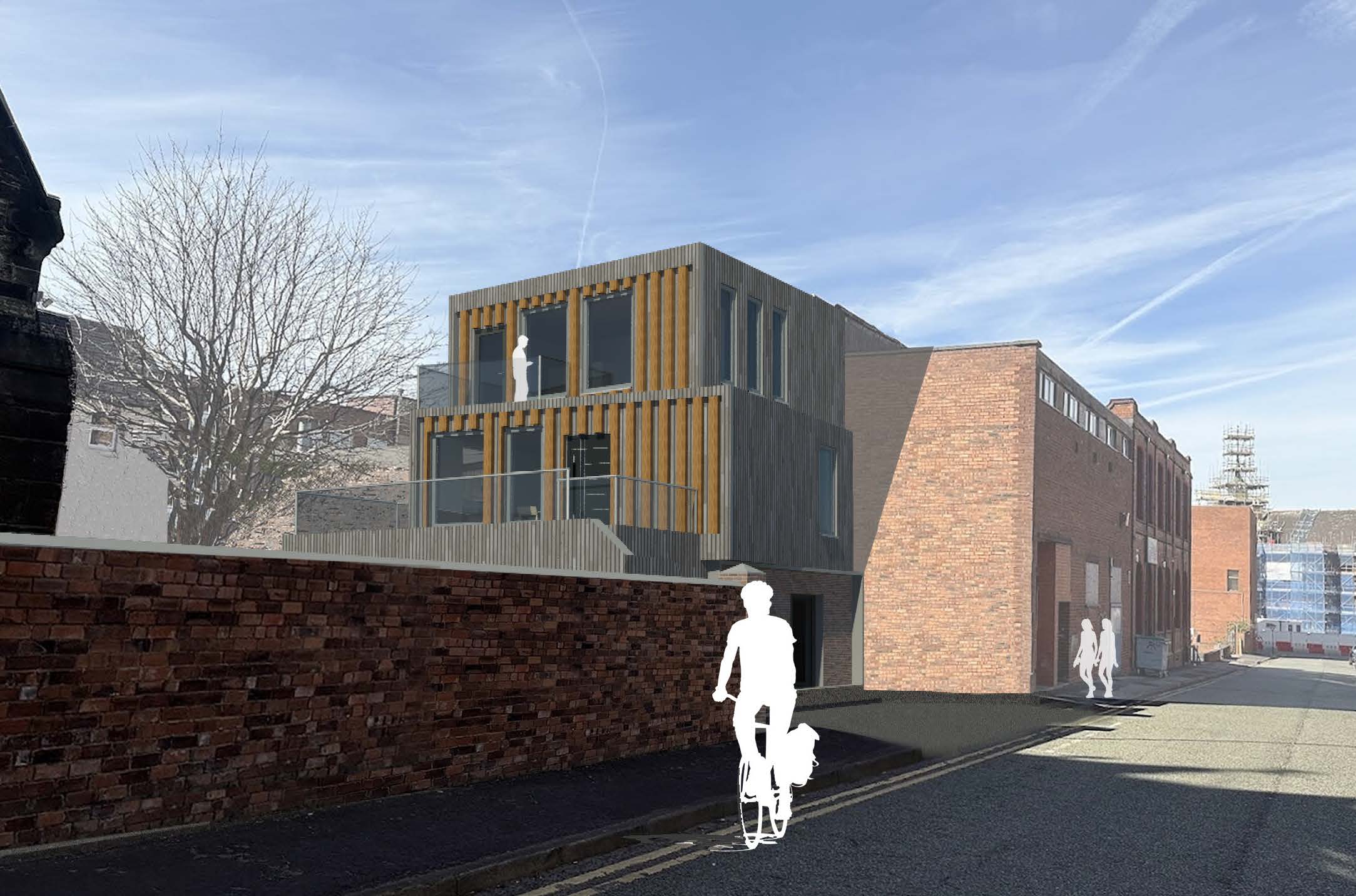
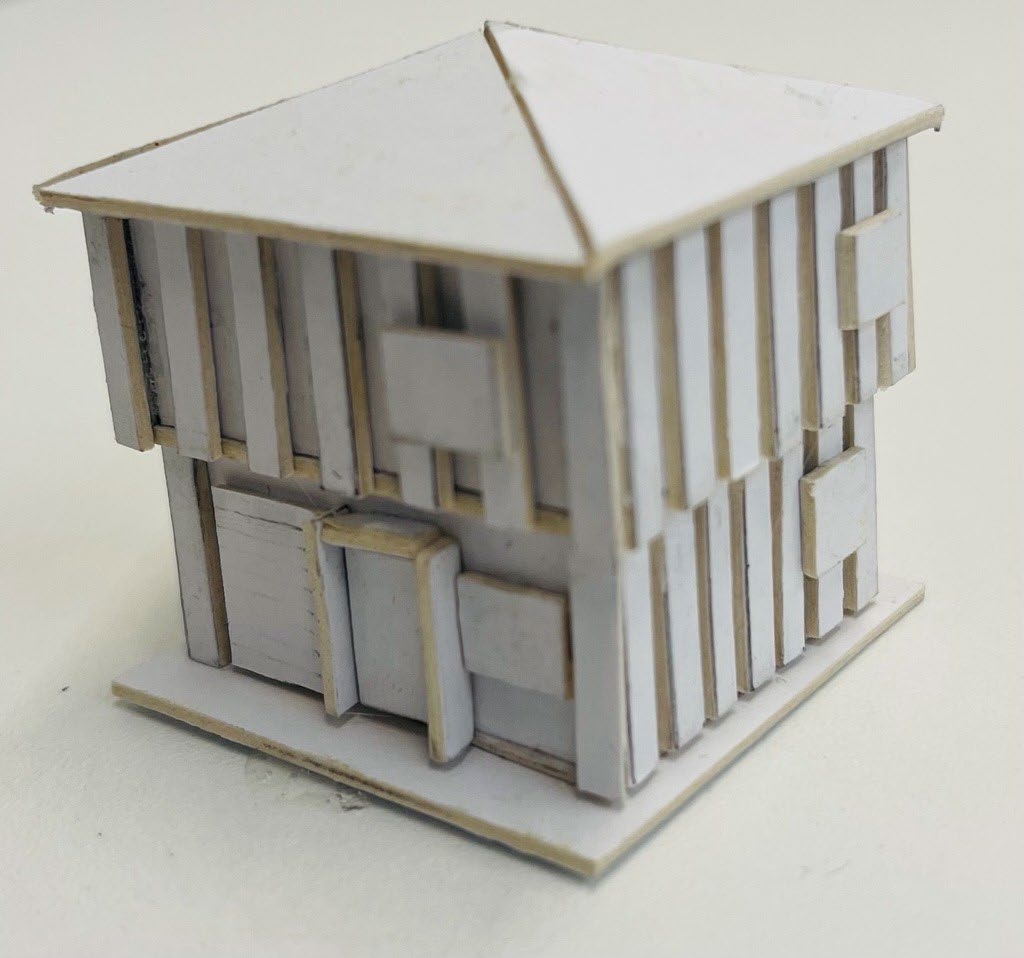
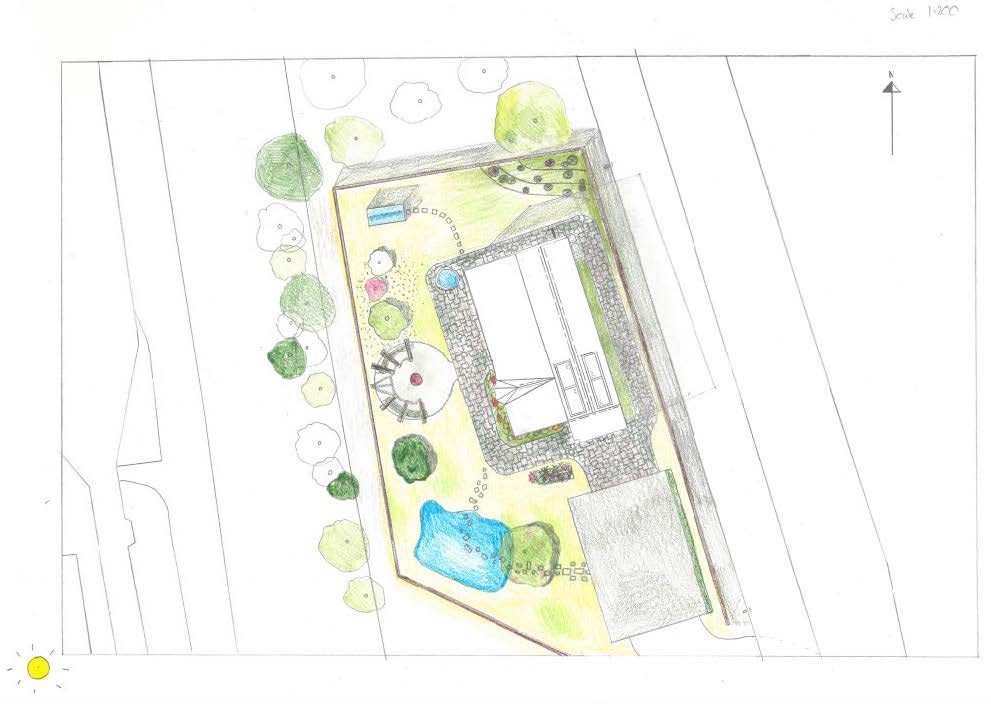
Model built by a first year architecture studentSketch drawn by a first year architecture studentArtwork created by a first year architecture studentGraphic created by a first year architecture student 

Employability on the course

By the time you graduate, you'll hold the same RIBA-accredited, ARB-prescribed degree as our direct-entry students. Professional placements are offered on this course, giving you real-world exposure and industry contacts.

The foundation year also builds transferable, employer-valued skills from day one — problem-solving, numeracy, communication and independent research — each mapped to its own learning outcomes, so you leave Year 0 with more than just subject knowledge.

Graduates from this course go on to roles including:

  • Architectural Assistant
  • Urban Designer
  • Interior and Spatial Designer
  • Construction Project Manager
  • Sustainable Design Consultant
  • Architectural Technologist
  • Building Information Modelling (BIM) Coordinator

Course Modules

Potential Career Paths

Support licensed architects in design development and planning submissions.

Contribute to the planning and design of urban spaces, public areas, and regeneration projects.

Develop interior environments that are both functional and visually appealing.

Coordinate building projects from planning to completion, ensuring they stay on budget and schedule.

Work on creating energy-efficient, environmentally responsible buildings and solutions.

Specialise in the science and technology of building design and construction.

Manage and coordinate digital models and project data using BIM technologies.

Additional Information

Everything you need to know about this course!

Widening access to architecture is part of the University of Wolverhampton's identity, not an add-on. The foundation year sits alongside the School's strong record of apprenticeships and alternative entry routes — reflecting a social mobility ethos that's built into how the School of Architecture, Computing and Engineering operates, not just how this course is marketed.

You'll study at our Springfield site, a £100 million transformation of a 12-acre Grade II-listed former brewery into Europe's largest specialist design, construction and built environment campus — home to the National Brownfield Institute, a government-supported institute researching how derelict land can become new communities, based in the same building where you'll be learning from Year 1 onwards.

If you're unsure whether you meet the entry criteria, the Gateway team can talk you through the Prepare for Foundation Pathway — a one-day assessment event covering a written task and a series of activities, designed to test your interest and potential rather than your UCAS points alone. Applicants must be 18 or over at the start of the course.

Your foundation year carries its own set of outcomes, distinct from the specialist degree that follows. By the end of Year 1, you'll be able to:

  • Present, evaluate and interpret qualitative and quantitative data to build a sound, well-reasoned argument
  • Apply mathematical and statistical techniques to solve real-world problems
  • Communicate clearly, in writing and verbally, with structured and coherent arguments
  • Evaluate different approaches to solving practical, scientific and technological problems
  • Demonstrate the transferable skills and personal responsibility employers expect from day one

These outcomes then feed directly into the honours degree, where by graduation you'll also be able to generate and communicate comprehensive architectural designs, understand the architect's professional and legal responsibilities, and combine aesthetic design with engineering and material constraints to produce safe, sustainable, cost-effective solutions.

Location Mode Sep intake Fee Year
Home Full-time £9790 per year 2026-27
International Full-time £17600 per year 2026-27

The University is committed to a transparent fee structure, with no hidden costs, to help you make an informed decision. This includes information on what is included in the fee and how fees are calculated and reviewed.


If a tuition fee is not showing, we may not offer this intake for this course. Please check the start date information on the course finder for start dates.

Academic Pathway:-

Typical entry requirement: 48 UCAS points

  • A Levels - grades DD / EEE
  • BTEC L3 Extended Diploma or OCR Cambridge L3 Technical Extended Diploma - grades PPP
  • BTEC L3 Diploma - grades MP
  • Access to HE Diploma (60 credits) of which a minimum of 45 must be at Level 3 (48 UCAS point equivalence, minimum 45 credits at merit)
  • T Levels with an overall grade of Pass and a minimum grade of D or E in Core
  • International entry requirements and application guidance can be found here
  • Use the UCAS Tariff calculator to check your qualifications and points

    Prepare for Foundation Pathway: - We will consider applicants who have not achieved level 3 qualifications if you have a keen interest in this subject area or hold relevant experience. To receive an offer through this route you will be required to successfully attend and pass a Prepare for Foundation event. This is a one-day programme which is designed to assess your keen interest or recent experience in the subject, through a written assessment and a variety of activities. During the event you will have the opportunity to ask questions, be introduced to studying a higher education foundation course and meet staff and fellow students. If you would like more advice and guidance about this admissions pathway, please contact Gateway to discuss and support you making an application to us.

    Other Requirements: Applicants must be 18 years old or above at the start of the course.

    Tuition Fees Loan (Home Fee Status):

    Most students will be able to apply for a loans to pay for these subject to eligibility. To find out more information please refer to the government Student Finance website.

    Changes for EU students:

    The UK government has confirmed that EU students starting courses from 1 August 2021 will normally be classified as having Overseas Fee status. More information about the change is available at UKCISA:

    EU citizens living in the UK with 'settled' status, and Irish nationals living in the UK or Ireland, will still be classified as Home students, providing they meet the usual residency requirements, for more information about EU Settlement Scheme (EUSS)


    Self-funding:

    If you don’t want to take out a loan to pay your fees or if you aren’t eligible to receive a loan, you might want to take advantage of the University’s scheme to pay by instalments: See How to pay.

    For more information please contact the Gateway.


    Your employer, embassy or organisation can pay for your Tuition fees:

    If your employer, embassy or organisation agrees to pay all or part of your tuition fees; the University will refer to them as your sponsor and will invoice them for the appropriate amount.

    We must receive notification of sponsorship in writing as soon as possible, and before enrolment, confirming that the sponsor will pay your tuition fees.


    Financial Hardship:

    Students can apply to the Dennis Turner Opportunity Fund.

    for help with course related costs however this cannot be used for fees or to cover general living costs.


    Bursaries and Scholarships:

    In addition the University also offers a range of Bursaries and Scholarships packages

    You can find more information on the University’s Funding, cost, fee and support pages.

    Telephone

    01902 32 22 22

    Email

    enquiries@wlv.ac.uk

    Online

    Order a prospectus

    How we compare

    Find out how our course is rated on Discover Uni, the official website for comparing UK higher education courses.

    Find out how our course is rated on Discover Uni, the official website for comparing UK higher education courses.

    Full-time Course