/prod01/wlvacuk/media/departments/digital-content-and-communications/submitted-news-images/Josh-Helen-Pride26-speeches-closeup.png)
/prod01/wlvacuk/media/departments/digital-content-and-communications/images-2024-25/250630-SciFest-1-group-photo-resized-800x450.png)
/prod01/wlvacuk/media/departments/digital-content-and-communications/submitted-news-images/Kiran-Gulia.jpeg)
/prod01/wlvacuk/media/departments/digital-content-and-communications/images-2026/QS-Five-Star.jpg)
The Army Game and Charlie Townsend
10/12/2025 - 10.01
Roger Slater
Post World War Two, in 1948, The National Service Act was introduced, to come into effect in 1949. It was introduced to alleviate the manpower shortages across the services as a result of the war, and also to further develop discipline and a unity across the nation.
Among the physically fit males between the ages of 17 and 21 there were some exclusions as there had been with wartime conscription – reserved trades such as Engineers, Bakers, Doctors and Farmers, were often exempted and many students were allowed to defer their call-up until studies had been completed.
Footballers from all levels were not exempt however, and one of those called up in 1958 (National Service ended in 1963) was Rodney Alfred James Townsend, known throughout his life and extensive football career as ‘Charlie’ who I was very pleased to chat to recently about his National Service football career. He got the nickname from his father. As a young child during World War Two, he’d go out to play and get scrapes, cuts and bruises. His Dad said he wasn’t a Rodney but a right Charlie and the name stuck!
Well known for his 520-odd appearances for Wealdstone FC between 1957 and 1971, as well as having spells with Hitchin Town and Hayes FC, he also made 32 appearances for the England Amateur side between 1961 and 1968 but in fact, his career started as an Amateur with Watford FC in 1955, where he made a dozen appearances as an outside right while at the same time he was apprenticed as a Carpenter. Wealdstone Trainer at the time, Len Goulden approached the player and the club and asked Charlie to move to the Stones, where ‘the rest’ as they say, is history. He went straight into the side as Centre Forward and scored twice in five games, but the fifth was lost 5-0 and Charlie was dropped by the Committee of ten people that at the time, picked the side!
With the 1958-59 season underway, 20-year-old Charlie received his call-up papers. He mentioned this to Club Secretary Bill Leadbeater, who immediately asked where Charlie was to report (Royal Army Ordinance Corps at Hillsea Barracks, Portsmouth) and Bill said that he knew the Major there as a friend. A call was obviously made, as Charlie arrived at Hillsea Barracks on the Thursday, had his first Army haircut on the Friday and was given a 12-hour Pass for the Saturday to return to London to play for Wealdstone against Walton & Hersham. Post game, the uniform was back on, and Charlie returned to Portsmouth.
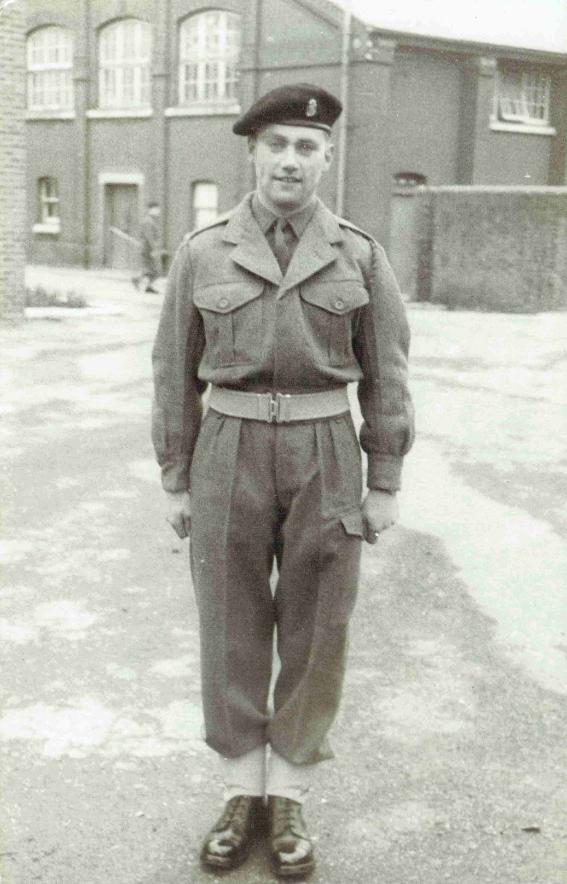
Day 1 Private RAJ Townsend. Source: Author’s Collection
It was quickly obvious that the Physical Training Instructors at Hillsea knew of Charlie’s burgeoning football career as he was soon selected to play for his unit and he was enough of a success for them to ‘extend’ his six weeks Basic Training to three months, in the main so that he could continue to play! Alongside this, a weekend pass was a formality and Charlie continued to play for the Stones throughout his service. Trains to London on a Friday evening or Saturday morning, home, play for the Stones, home to sleep, then a train back on the Sunday, were a way of life!
Charlie was also selected to step up and play for The Army, playing in the same side as two professionals that were also on National Service, Peter Dinsdale from Huddersfield Town and Colin Osman who was playing for Portsmouth, though the rest of The Army team was from the amateur ranks.
Basic Training “eventually” completed for Charlie, he was posted to the Ammunition School at the Central Ammunition Depot at Bramley. The depot was established in 1918 and the Ammunition School in 1922, training all new recruits there in the responsible handling, storing and managing of military supplies, mainly ammunition! Once again, Charlie represented the ‘School Team’ and as in his time at Hillsea Barracks, he was able to continue to play for the Stones as coaches were laid on, on Fridays to London Victoria from where the servicemen made their way home for the weekend, as long as they returned to barracks by midnight on Sunday.
Charlie was certainly fortunate with the postings being within a commutable distance of London, as for those from further afield, it just wasn’t possible to travel home and back in the time, and many remained in barracks, pretty much ‘for the duration’. In fact, Charlie recalled that in the two years of his National Service, he only actually spent two weekends in camp!
Seeing him on the football field. Charlie was asked, alongside Johnnie Byrne who was playing for Crystal Palace and later joined West Ham United, to run in the Army Athletics Championships, though selected to run on the Friday of the Championships in a 3-mile race and again on the Saturday in the 1-mile, Charlie achieved a ‘double’ as he actually finished last in both races and wasn’t asked again!
Soon after he was posted again, this time to RAOC Defence Munitions Kineton, the largest ammunition depot in Western Europe. Promoted to Lance Corporal which increased his £2-a-week wage by 3s6d (17 1/2p young’uns! ) and eventually Corporal (an unpaid promotion, though he was offered 14 shillings (70p) if he signed on for a further couple of years! Charlie declined but was put in charge of five Pioneer Corps loading ammunition onto lorries to be sent mainly to the Middle East. He also found himself a place in the Royal Army Ordinance Corps football team playing locally in the Warwickshire League against a few local sides and other Military teams (including RAF Gaydon who had another pro, Mick Burns in their XI) and also entered into The Army Cup. His team, 29 Company RAOC went on to win the competition, despite being one of the smallest companies to enter, with only around 500 to choose from.
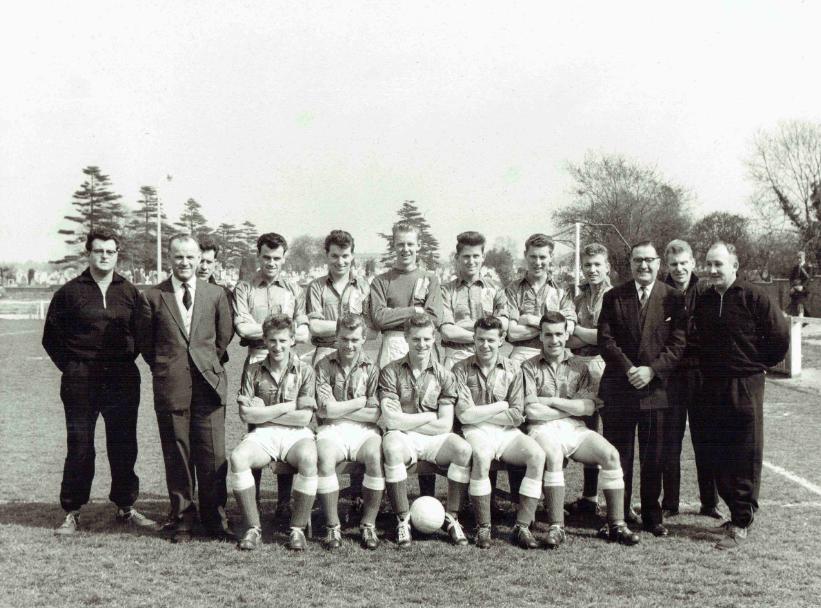
29 Coy Royal Army Ordinance Corps Football Team. Source: Author’s Collection
They won the final 2-1, against No 2 Training Battalion Royal Army Service Corps, played on Wednesday 20th April 1960, at the Aldershot Military Stadium and as shown in the background of the picture below (Charlie is 3rd left), there was a good crowd present.
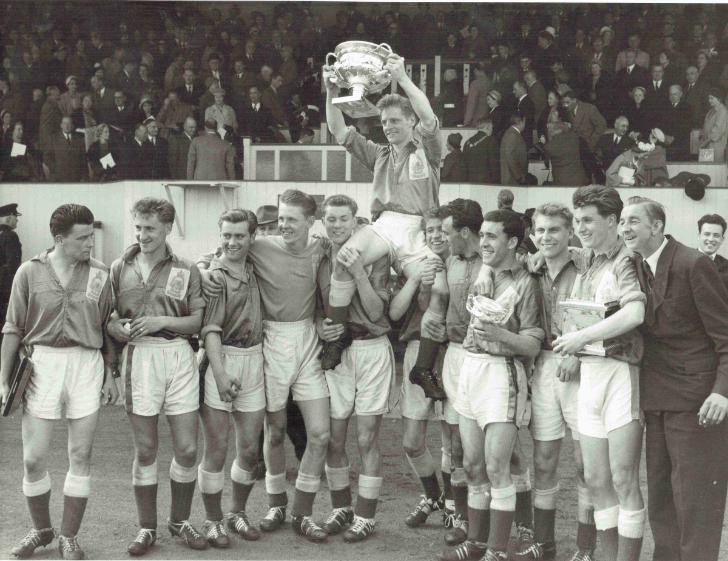
Army Cup Final Winners. Source: Author’s Collection
They had won through from the Preliminary Round where they beat 68 Selection Regiment RA 9-0. They won five further rounds of the competition before taking on and beating 6 VAH Training Battalion REME in the semi-final. They had scored 35 goals conceding only 12 in their seven victories against their final opponents 26 scored and 8 against, also in seven victories.
A look at the teams in the programme sees a couple of names jump from the page: Ron Yeats, the Liverpool centre-half, Alex Young, an Everton forward and Chris Crowe, a winger, then of Leeds United. Each of the three was also a full International, while Johnnie Byrne once again lined up alongside Charlie for 29 Coy. RAOC.
The prize for victory was a ‘semi-official’ two-week pass, Byrne and Townsend travelling back to London together as they were the only two of the team from the capital. It was the longest break they had whilst on service, but the year following the win did offer other ‘unofficial’ perks. Simply, Charlie and Johnny Byrne were favoured by the Officer in Charge of the Mess who was a Crystal palace fan. A blind eye was turned as Townsend and Palace player Byrne would go to the gym at around 6am, then breakfast and then they’d keep their heads down, milling around for the day in tracksuits rather than battledress, mainly spending their time keeping out of the way of anyone that would give them a job to do and walking to the various points around the camp, place to place, meeting the Tea Van at its prescribed ‘delivery’ times!
After 18 months at Kineton, Charlie had done his two years and he finally got his ticket home. He had saved his Army money throughout his service as playing for Wealdstone he was still getting a couple of quid a week boot money. He lived off that in camp and had about six months off following his demob while he decided on what path his future would take, training with Wealdstone and going to the cinema high on the list of things to do! Eventually, he took six weeks’ maintenance work as a Carpenter with a friend’s company though he actually stayed nine years!
Despite serving his time, National Service was not quite done for Charlie. He kept in touch with Johnnie Byrne and Glynn Pring for a while, and he was ‘invited back’ to Kineton the following year, to play in the semi-final of The Army Cup, effectively as a ringer! Sadly, the success wasn’t to be repeated as 29 RAOC were beaten 3-1, by a Royal Army Service Corps side.
Finally, on the 8th February 1961, Charlie was to play once more on a Military ground, as he was selected to play for the FA Amateur XI v The Army Amateur XI, at The Royal Military Academy, Sandhurst. His former teammate and friend Glynn Pring lined up as an opponent, as did Corporal RG Ardrey who had been an opponent in The Army Cup Final the year before.
Biography
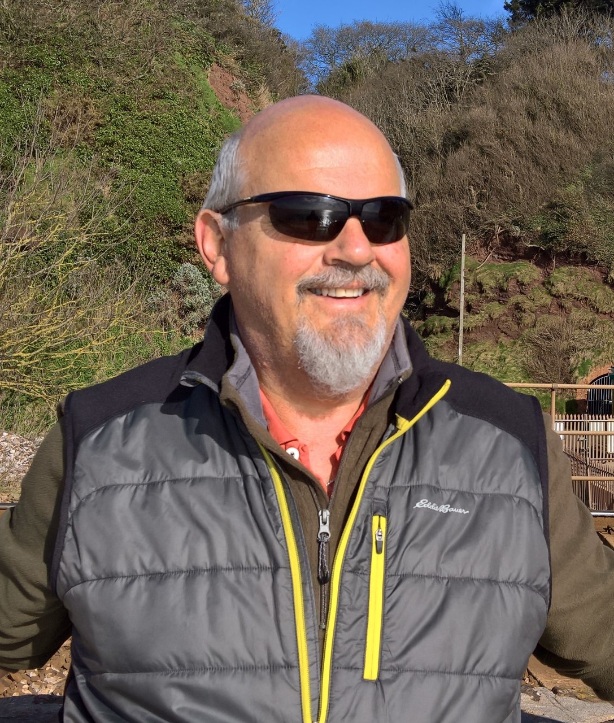
Roger Slater was born in Harrow in the late 1950s and has moved around a bit and retired to Devon with wife of 24 years, Helen. He originally trained as an Electrical Engineer but worked for almost 40 years in Building Services Technologies, primarily HVAC control systems and Electronic Security. Roger retired in 2018 having run his own Engineering Consultancy for almost 15 years.
For relaxation and hobbies, he writes, mainly about his football club, Wealdstone FC and has published eight books including a club history since 2002. He does not class himself as a historian, just an enthusiastic amateur.
He also writes for a fanzine/magazine called Where’s The Bar that has just relaunched.
Otherwise, hobbies are upcycling and building ‘strange’ lighting out of people’s rubbish and occasionally painting, though he also buys and sells at auctions and on the internet (mainly football related or antiques).
In respect of other sports, he will watch most but follows the Toronto Blue Jays avidly in baseball, as a result of working on and off in Canada in the early nineties.
Roger also reads and collects books on World War One, in particular personal biographies and war diaries as opposed to battle histories…
All of that could change tomorrow or on any other day if something else takes his fancy as he will give most things a try if they appeal!!