School of Architecture, Computing and Engineering

BEng (Hons) Chemical Engineering

BEng (Hons) Full-time 3 years, Part-time 6 years

Engineer the processes powering clean energy, pharmaceuticals and sustainable manufacturing. Our IChemE-accredited degree combines pilot-scale industrial training with strong technical foundations, so you graduate ready to solve the chemical engineering challenges shaping the 21st century.

Engineer the processes powering clean energy, pharmaceuticals and sustainable manufacturing. Our IChemE-accredited degree combines pilot-scale industrial training with strong technical foundations, so you graduate ready to solve the chemical engineering challenges shaping the 21st century.

Award
BEng (Hons)
Start date(s)
14 September 2026
UCAS Code
H846
Course specifications
Course length
Full-time (3 years),Part-time (6 years)
Campus location
University: Springfield Campus
UCAS points calculator

Why choose this course?

Chemical engineers design and run the processes that turn raw materials into the things modern life depends on — fuel, medicine, food, plastics, clean energy. The BEng (Hons) Chemical Engineering degree at the University of Wolverhampton is an IChemE-accredited course built around real industrial practice, not just theory, so you learn to think and work like a practising engineer from year one. 

You’ll study the core disciplines of chemical engineering — thermodynamics, fluid mechanics, reaction engineering and process design — but you’ll apply them on pilot-scale equipment, not just on paper. By the time you graduate, you’ll have designed, tested and defended your own chemical process to a panel of investors, built confidence with industry-standard simulation software, and developed the professional judgement that employers in energy, pharmaceuticals, manufacturing and sustainability look for. 

This course is right for you if you want to: 

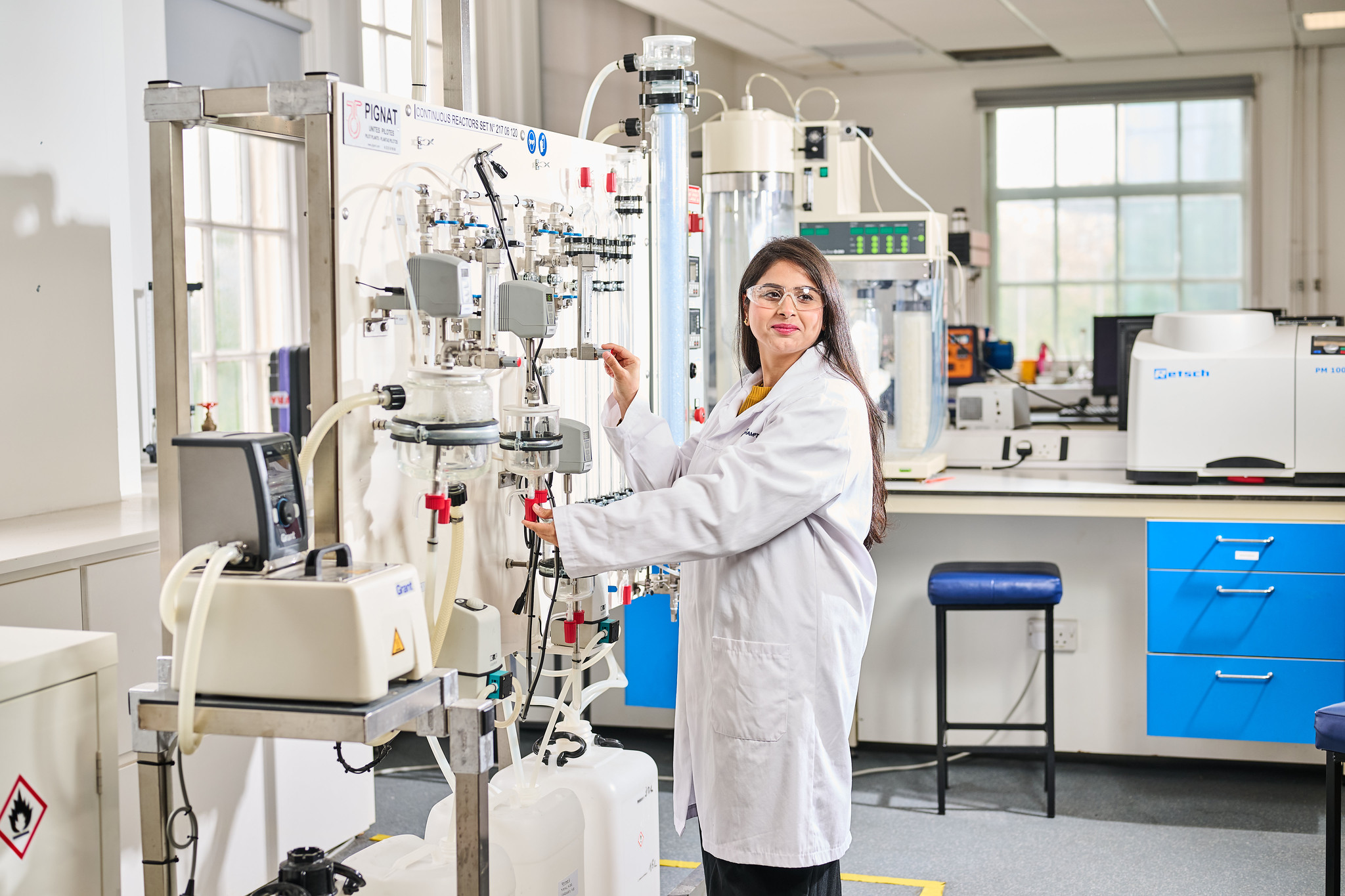
  • Work on real engineering problems, not just study them — using pilot-scale distillation columns, reactors and adsorption units
  • Help solve global challenges in clean energy, carbon capture and sustainable manufacturing
  • Graduate with a professionally accredited degree and a guaranteed placement on your CV
  • Learn in a smaller, more supportive engineering environment where you’re not just a student number
  • Enter the profession from a broad range of academic backgrounds, with support built in from day one 

Our course is accredited by the Institution of Chemical Engineers (IChemE), and every student is supported by a Personal Tutor throughout their studies. 
What's unique about this course?

What sets Wolverhampton’s Chemical Engineering degree apart is direct, hands-on access to industrial-scale engineering — not just labs, but the same kind of pilot plant equipment used across the process industries. 

  • Pilot-scale industrial facilities. Operate distillation columns, adsorption units and reactors that mirror real plant environments — moving you from classroom theory to plant-floor practice.A dedicated focus on carbon capture and sustainability engineering. Learn the clean-energy and low-carbon process technologies driving the industry’s biggest current shift.
  • Industry-standard simulation and testing tools, including process simulation software used across the sector, so you graduate already fluent in the tools employers expect you to use.
  • The Chemical Engineering Design Centre — a dedicated space with industry-standard software, technology and support for design and process modelling work.
  • A guaranteed professional placement for every student, built into the structure of the course rather than left to chance.
  • Our course is accredited by the Institution of Chemical Engineers (IChemE)with up to four years of student IChemE membership paid for by the department. 
  • A smaller, more supportive engineering cohort, with close staff contact and additional employability workshops built into the course. 

What happens on the course?

The course is built around a simple idea: you learn chemical engineering by doing it, not just reading about it. Teaching follows a clear three-stage journey — learn the fundamentals, apply them to real problems, then design and defend your own engineering solution. 

Year one gives you the underpinning science, maths and core principles of chemical engineering — process analysis, energy and material balances, thermodynamics and fluid flow — alongside an introduction to organic chemistry and engineering materials. Guest speakers from industry feature from your first semester. 

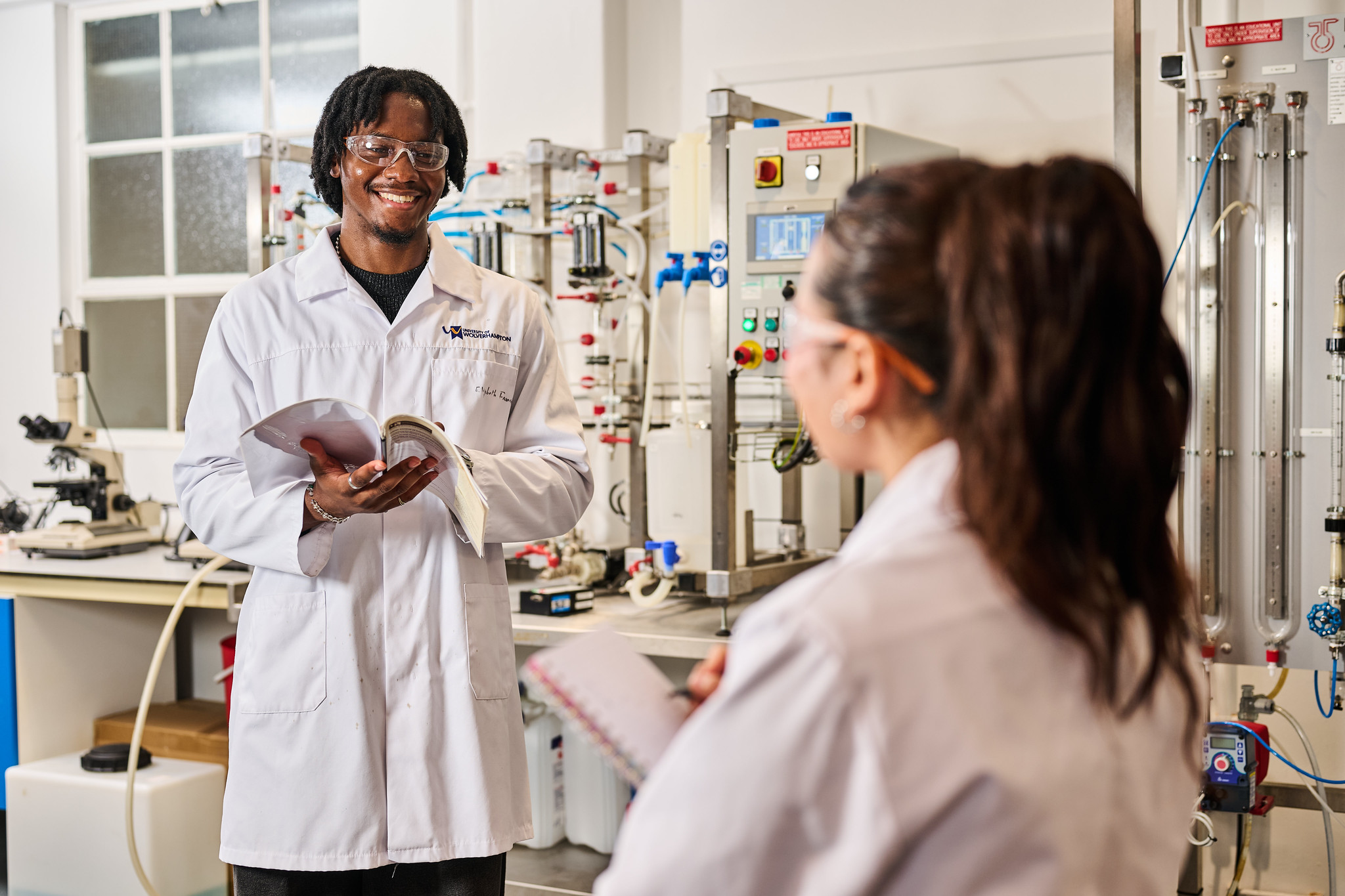
2 Chemical engineering students in white lab coats and safety goggles working in the chemical engineering lab at the city campus.

Year two moves you into the engineering core: reaction engineering, transport processes, fluid mechanics and multiphase systems, and process modelling and simulation using industry-standard software. You’ll also study system dynamics and control, and work in a group to design a chemical process from scratch — ultimately pitching that design to a panel of investors. 

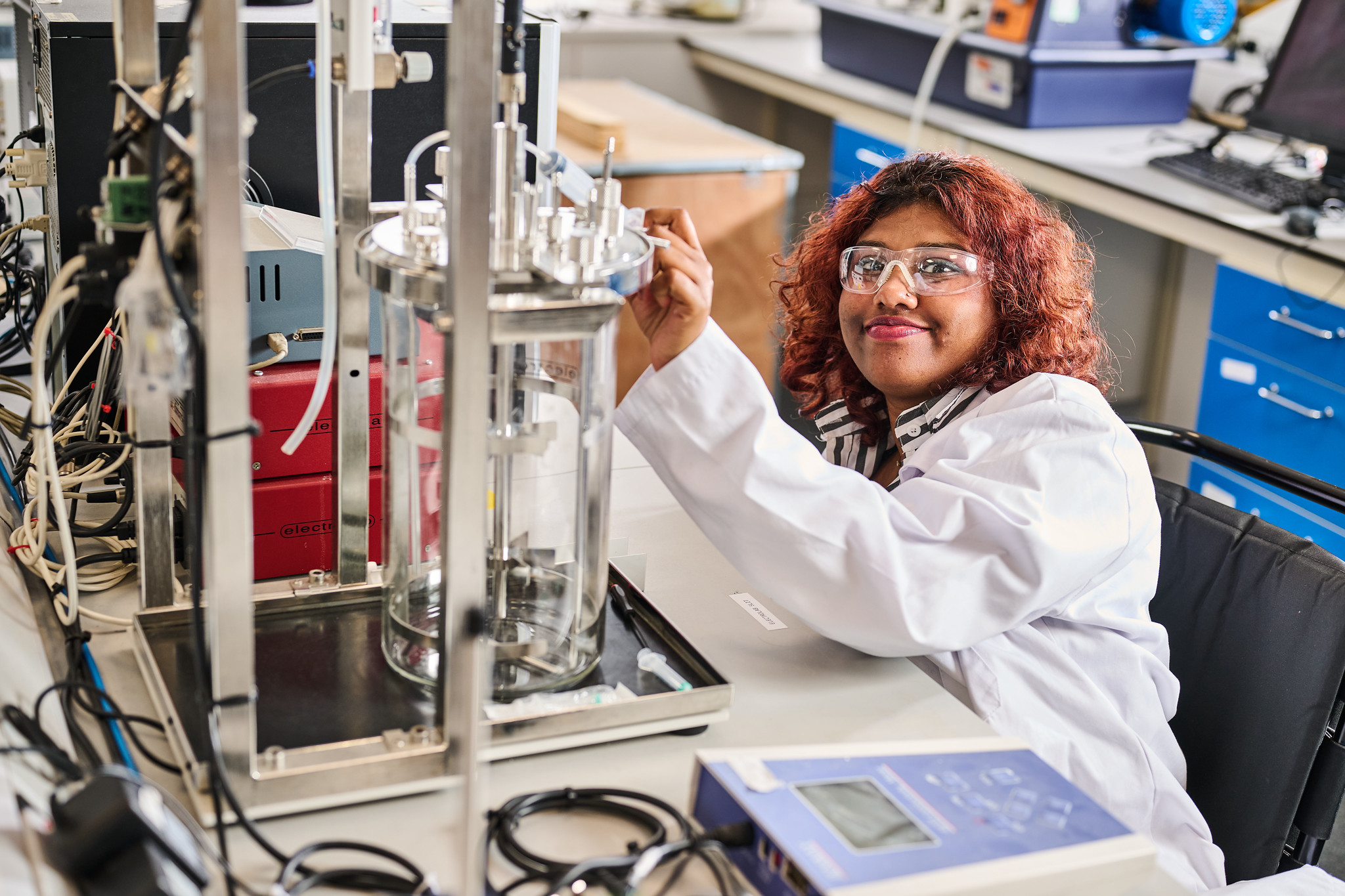
Student in a white lab coat standing in a chemical engineering lab at City Campus. Chemical engineering student in white lab coat and safety goggles working in the chemical engineering lab at the city campus. 

Year three is where it all comes together. Alongside modules in environmental engineering, safety and green energy, you’ll complete a year-long, 40-credit Design Project — an open-ended engineering brief where you work in a team to design a complete chemical plant, covering mass and energy balances, economic viability, and safety, health and environmental considerations. You’ll also choose a research specialism — manufacturing, energy, food, safety or complex fluids — guided by academic staff working in that area. 

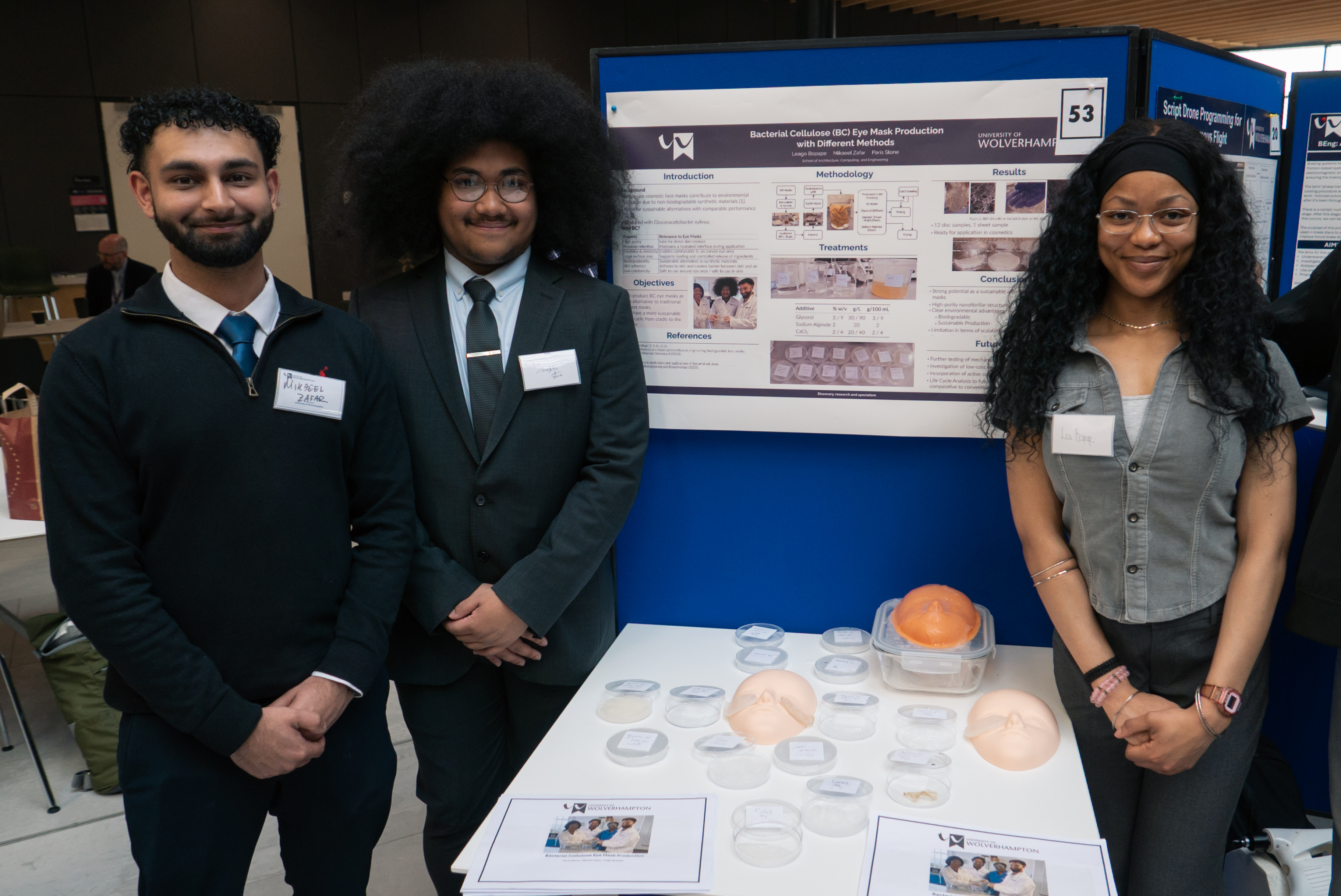
3 Chemical Engineering students standing proudly aside their materials presentation at the end of year show at Springfield site. Chemical engineering final project submission.

Across the three years, you’ll build: 

  • A grounding in thermodynamics, fluid mechanics, reaction engineering and process control
  • Practical, hands-on experience with pilot-scale plant equipment
  • Confidence with industry-standard process simulation software
  • The ability to design a chemical process from first principles — and defend it under scrutiny
  • A sustainability-first mindset, from carbon capture to renewable energy systems 

This course is currently subject to revalidation in February 2027; module content is reviewed annually and may be subject to change.

Placements on the course

Every student on this course is guaranteed a professional placement — a structured, real-world experience built into the degree itself, not left to chance or your own job-hunting. It's designed to give you genuine industry exposure, a proven track record for your CV, and the industry networks essential for your career.

These placements are broader than chemical engineering roles alone — you won't always be placed directly into a chemical or process engineering position. Instead, every placement is chosen to build the transferable workplace skills that every engineering employer expects from day one: professionalism, communication, teamwork and time management, all of which translate directly into chemical, process and manufacturing environments.

Our placements are:

  • Short duration — condensed, work-like experience in professional environments
  • Academically integrated — always linked to your coursework, assessments or professional development modules
  • Project-based — you'll work on specific tasks or research with a real organisation
  • Flexible in format — in-person, remote, hybrid or virtual, depending on the opportunity
  • Focused on skill development — building communication, teamwork and problem-solving skills employers value
  • Experiential — closing the gap between the knowledge you've gained and the skills you need to succeed

Find out more about how professional placements work across all our courses.

Employability on the course

Every student on this course is guaranteed a professional placement — a structured, project-based experience with a real organisation that’s built into your assessment, not offered as an optional extra. It’s designed to close the gap between what you’ve learned and what employers actually need from day one. 

Chemical engineering graduates from Wolverhampton go on to work across some of the highest-value sectors in the economy: 

  • Energy — including clean energy, carbon capture and the transition to net zero 
  • Pharmaceuticals — formulation, process design and scale-up
  • Food processing and manufacturing
  • Sustainability and environmental engineering 

Typical career paths include: 

  • Process Design Engineer — designing chemical processes and plant layouts for fuels, chemicals, food or pharmaceuticals, using simulation tools such as Aspen Plus and HYSYS to optimise efficiency, safety and cost 
  • Chemical Plant Design Engineer — working on the detailed design of large-scale industrial facilities, including reactor systems, heat exchangers and distillation columns 
  • Product Development Engineer — developing new chemical products and formulations, from polymers to speciality chemicals, from lab-scale research through to manufacturing 

You’ll graduate already fluent in the industry-standard software employers expect, with up to four years of IChemE student membership paid for by the department, and direct exposure to honorary and visiting industry experts who teach and mentor throughout the course. 

Course Modules

Potential Career Paths

Design chemical processes and plant layouts for the production of fuels, chemicals, food, or pharmaceuticals. Use simulation tools (e.g. Aspen Plus, HYSYS) to optimise efficiency, safety, and cost.

Work on the detailed design of large-scale industrial facilities, including reactor systems, heat exchangers, and distillation columns. You'll apply principles of thermodynamics, fluid mechanics, and materials science.

Develop new chemical products or formulations, such as polymers, coatings, cosmetics, or speciality chemicals. This involves lab-scale research, scale-up, and collaboration with manufacturing teams.

Additional Information

Everything you need to know about this course!

The University of Wolverhampton has invested heavily in chemical engineering since establishing the course with IChemE in 2015 — including over £1.3 million in specialist chemical engineering laboratories, a dedicated Chemical Engineering Design Centre, and access to the £25 million Rosalind Franklin building, a regional centre of excellence for science teaching and research.

Beyond the facilities, we back every student with practical support most universities charge extra for: 

  • All core textbooks for years one and two, provided electronically and in the university’s learning centres 
  • Industry-standard software licences available across campus 
  • All Personal Protective Equipment provided free of charge 
  • Free UK field trips 
  • Up to four years of IChemE student membership, paid for by the department 
  • Full use of the Chemical Engineering Design Centre 

We’ve built our reputation on producing engineers who are genuinely ready for industry — with close links to regional, national and international employers, regular guest speakers, and honorary and visiting industry experts who teach and mentor alongside our academic staff. If you want an engineering degree that treats you like a future professional from day one, in a supportive environment where you’re not just another face in a lecture hall of hundreds, this is it. 
By graduation, you’ll have the technical depth and professional skill set to practise as a chemical engineer, including the ability to: 

  • Apply core scientific and mathematical principles to solve real chemical engineering problems, from process design to plant optimisation
  • Analyse and interpret complex engineering data, using industry-standard simulation tools to evaluate and improve process performance
  • Design innovative, sustainable engineering solutions, integrating safety, environmental impact and economic viability into every decision 
  • Communicate complex engineering concepts clearly, to both specialist and non-specialist audiences
  • Work with professional accountability, managing risk, quality and teamwork to the standard expected in industry
  • Carry out independent technical research, culminating in your final-year Design Project 

These outcomes are mapped directly to IChemE accreditation requirements, so you graduate with a qualification recognised across the profession. 

Location Mode Sep intake Fee Year
Home Full-time £9790 per year 2026-27
Home Part-time £4895 per year# 2026-27
International Full-time £17600 per year 2026-27

The University is committed to a transparent fee structure, with no hidden costs, to help you make an informed decision. This includes information on what is included in the fee and how fees are calculated and reviewed.


If a tuition fee is not showing, we may not offer this intake for this course. Please check the start date information on the course finder for start dates.

# Undergraduate part-time fees for 50% rate of study

GCSE English and Mathematics at grades 4/C+ or an acceptable equivalent qualification.

Please note we do NOT accept GCSE Short Courses

PLUS EITHER

  • 80 UCAS points including a Level 3 qualification in Mathematics and another subject in either Physics, Chemistry, Design Technology, Further Mathematics, Electronics, Computing, ICT or Engineering. Excluding General Studies or Critical Thinking
  • A Levels - grades CDD including a Mathematics at grade C and another subject in either Physics, Chemistry, Design Technology, Further Mathematics, Electronics, Computing, ICT or Engineering. Excluding General Studies or Critical Thinking
  • BTEC L3 Extended Diploma or OCR Cambridge L3 Technical Extended Diploma – grade MMP in an Engineering subject to include Mathematics
  • BTEC L3 Diploma – grade DM in an Engineering subject to include Mathematics
  • Access to HE Diploma (60 credits) of which a minimum of 45 must be at Level 3 (80 UCAS point equivalence) in an Engineering subject to include Mathematics.

Please note we do NOT accept T-Level Courses

Use the UCAS Tariff calculator to check your qualifications and points

Students must usually have studied for a minimum of two years post GCSE level. However, we will consider applications from mature students who do not have two years of post-16 study, where they have relevant work experience. Please see http://wlv.ac.uk/mature for further information.

If you've got other qualifications or relevant experience, please contact The Gateway for further advice before applying.

International entry requirements and application guidance can be found at http://www.wlv.ac.uk/international/apply

English language requirements also apply

Tuition Fees Loan (Home Fee Status):

Most students will be able to apply for a loans to pay for these subject to eligibility. To find out more information please refer to the government Student Finance website.

Changes for EU students:

The UK government has confirmed that EU students starting courses from 1 August 2021 will normally be classified as having Overseas Fee status. More information about the change is available at UKCISA:

EU citizens living in the UK with 'settled' status, and Irish nationals living in the UK or Ireland, will still be classified as Home students, providing they meet the usual residency requirements, for more information about EU Settlement Scheme (EUSS)


Self-funding:

If you don’t want to take out a loan to pay your fees or if you aren’t eligible to receive a loan, you might want to take advantage of the University’s scheme to pay by instalments: See How to pay.

For more information please contact the Gateway.


Your employer, embassy or organisation can pay for your Tuition fees:

If your employer, embassy or organisation agrees to pay all or part of your tuition fees; the University will refer to them as your sponsor and will invoice them for the appropriate amount.

We must receive notification of sponsorship in writing as soon as possible, and before enrolment, confirming that the sponsor will pay your tuition fees.


Financial Hardship:

Students can apply to the Dennis Turner Opportunity Fund.

for help with course related costs however this cannot be used for fees or to cover general living costs.


Bursaries and Scholarships:

In addition the University also offers a range of Bursaries and Scholarships packages

You can find more information on the University’s Funding, cost, fee and support pages.

Telephone

01902 32 22 22

Email

enquiries@wlv.ac.uk

Online

Order a prospectus

How we compare

Find out how our course is rated on Discover Uni, the official website for comparing UK higher education courses.

Find out how our course is rated on Discover Uni, the official website for comparing UK higher education courses.

Full-time Course

Part-time Course