School of Pharmacy and Life Sciences

BSc (Hons) Animal Behaviour & Wildlife Conservation with Sandwich Placement

BSc (Hons) Sandwich 4 years

Turn a year of study into a year of real conservation experience. This four-year sandwich degree adds a full, subject-relevant placement to your BSc — before you even graduate.

Turn a year of study into a year of real conservation experience. This four-year sandwich degree adds a full, subject-relevant placement to your BSc — before you even graduate.

Award
BSc (Hons)
Start date(s)
14 September 2026
UCAS Code
DD36
Course specifications
Course length
Sandwich (4 years)
Campus location
University: City Campus
UCAS points calculator

Why choose this course?

93% of students on bioscience courses were satisfied with the teaching on their course (NSS 2026)

This four-year sandwich version of BSc (Hons) Animal Behaviour and Wildlife Conservation builds the same behavioural observation, species survey and habitat assessment skills as the standard degree, taught by experienced, research-active staff — then adds a full year putting them into professional practice.

Accredited by the Royal Society of Biology, the course gives your degree recognised professional standing from day one.

Royal Society of Biology Logo

You'll study everything from the wildlife on your own doorstep through to large, charismatic mammals, working with more exotic species first-hand through zoos, aquaria, wildlife parks and international field courses, using your understanding of animal behaviour to underpin real conservation objectives throughout.

What sets the sandwich route apart is what happens next: a dedicated, subject-relevant placement year, in the UK or overseas, that lets you apply everything you've studied in a genuine professional setting long before you graduate — giving you a level of hands-on experience few other conservation degrees can match.

What's unique about this course?

  • Professionally Accredited: This course is accredited by the Royal Society of Biology, confirming it meets professional standards.
    Royal Society of Biology Logo
  • A full year, not a taster: 60 credits dedicated entirely to workplace experience, not a short internship squeezed around your studies.
  • Subject-relevant, by guarantee: your placement must relate to ABWC, and is chosen to reflect your own career interests, whether in the UK or overseas.
  • Dedicated placement support: a named sandwich placement tutor helps you prepare and apply, backed by a careers officer who sources placement opportunities specifically for this route.
  • Built for maximum readiness: you return to your final year with real workplace experience already shaping your Honours Project and career direction.
  • Compulsory international fieldwork: week-long field courses across the UK and Europe (previous destinations include the Lake District and Poland) are built into the course.
  • Expert Staff: You’ll be taught by research-active experts including Dr Christopher Young, Dr Colin Dubreuil, Dr Ian Hooper, Dr Natasha Kruger, Prof Mark O’Shea, Dr Stefano Vaglio and Mr Ken Oliver, who bring real-world experience into their teaching.
  • State-of-the-Art Facilities: Study in cutting-edge labs within the Rosalind Franklin Building, offering the latest in teaching and technology.

What happens on the course?

Years one and two follow exactly the same academic path as the standard degree — building your foundation in animal behaviour, ecology and evolution, then developing it through modules in conservation biology and zoo and wildlife conservation and monitoring, alongside a professional development module that starts preparing you for your placement early.

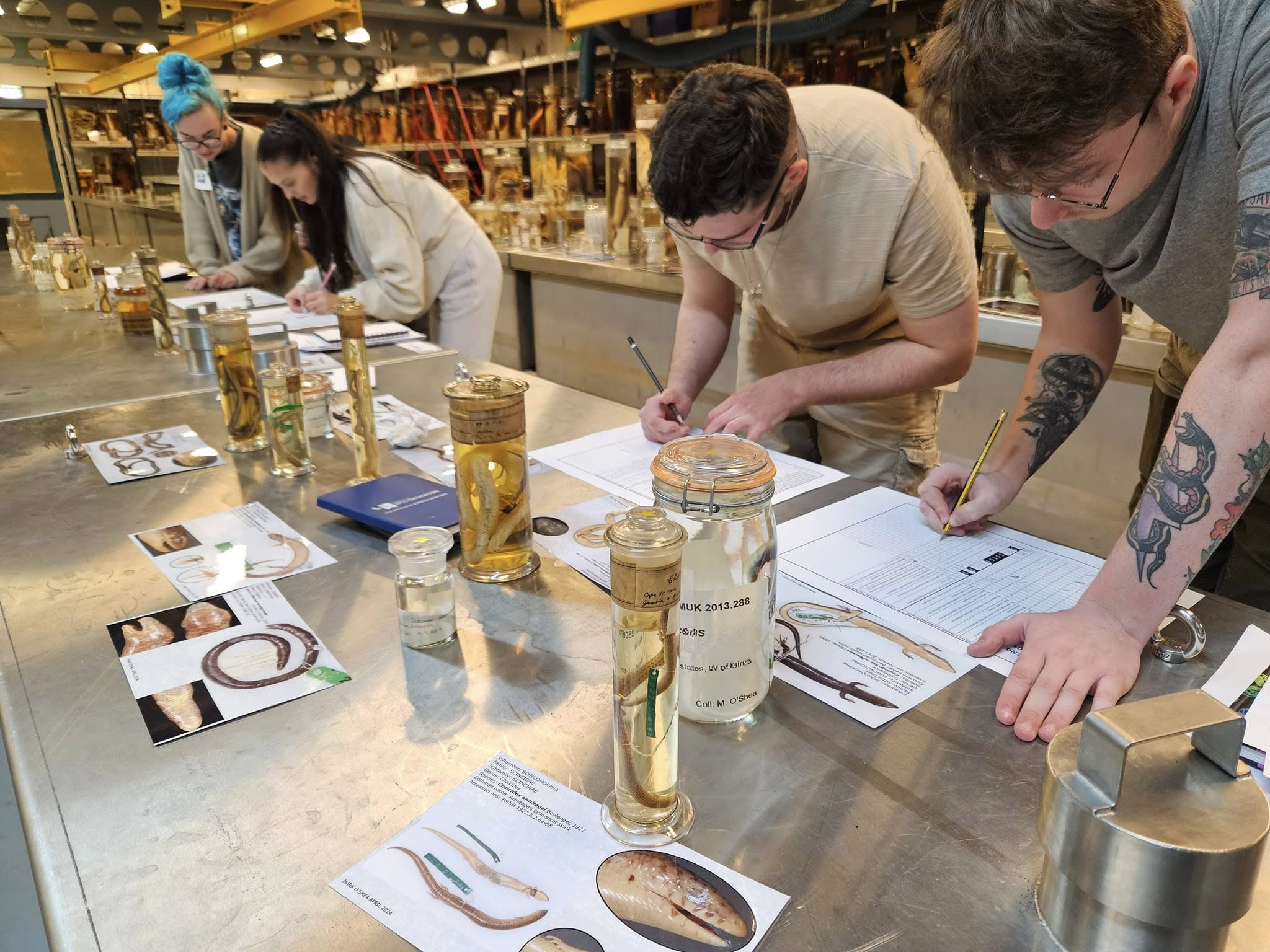
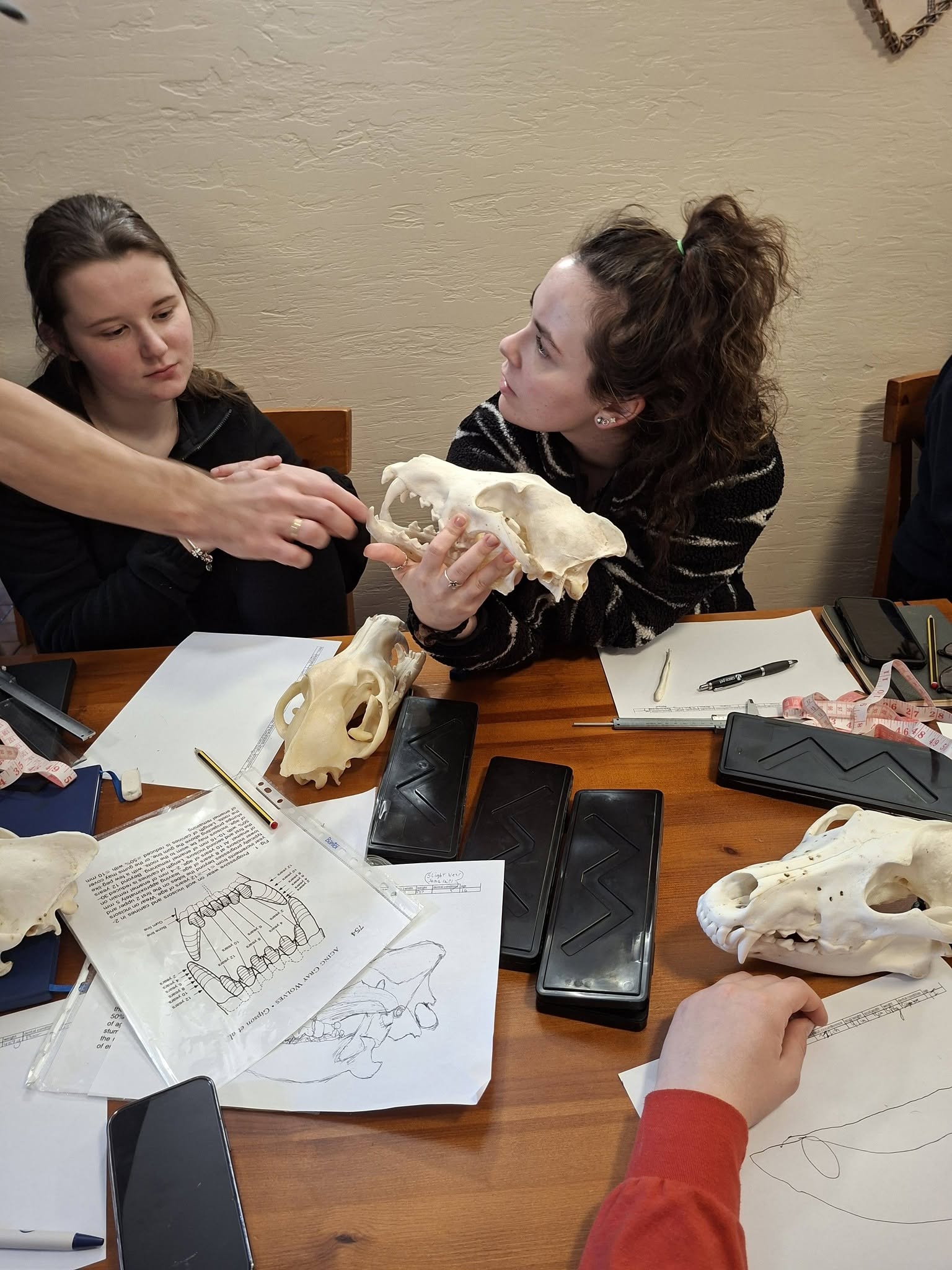
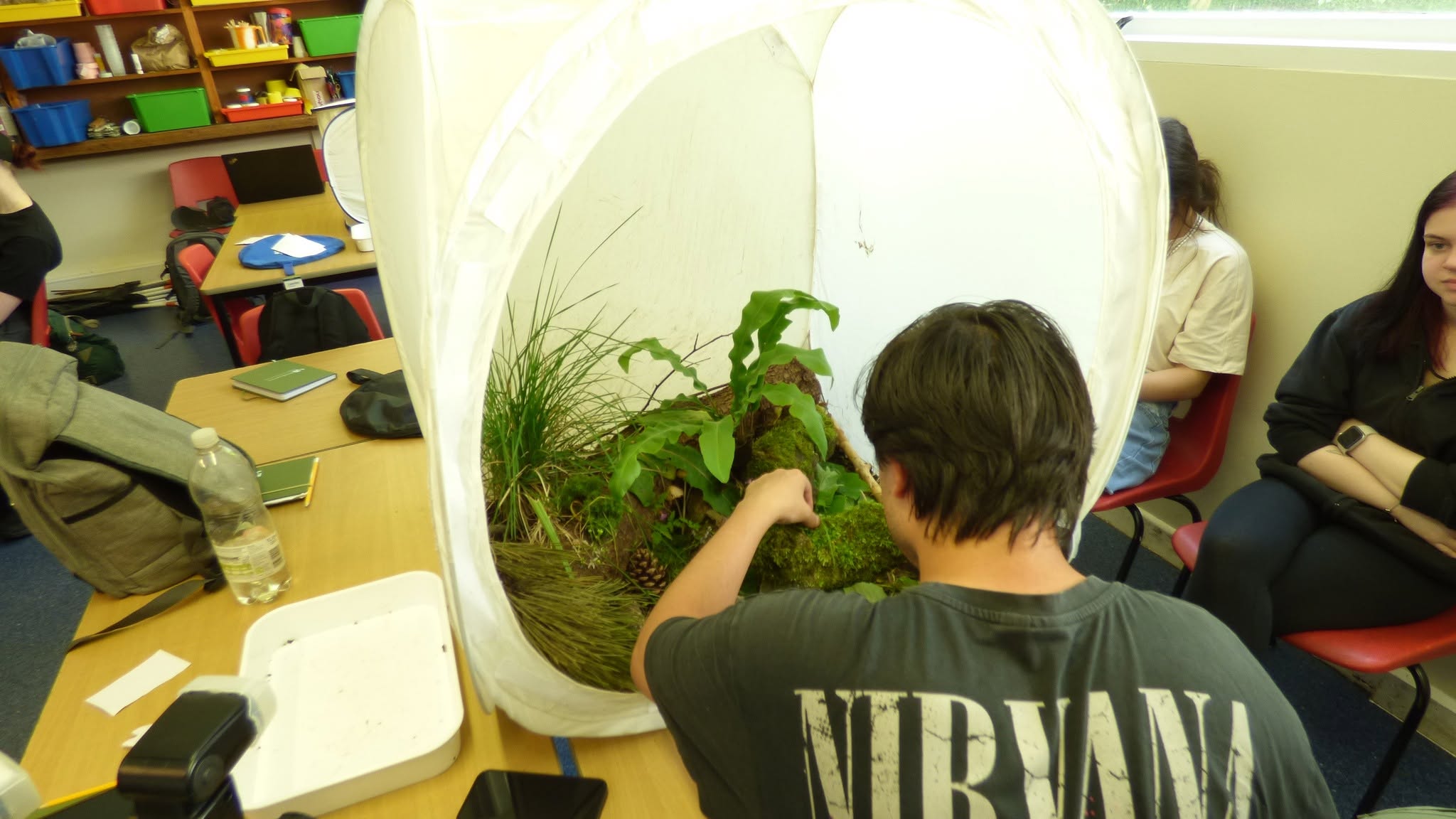
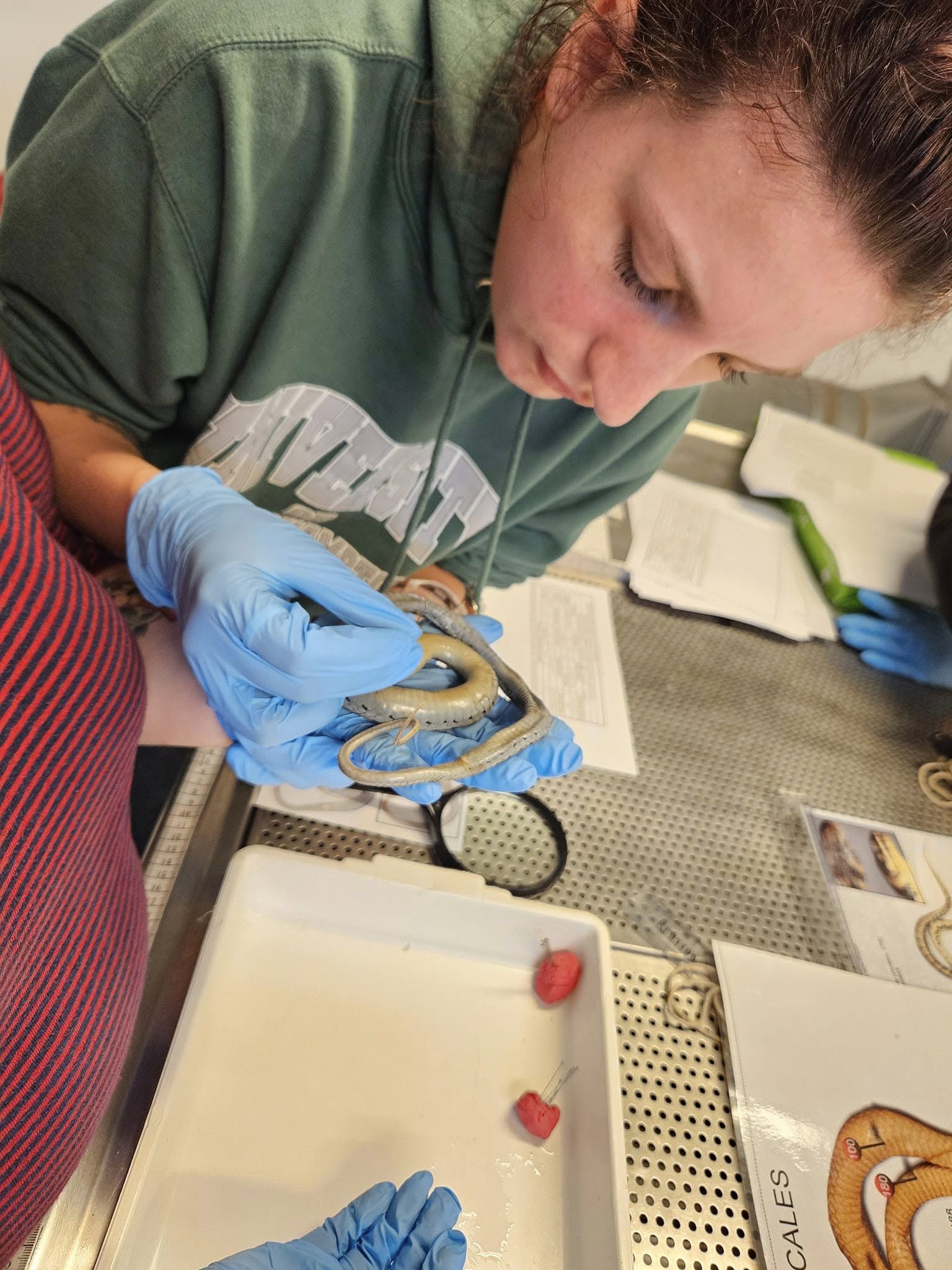
students in animal lab looking at snake specimens and observing and taking notes. Student investigating Wolf Skull student in classroom working on some grass and plant life inside a tent. student wearing blue gloves is holding a specimen of a snake.

Year three is your placement year. Rather than returning to lectures, you'll spend a full academic year working in a real conservation-related organisation of your choosing — in the UK or abroad.  You'll:

  • apply the knowledge and fieldcraft built in years one and two to genuine professional practice
  • develop workplace skills that simply can't be taught in a classroom
  • build professional relationships and a track record that can support your route into graduate employment

Year four brings you back to complete your BSc (Hons) at Level 6, where your placement experience directly informs your independent Honours Project — often continuing work with the same external partners the wider ABWC course already collaborates with, such as Dudley Zoo, Natural England and Operation Wallacea. You'll also study the conservation of vertebrate species, tackle real-world conservation problems, and examine the growing global challenge of invasive species.

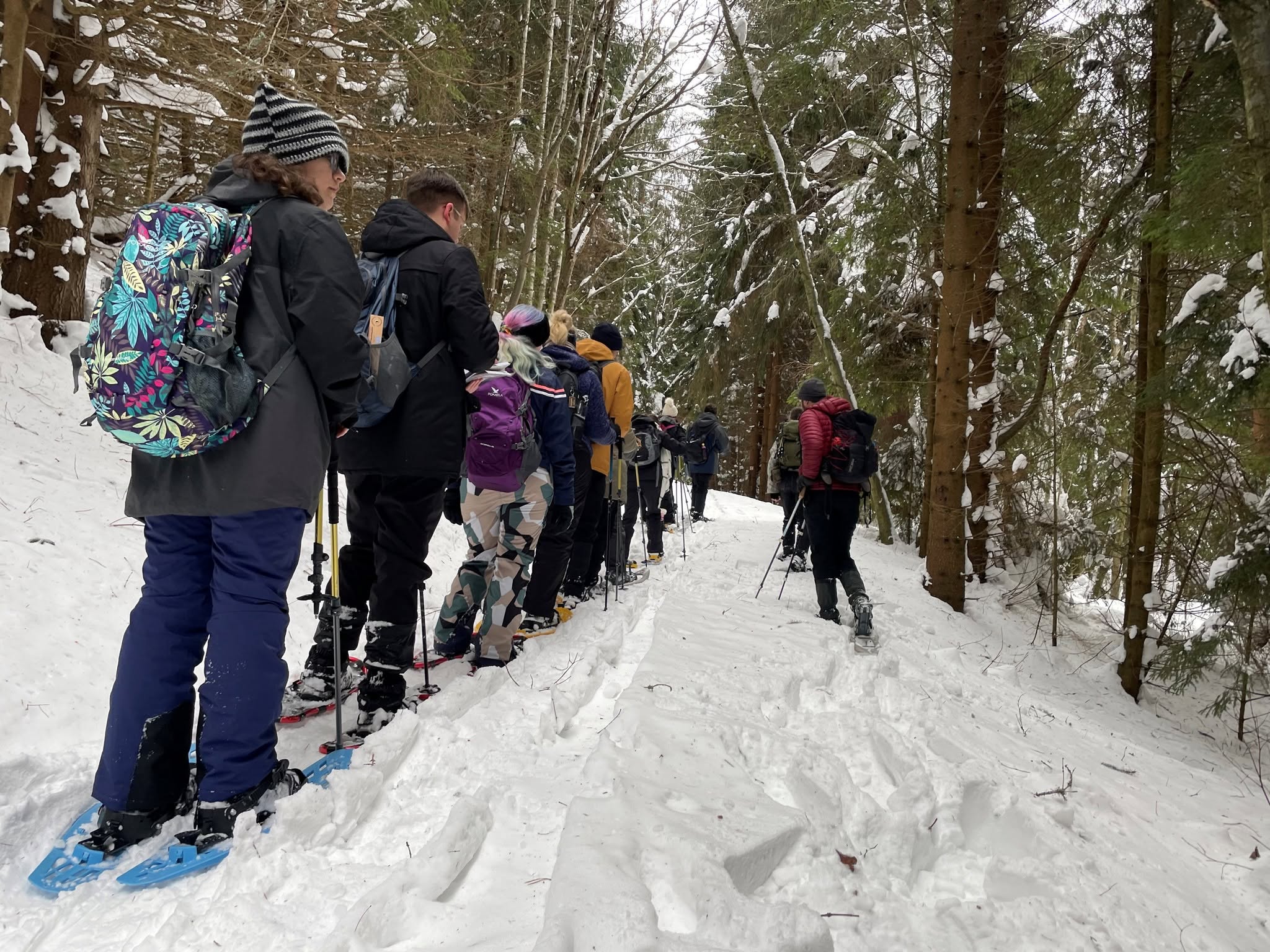
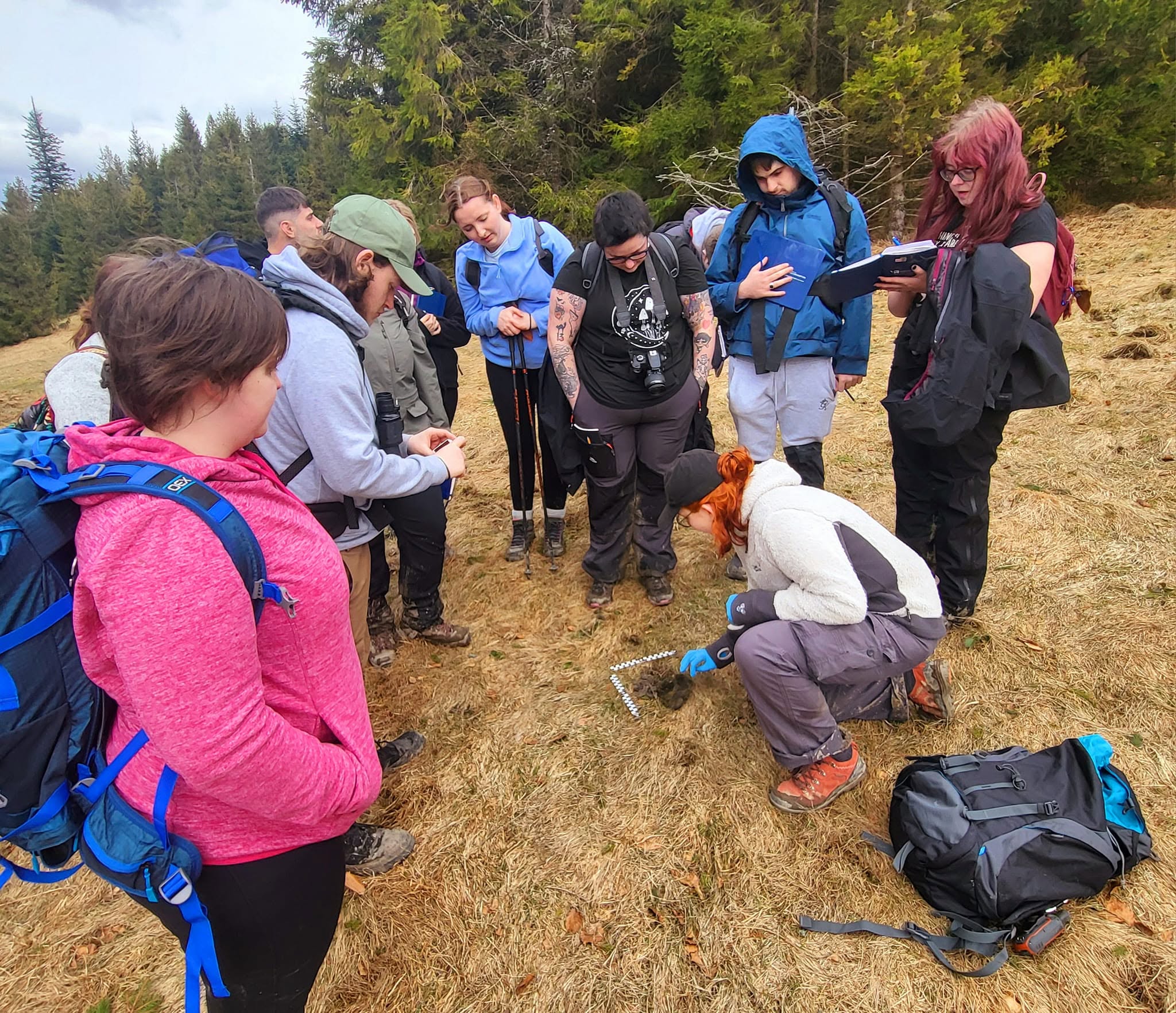
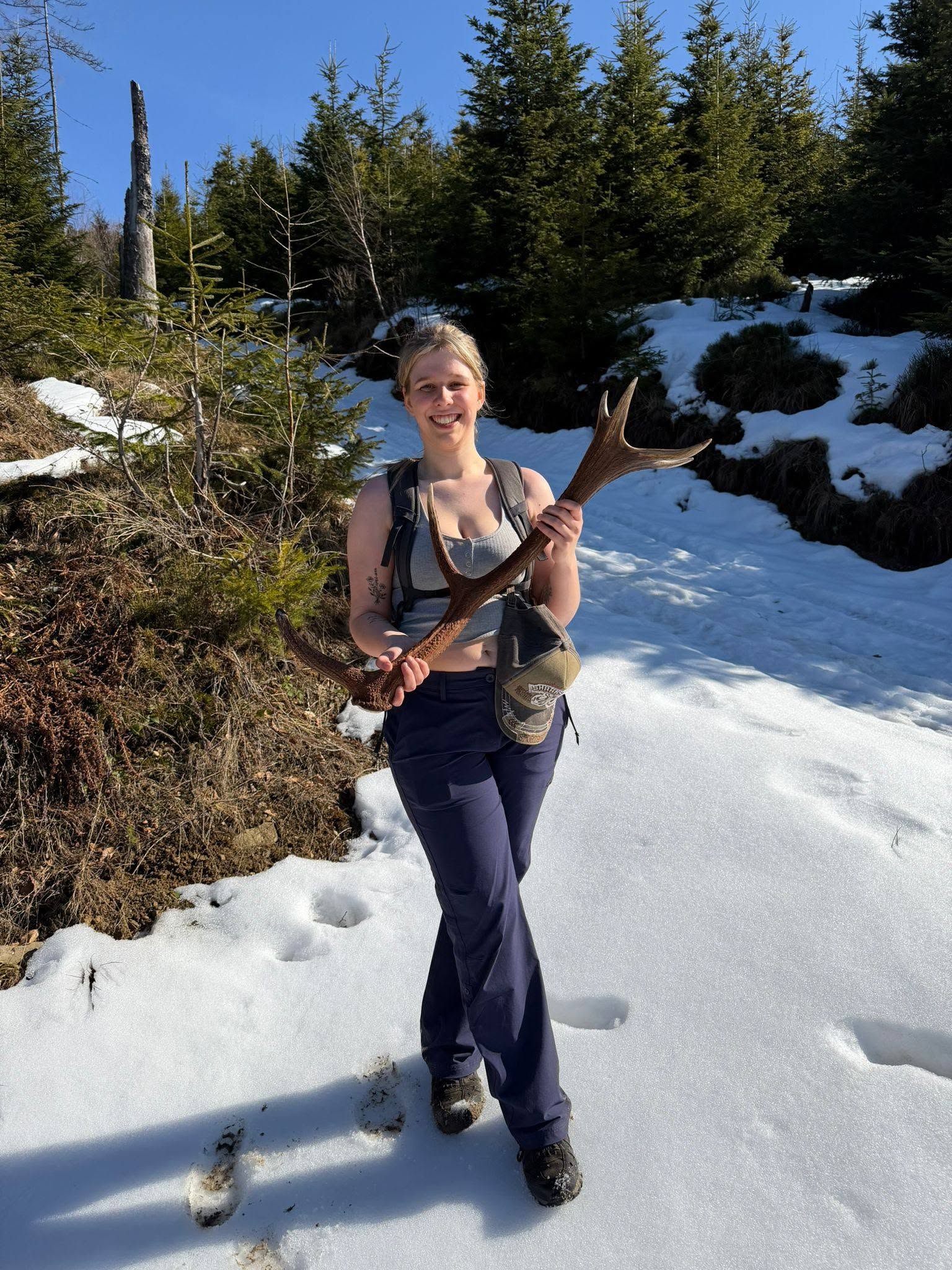
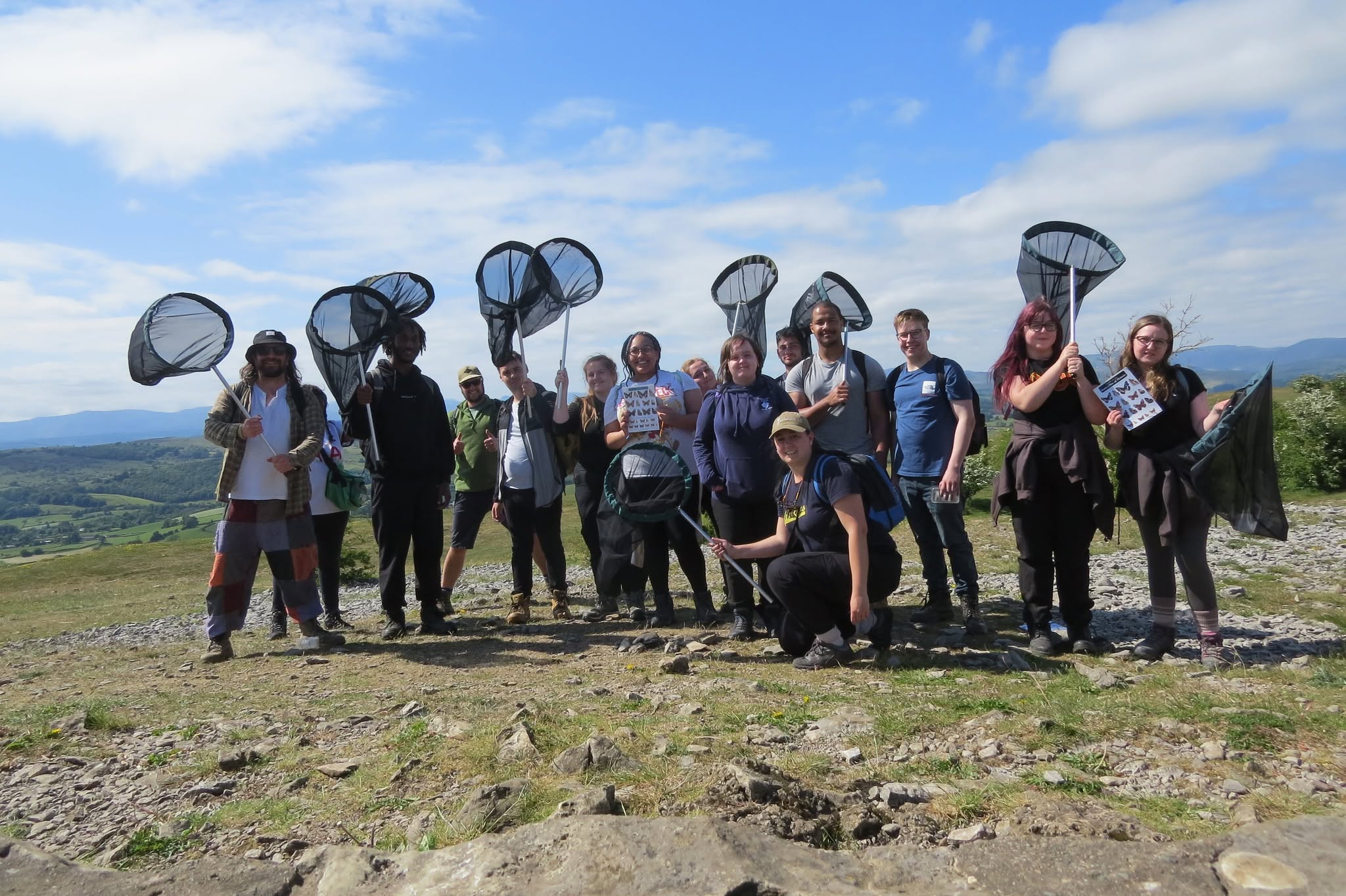
 Students skiing through the snow in woods on an international field trip Students investigating scat on an international field trip Student standing in the snow and holding a stag antler on an international field trip Students standing on top of a grassy hill holding bug nets on a field trip.

Placements on the course

When it happens
Your placement sits in year three, between Level 5 and your final year of study — a full 60-credit academic year (module 5BM097: Sandwich Placement), rather than a short break from lectures.

What it involves
You'll work in a real conservation-related organisation, applying the knowledge and fieldcraft built across your first two years to genuine professional practice. Placements must be subject-relevant, and can be based in the UK or overseas — chosen to reflect your own interests and career direction, not assigned to you.

How you're supported
You're not left to find a placement alone. A dedicated sandwich placement tutor supports you in preparing for and applying to opportunities, and a careers officer sources and advises on placements specifically for students on this route — in addition to the wider Faculty Careers Office support and Level 5 employability module available to all ABWC students.

Where placements can be
Illustrative examples — the exact organisation is your choice, provided it's subject-relevant:
•    Zoos, wildlife parks and aquaria
•    Wildlife and conservation NGOs
•    Ecological consultancies
•    Government and statutory conservation agencies
•    Research institutions and field stations

What happens next
You return to complete your final year with a full year of professional experience behind you — experience that often directly shapes your Honours Project, and in many cases continues through the same external partners the wider course already works with, such as Dudley Zoo, Natural England and Operation Wallacea.

Employability on the course

A sandwich placement is, in many ways, the employability strategy of this course made explicit. Instead of gaining industry exposure alongside your studies, you gain an entire year of it — full-time, subject-relevant, and built directly into your degree.

You're supported throughout by a dedicated sandwich placement tutor, who helps you prepare for and apply to opportunities, and a careers officer who sources and advises on placements specifically for students on this route. This sits alongside everything the standard course already offers: a Level 5 employability module, direct input from the Faculty Careers Office, and a bi-annual careers fair connecting you with subject-specific employers — many of them former ABWC students themselves.

For many students, the placement year becomes more than experience — it's the first step of their career, whether that means returning to the same organisation after graduation or using the contacts and reference built during your placement to secure a different graduate role. Either way, you graduate not just with a degree, but with a demonstrable year of professional practice behind you.

Course Modules

Additional Information

Everything you need to know about this course!

Wolverhampton gives you a thorough grounding across the full spectrum of animal behaviour and conservation science — from biological diversity, evolution and physiology through to ecology and behaviour itself — studying species from the molecular level up to whole organisms, communities and populations.

Conservation runs through everything you study, and you'll learn to apply behavioural knowledge at every scale, from site-based management to landscape-level conservation planning. Two compulsory week-long field courses — one in the UK, one in Europe — anchor this in practical experience, with further options to take part in international field courses worldwide and study abroad with partner institutions in the US and EU.

The sandwich route builds directly on this. Where the standard course offers an optional placement — for example, at local or regional zoos, wildlife collections or wildlife-related NGOs — this route offers a full, subject-relevant placement year, in the UK or overseas, chosen around your own interests and supported by a dedicated placement tutor and careers officer.

You're taught throughout by staff with extensive fieldwork, research and consultancy experience, feeding current, real-world practice directly into your teaching.

By graduation, you'll have built both the subject knowledge and the practical, professional skills to work in wildlife conservation.


Knowledge and understanding

You'll develop knowledge and understanding of:

  • how and why animals behave, both individually and within social groups
  • the legislative framework underpinning wildlife conservation and conservation practice
  • the diversity of living organisms, their structure and life processes
  • how to classify and identify animals and their habitats
  • recent advances in behavioural and conservation science, and the philosophical and ethical questions they raise
  • how to apply your knowledge of animal behaviour, ecology and biology to the real-world protection and conservation of species and habitats

Skills you'll build

  • Design and carry out behavioural and conservation research, from data collection through to analysis
  • Translate classroom learning into professional practice through a full year of workplace experience
  • Communicate scientific findings to specialist and public audiences — in writing, orally and visually
  • Build a professional network and track record in the conservation sector before you graduate
  • Work as a reflective, ethically responsible practitioner, aware of legal obligations and diverse perspectives on wildlife and conservation

Location Mode Sep intake Fee Year
Home Sandwich £9790 per year 2026-27
International Sandwich £17600 per year 2026-27

Additional Course Costs

Field courses are offered as optional International Studies modules at Level 5 (Not HND) and Level 6.

Cost is met in full by the student.

Location and precise length varies year-on-year (South Africa, Azores, India, Ecuador). Including flights and with differing destinations and time lengths this is estimated at between £1200-£2500. 

Further information on these additional costs will be provided prior to the start of your studies

The University is committed to a transparent fee structure, with no hidden costs, to help you make an informed decision. This includes information on what is included in the fee and how fees are calculated and reviewed.


If a tuition fee is not showing, we may not offer this intake for this course. Please check the start date information on the course finder for start dates.

  • 96 UCAS points
  • A Levels - grades CCC / BCD to include a Science subject, preferably Biology.
  • BTEC L3 Extended Diploma or OCR Cambridge L3 Technical Extended Diploma - grades MMM  (in Animal Management or Applied Science) 
  • Access to HE Diploma (60 credits) of which a minimum of 45 must be at Level 3 (96 UCAS point equivalence, minimum 45 credits at merit) in a Science or Science related subject
  • T Level - P - Core grade needs to be C or above-

Use the UCAS Tariff calculator to check your qualifications and points

Students must usually have studied for a minimum of two years post GCSE level. However, we will consider applications from mature students who do not have two years of post-16 study, where they have relevant work experience. Please see http://wlv.ac.uk/mature for further information.

If you've got other qualifications or relevant experience, please contact The Gateway for further advice before applying.

International entry requirements and application guidance can be found at http://www.wlv.ac.uk/international/apply

English language requirements also apply

Royal Society of Biology

"Accredited by the Royal Society of Biology for the purpose of meeting, in part, the academic and experience requirement of membership and Chartered Biologist (CBiol)."

Tuition Fees Loan (Home Fee Status):

Most students will be able to apply for a loans to pay for these subject to eligibility. To find out more information please refer to the government Student Finance website.

Changes for EU students:

The UK government has confirmed that EU students starting courses from 1 August 2021 will normally be classified as having Overseas Fee status. More information about the change is available at UKCISA:

EU citizens living in the UK with 'settled' status, and Irish nationals living in the UK or Ireland, will still be classified as Home students, providing they meet the usual residency requirements, for more information about EU Settlement Scheme (EUSS)


Self-funding:

If you don’t want to take out a loan to pay your fees or if you aren’t eligible to receive a loan, you might want to take advantage of the University’s scheme to pay by instalments: See How to pay.

For more information please contact the Gateway.


Your employer, embassy or organisation can pay for your Tuition fees:

If your employer, embassy or organisation agrees to pay all or part of your tuition fees; the University will refer to them as your sponsor and will invoice them for the appropriate amount.

We must receive notification of sponsorship in writing as soon as possible, and before enrolment, confirming that the sponsor will pay your tuition fees.


Financial Hardship:

Students can apply to the Dennis Turner Opportunity Fund.

for help with course related costs however this cannot be used for fees or to cover general living costs.


Bursaries and Scholarships:

In addition the University also offers a range of Bursaries and Scholarships packages

You can find more information on the University’s Funding, cost, fee and support pages.

Telephone

01902 32 22 22

Email

enquiries@wlv.ac.uk

Online

Order a prospectus

How we compare

Find out how our course is rated on Discover Uni, the official website for comparing UK higher education courses.

Find out how our course is rated on Discover Uni, the official website for comparing UK higher education courses.

Sandwich Course