/prod01/wlvacuk/media/departments/digital-content-and-communications/submitted-news-images/Wolves-Women-interview.jpg)
/prod01/wlvacuk/media/departments/digital-content-and-communications/submitted-news-images/CLS-cohort-2024.jpeg)
/prod01/wlvacuk/media/departments/digital-content-and-communications/images-18-19/beinghuman_teaser.jpg)
/prod01/wlvacuk/media/departments/digital-content-and-communications/submitted-news-images/Espanyol-FC-exchange.jpg)
/prod01/wlvacuk/media/departments/digital-content-and-communications/submitted-news-images/Varsity.jpg)
/prod01/wlvacuk/media/departments/digital-content-and-communications/submitted-news-images/WMBF-business-festival.jpg)
/prod01/wlvacuk/media/departments/digital-content-and-communications/submitted-news-images/WUSCAs-Shortlist-tile-1.png)
We’ve Got Turret Syndrome!
03/04/2026 - 6.20
Roger Slater
World War Two ended 80 years ago, yet its impact on football stadia in Europe is still evident. In the early years of the war, with Germany still a major force, Air Raids were carried out by the RAF targeting key industry, and none more so than the U Boat manufacturing facilities and oil and fuel storage in St Pauli, Hamburg.
In response, Hitler and his cohorts decreed that air raid shelters and defences would be built across the Reich and Hamburg was deemed to be high on the list of potential targets with over 1,000 bunkers and defences built there. Just for context, to defend against potential invasion, around 10,000 defences ranging from machine gun posts to major artillery installations and command posts were built between Norway and Spain as part of the Atlantic Wall.
Over 600 of these structures still remain in Hamburg, and one, the Flaktum IV (Flak Tower) Hockbunker at Feldstraße dwarfs them all. It was built in 300 days in 1942, by over 1,000 prisoners of the Reich as forced labour and it stands 35 metres high and is 75 metres square – around three quarters of the size of the football stadium (where Hamburg play) that it overshadows - not exactly what you’d call hidden!
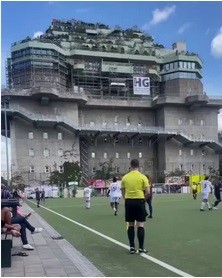
Flaktum IV (Flak Tower) Hockbunker at Feldstraße. Source: St Pauli FC
It was designed to hold over 18,000 people during the raids and in that aspect, its 3.5metres thick walls were very effective. It was however, much less successful in its prime military function of shooting down enemy bombers, as the RAF who looked out of the window and immediately knew where it was soon learnt that if they dropped tinfoil strips nearby, they disrupted the bunker’s radio systems and made it completely ineffective. Now often known as the Media Bunker, it has been restored and houses a luxury hotel, nightclubs and concert venues and also has a roof garden, most of which overlook the pitch.
In German occupied France, stadiums located near the Atlantic Wall had small defences though very little remains evident. The now named Stade de la Liberation in Boulogne-sur-Mer reflecting the city’s liberation in 1944, was at the centre of a heavily defended area with much of the surrounding area heavily fortified, but nothing remains around the stadium except for perhaps the memories of the archaeological digs that uncovered vestiges of World War Two when redeveloping parts of the stadium in 2007.
It would not be too much to expect that World War TWO left its mark on the football grounds of the UK as well, but in fact, it didn’t. Sure, there were a few grounds, Fulham’s Craven Cottage and West Ham’s Upton Park for example, that suffered bomb damage and a few more like Swindon Town’s County Ground (an Internment Camp) and Wealdstone FC’s Lower Mead (an ARP Station) that ‘saw Military Service’, but now there is almost no evidence of any physical remains, merely an occasional reference in club histories, re-hashed magazine articles (!) or newspaper reports of the time. If you research a little harder though, you can find two unique wartime structures that remain pitch-side.
The first, at The Oval Stadium, Belfast, home to Glentoran FC, is a “Type 24 Pillbox”, located on the Sydenham Hill area of the ground. It was built by the Ministry of Defence on what is the highest point in Belfast, to overlook the local shipyards and airfields.
Constructed in 1940, it survived the Belfast Blitz of 1941, which comprised four Luftwaffe air raids on strategic targets in Belfast between 7th April and 6th May 1941. The first was a small raid designed to confirm the previous reconnaissance that indicated Belfast (assumed to be on the limit of operational range for German bombers) was poorly defended. Indeed, in an extreme contrast to Hamburg mentioned above, there were only 22 anti-aircraft guns positioned around the city, six light and sixteen heavy and on the night of the first raid only seven of these were manned and operational.
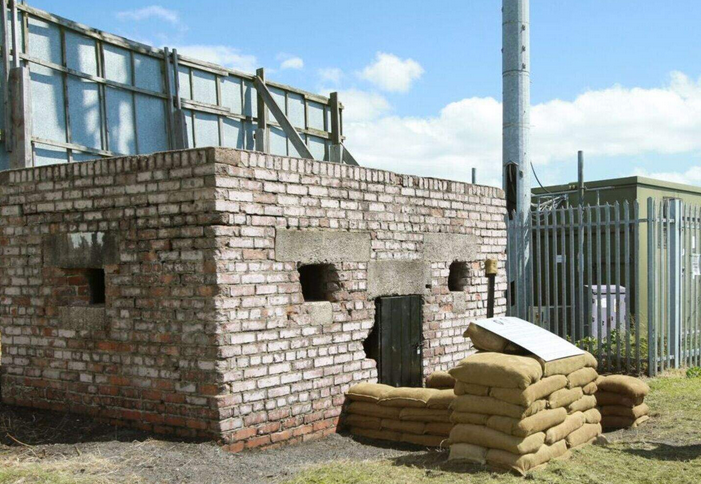
Glentoran FC, Type 24 Pillbox. Source: Glentoran FC
Yet, Belfast’s factories and shipyards were making a considerable contribution towards the Allied war effort with Harland & Wolff producing and repairing Aircraft Carriers and Cruisers (HMS Belfast for so long a feature of the River Thames in London was built there), Short Brothers were producing aircraft such as the Sunderland Flying Boat and the Stirling Heavy Bomber and James Mackie and Sons were somewhat ironically the primary manufacturer of shells for the numerous Bofors Guns in service with Army and Air Defences - just not in and around Belfast! It all combined to make the city an attractive bombing target for the Luftwaffe.
That first raid was followed a week later by the crowd at a football match taking place at Windsor Park spotting a lone Junkers JU88 circling above the ground and the city. Undisturbed by any attempt (other than pointing fingers and an occasional “Oooh, look at that”) to dissuade the pilots from completing their reconnaissance task, it was followed by 150 bombers attacking the city that evening.
There is no doubt that the Gloucestershire Regiment stationed in the pillbox in Glentoran’s ground would have had full view of the proceedings as the streets and factories and even the shipyard were bombed, and they would have watched helpless as the stadium and its surrounding houses were also destroyed, unable to react or offer more than a token resistance despite having so many anti-aircraft gun shells near at hand, primarily because they were armed only with rifles and a machine gun.
Seventy-eight years later in 2019 and still standing within the ground, the pillbox was restored by the Glentoran Community Trust, with a commemorative plaque added near the entrance to educate the occasional visitors. It is considered a unique historical feature for a football stadium and still stands on the embankment at the Sydenham end of the ground.
Unique as a Gun Emplacement within a ground and a little closer to my heart is a structure in the corner of the ground at Grosvenor Vale, former home of Ruislip Manor FC and current home of National League Wealdstone FC (though for how much longer remains a question as the club are looking to build a new stadium and the present landlords want to redevelop the ‘Vale’ site).
Currently (sadly) painted blue and white and prominent in the top corner of the ground is “The Gun Turret”. But what do we know about it and its history?
It has variously been rumoured to be a Searchlight Tower or an Anti-Aircraft Gun Tower – in fact, it was both.
There is also a building buried in the undergrowth some 30m to the rear (which you won’t have seen unless you really look) which has also been variously described as a Type 24 Pill Box (according to the London Borough of Hillingdon listing details), but it isn’t a Pillbox at all, proven both by the size and construction and qualified by the fact it was built in the middle of a field! In fact, the English Heritage listing for the two structures states the remote brick building is much more likely a Magazine for ammunition storage and/or Crew Quarters (as the gun would have been crewed by ladies of the Auxiliary Territorial Service (ATS) female gun crews, often nicknamed ‘Ack Girls’ and as the girls were legally barred from firing the guns themselves (as they were forbidden from engaging in direct combat) but they could operate the searchlights and range finders. An odd fact that freed up over 190,000 men for front-line duties.
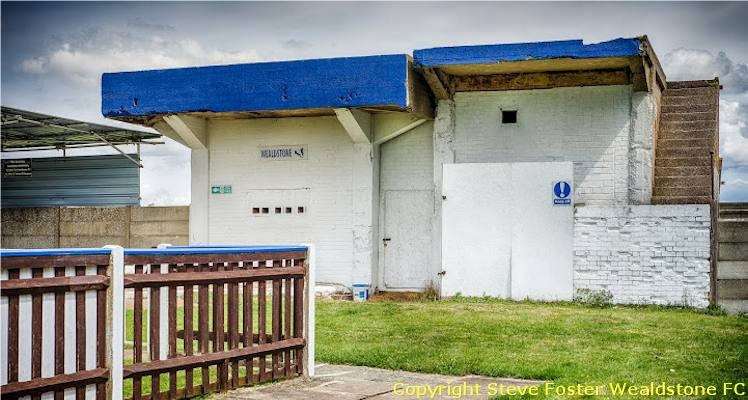
The Gun Turret. Source: Steve Foster
But why was it built? Well, this also falls into the category of “…what else do we think we know?” There’s a theme here! A common misconception is that it was obviously built to protect the approach to RAF Northolt in World War Two, but in fact, it wasn’t. That may well have been a secondary purpose merely brought about because of the physical location, but it was actually built as part of the defences for a partially underground Munitions Store, part of which is believed to remain under the Transport for London Ruislip Depot located between West Ruislip and Ruislip Gardens underground stations. Now those are some tunnels I’d like to explore!
Okay, that’s enough with what we thought we knew but didn’t - what is the actual story?
It starts with the very first days of the development of local farmland into what is now Ruislip. Originally part of Sherley’s Farm, the land was sold off for development in the early 1930s as the Ruislip housing estate was being constructed.
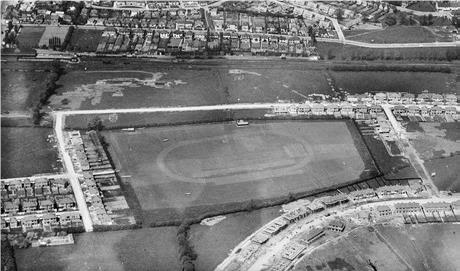
Grosvenor Vale. Source: Author’s Collection
Part of the development plan maintained the field at the end of what became Grosvenor Vale. This was subsequently sold to the Air Ministry and became an RAF Sports Ground, home to their Apprentices sports teams. There was no stadium, as shown above, in the photograph taken just before the outbreak of World War Two, as the centrally located football pitch was surrounded by a cut grass athletics track, each forming the main features of the open site. Even much of the local housing was yet to appear. Later tenants, Ruislip Manor FC at this time played on the next farm down the road, New Pond Farm, in the area where Ruislip Gardens shops now stand. It wasn’t until around 1947, that they took over the Grosvenor Vale ground, on lease from the Air Ministry.
In 1936, as part of a Government/Military move to prepare for war, three major underground depots for Ammunition Storage (10-35,000 tons each) were developed to hold incendiary and standard bombs as a reserve. These were each supported by Ammunition Parks (local storage across the UK to directly support bomber groups and Satellite sites), of which the Ruislip location was one of eight, it’s purpose as support for RAF Chilmark in Wiltshire.
By the time World War Two started, the RAF Apprentices were no longer using the undeveloped site and the field lay dormant until 1940, when following a directive from the Air Ministry and the anticipation of Luftwaffe bombing raids extending to London, it was decreed that a ‘Directorate of Fortifications and Works (DFW) Design 55087 Light Anti-Aircraft Gun Tower and Ancillary Building’ were constructed as defences for the Munitions Store.
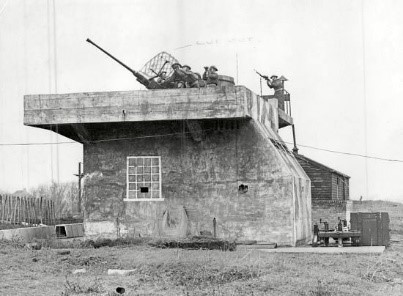
Not the Ruislip Turret - But The Same Model Lea Turret. Source: Author’s Collection
It seems that only 81 towers of this type were built and less than ten are believed to exist today, which was part of the reason that the ‘Wealdstone Turret’ was granted a Grade II listing in May 2013, meaning it cannot be demolished nor changed in any way – in fact, it needs permission if it is to be repainted, perhaps next time in the scheme more applicable to its period of service! The Lea Turret in the picture above, reflects the design of the left-hand side of the Wealdstone version, which has an additional and originally separate Searchlight/ Range Finder building directly to the right. This was originally separated by around one metre, but the gap was infilled for storage in the 1960s.
Of equal importance to the rear is the remote Magazine (photographed to the right) before the surrounding undergrowth had grown over the building! Built to differing specifications, often in adapted Anderson shelters, few of these have survived in any condition.
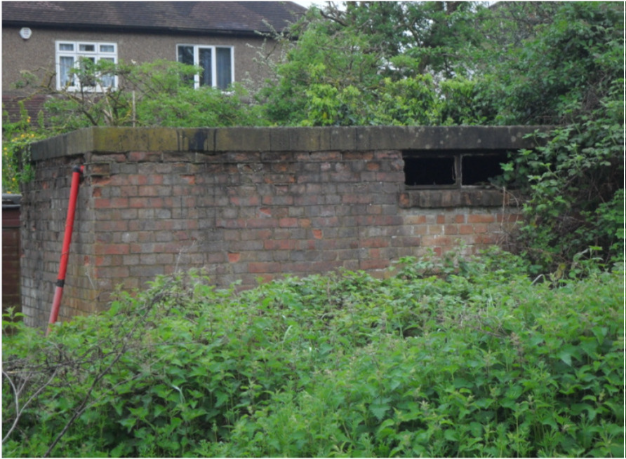
The Magazine: Source: Author’s Collection
The Gun Tower was designed to raise a 40mm Bofors gun and its operational equipment above surrounding obstacles in order to achieve an all-round field of fire but by late 1940, this design had been superseded by a simpler, easier to construct, steel-framed type.
The construction of this Turret and Light Tower comprises two elevated platforms, approximately five metres high, located immediately adjacent to each other, originally leaving a narrow (one metre) gap between them at platform level. The Bofors gun would have been mounted on the larger (north-western) platform and its range predictor and/or searchlight on the smaller (south-eastern) one.
The range finder was used to calculate enemy aircraft speed and height and thus ensure the accuracy of the gun. The separation between the two buildings was to try and ensure that the gun’s recoil when fired did not disrupt the predictor. The raised hexagonal concrete mount for the Bofors gun can still be seen in the centre of the gun platform.
The concrete frame has full-height brick infill which has been later extended to the rear (north-east) of the range predictor platform to form a concrete-roofed extension. This had a large opening in the south-eastern elevation, which is now blocked. Small openings with concrete frames are set high in the brickwork to provide ventilation. There is another large, blocked opening in the north-east wall of the infill of the gun platform.
Internally, the range predictor platform has two floors and the gun platform just one. An external concrete staircase along the south-east elevation provides access from the ground floor to the first-floor ammunition store in the range predictor tower (the entrance door in the south-west elevation is bricked up) and then up to the gun platform.
At ground level, the range predictor tower has a pillbox-type room with a low ceiling whereas the gun platform has a single high-ceilinged room on the ground floor. This room and that in the extension to the rear of the range predictor platform would have housed the operations room and generator. Between the two platforms is a full height ‘entrance lobby’ with an entrance in the south-west elevation.
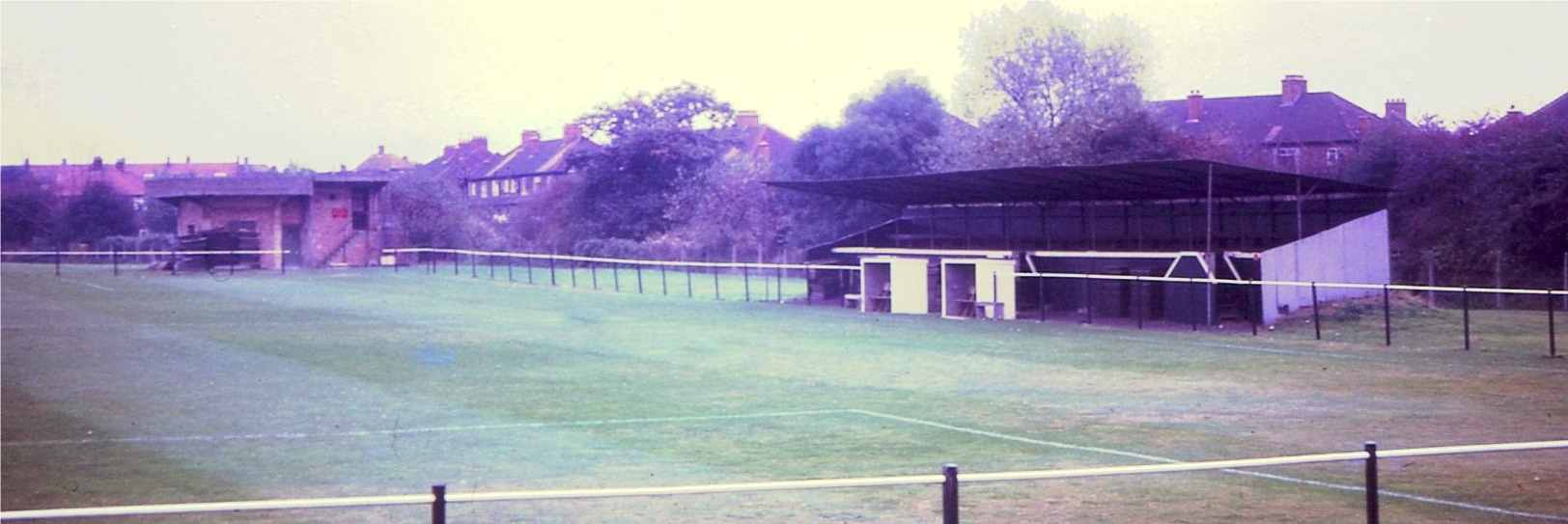
The ground in the early post war years, home to Ruislip Manor FC, the turret was still a stand-alone feature in the corner of the ground! Source: Author’s Collection
We cannot be certain if the gun was ever fired in anger, but a look at look at the Bomb Map of the area in World War Two (https://bombsight.org) would strongly indicate that it was!
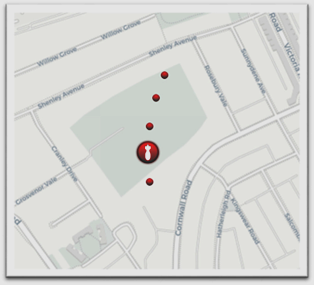
Bomb Map. Source: Bombsight
Indeed, it may actually have been the target for a particular bombing raid between October 7th 1940 and 6th June 1942, when a string of High Explosive bombs were dropped directly across the playing fields with no others in close proximity!
Additionally, a few years ago, the Groundsman was driving his tractor across the field behind the stadium, adjacent to the tower, when the ground underneath him gave way. Once he and the tractor had been rescued the large hole was looked into. Sadly, about 80% full of water, some corrugated iron and conduit was exposed, indicating that it may have been part of a tunnel of some sort. There are no records of any such installation but a discussion around the same time with an elderly local resident re-ignited their memory of playing in the tunnel(s) after the war. Very possibly an Air Raid Shelter or something similar? Or even something entirely different!
The hole is still there and still full of water…one day it may drain enough to allow further investigation!
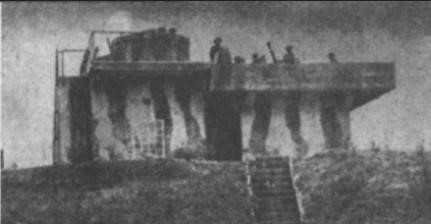
A good likeness of the turret and tower at Grosvenor Vale, as they may well have been during World War II: Source: Author’s Collection
Biography
Roger Slater was born in Harrow in the late 1950s and has moved around a bit and retired to Devon with wife of 24 years, Helen. He originally trained as an Electrical Engineer but worked for almost 40 years in Building Services Technologies, primarily HVAC control systems and Electronic Security. Roger retired in 2018 having run his own Engineering Consultancy for almost 15 years.
For relaxation and hobbies, he writes, mainly about his football club, Wealdstone FC and has published eight books including a club history since 2002. He does not class himself as a historian, just an enthusiastic amateur.
He also writes for a fanzine/magazine called Where’s The Bar that has just relaunched.
Otherwise, hobbies are upcycling and building ‘strange’ lighting out of people’s rubbish and occasionally painting, though he also buys and sells at auctions and on the internet (mainly football related or antiques).
In respect of other sports, he will watch most but follows the Toronto Blue Jays avidly in baseball, as a result of working on and off in Canada in the early nineties.
Roger also reads and collects books on World War One, in particular personal biographies and war diaries as opposed to battle histories…
All of that could change tomorrow or on any other day if something else takes his fancy as he will give most things a try if they appeal!!