

/prod01/wlvacuk/media/departments/digital-content-and-communications/submitted-news-images/Mr-Speaker-2.jpeg)
/prod01/wlvacuk/media/images/2019-re-design/video-banner/national_brownfield_institute_top_banner.jpg)
Key information
The responsibility for Sustainability sits under the Chief Operating Officer (Dr Pete Cross) and the Director of Estates and Facilities (Robert Gilbert).
There are two Sustainability Managers at the University based in the Estates and Facilities Directorate:
- Charlotte Baker – C.Baker23@wlv.ac.uk – Responsible for Energy and Utilities, Decarbonisation, Biodiversity, Recycling and Engagement Activities
- Zainab Own – Z.Own2@wlv.ac.uk – Responsible for Carbon Emission reporting, Sustainable Education, ESG Reporting and energy demand reduction
Sustainability is further supported by many teams from across the University to achieve its collaborative goals.
Earth Day celebration for University students recognised for commitment to sustainability 22/04/2026
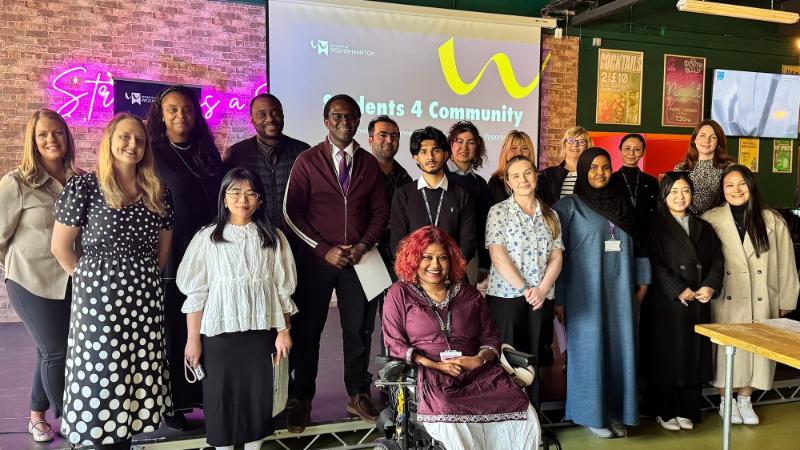
Fifteen University students have been recognised as Sustainability Champions this Earth Day, after achieving a University digital badge and certificate that acknowledges their commitment to sustainability through academic and careers-focused projects.
The students, drawn from a range of disciplines, completed the WLV Sustainability Champion Digital Badge, a reflective learning initiative designed to help students explore sustainability through their studies, placements and practical experiences, while linking this learning directly to future careers and employability.
Certificates and digital badges are being awarded this week, with a celebration event taking place earlier today, bringing together students and staff to mark the achievement and reflect on their sustainability journeys.
The initiative supports the University’s wider sustainability ambitions and the Green Innovation Corridor, encouraging students to engage with the United Nations Sustainable Development Goals (SDGs) and to recognise that sustainability spans social, environmental, economic and employability dimensions.
One Sustainability Champion, Sharanjit Rattu, BA (Hons) Education Studies, said:
“Our habits, our views, our actions matter. Adjusting your views and habits changes things for the better. We are all one and have the right to act responsibly for our planet, even the smallest changes can make a big difference.”
Another student awardee, Shradha Limbu, MSc Computer Science with Professional Practice, highlighted the long-term impact of the programme, adding:
“Moving forward, I aim to integrate these values into my practice both as a student and in my future professional career. By carrying these values into my future behaviour and professional practice, I hope to contribute to a more just, equitable, and sustainable world.”
The Sustainability Champion Digital Badge is led from within the Student Success Directorate and has recently been expanded across the University following strong engagement in its early phases. It encourages participants to reflect on how sustainability connects to their subject area, personal values and future professional practice, while also helping them articulate these skills to employers.
Dr Laura Nicklin, Student Success and Graduate Outcomes Lead, who created and oversees the initiative, said:
“Our Sustainability Champions work is so important to staff and students at the University of Wolverhampton, as well as the wider Wolverhampton community. By connecting the global goals to their own values, studies and careers, participants begin to see how sustainability can support their success, strengthen their employability and position them as active contributors to a changing world.”
The University will continue to grow the Sustainability Champions initiative as part of its commitment to embedding sustainability across teaching, learning and campus life.
SDG Ambassador Reflection
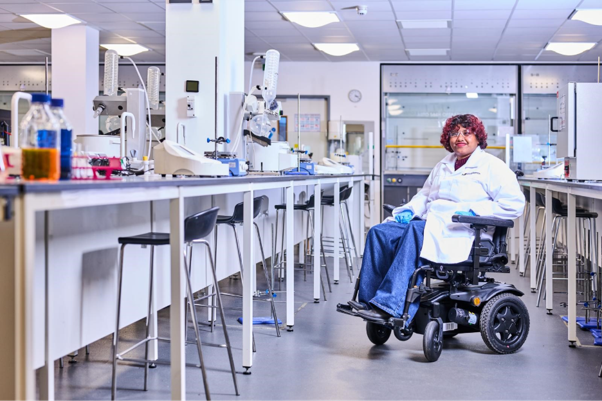
As a medical student, I am deeply inspired by the intersection of environmental health and human survival. While all 17 goals are interconnected, my reflection is primarily driven by:
SDG 3 (Good Health and Well-being): This is the core of my professional identity ensuring healthy lives and promoting well-being for all.
SDG 6 (Clean Water and Sanitation): I am inspired by the fact that healthcare cannot exist in a vacuum; without clean water and sanitation, clinical outcomes are compromised before a patient even enters a hospital.
SDG 13 (Climate Action): The growing health crisis caused by air pollution and extreme weather events has inspired me to look at how the health sector can lead in sustainability.
- Learning and Reflection
Preventative Care vs. Reactive Care: My studies have shown that achieving good health and wellbeing requires moving beyond just treating illness. It requires addressing the social determinants of health poverty, education, and environment.
Sustainability in Practice: In my clinical experience, I have observed the high volume of medical waste produced. This led me to research how healthcare systems can reduce their carbon footprint without compromising patient safety, a key takeaway from my sustainability activities.
The Power of Education: Reflecting on my own learning journey, I’ve realized that health literacy is one of the most powerful tools for sustainability. When patients are educated about their health, they are more resilient.
- Future Practice
I intend to "practice what I preach" by integrating these values into my daily work as follows:
As a Student: I will remain an advocate for sustainable practices within my university, such as promoting paperless resources and engaging in healthcare-specific sustainability forums. I will continue to seek out modules that bridge the gap between medicine and environmental science.
As a Future Health Professional: Resource Management I will be mindful of medical waste and advocate for the procurement of sustainable supplies in the clinical environment.
Holistic Patient Advocacy: In my future practice, I won't just treat symptoms. I will advocate for my patients' needs regarding their living environments, acknowledging that access to clean water (SDG 6) and safe air (SDG 13) are vital prescriptions for health.
Leadership: I aim to lead by example, mentoring junior staff and peers on how the health sector can contribute to the United Nations 2030 Agenda.
- Conclusion
The health sector is uniquely positioned to drive the SDGs forward. By committing to these goals, I am not just becoming a better clinician; I am becoming a global citizen dedicated to a healthier, more equitable world.
Sustainability Champion Staff Network at the University of Wolverhampton
The University is seeking to support UN Sustainable Development Goals.
What are Sustainability Champions?
Sustainability Champions are a network of volunteers who provide a local focus point for sustainability issues.
They encourage their peers to make small changes to everyday practices that collectively make a big difference across the University.
Sustainability Champions will also provide key information to Estates and Facilities about local areas for improvement.
ESG Champions 2025 Information
The Network
Each Sustainability Champion acts as champion for environmental issues within their workplace, department, or college and as a point of contact between the Sustainability Team and department staff, students, and senior management.
Support and information will be provided to Champions regarding ways to support Sustainability at the University.
Like all organisations of this size and complexity, The University of Wolverhampton has a major impact on the environment.
Due to the diverse and extensive nature of the University of Wolverhampton, there is no one-size-fits-all approach so there needs to be a local focus for activity to make the message relevant and effective.
Sustainability Champions play a key role in providing this local focus, understanding the culture of their Faculty, School, Department and Campus. Champions are empowered to encourage others to change their attitudes and behaviour to take environmental aspects into consideration.
How do I become a Sustainability Champion?
We are looking to have full representation across the University with at least one representative from each Faculty, School, and Department across all Campuses.
If you would like to join the network of Champions, please email the Sustainability Manager, Estates & Facilities at c.connor@wlv.ac.uk or Z.Own2@wlv.ac.uk
What can I do to help?
As Sustainability Champion you will be asked to feedback issues to Estates and Facilities regarding matters including energy use and recycling.
You are encouraged to remind team members to save energy by turning off computer monitors, lights and to reduce waste by recycling more.
You will be encouraged to raise ideas with your team and your manager. You will then be invited to share and discuss your ideas at Sustainability meetings set up by Estates and Facilities should you wish.
Volunteers will be supported by Estates & Facilities and will be part of an active network who shares ideas, practices, and information from across the University. Estates and Facilities will share information with Champions such as recycling rates and energy consumption. You will be encouraged to share this information within your department encouraging actions to monitor and reduce energy use and improve recycling rates.
We ask that Sustainability is factored into decision-making when purchasing goods or procuring services to reduce the impact on the environment by sourcing local, recycled, and efficient goods.
We anticipate the role will take around 2-4 hours of time a month, but this can be flexible.
Monthly Sustainability ‘Mission’
There will be a monthly ‘mission’ for Sustainability Champions provided as a guide to encourage areas of development. Many areas of focus will take longer than a month to implement and to see improvements made and Champions will be asked to continue to support positive changes throughout the year. Where possible, we will ask that you can provide further quantifiable information about improvements made in your areas to promote the success of the Champions.
|
Month |
Mission |
Comments |
|
September
|
Waste and Recycling |
Remind your colleagues and your students to separate waste and recycling appropriately. Inform the Sustainability Manager of any queries you have. Can you re-use, repair or recycle something to stop it going to waste? |
|
October |
Switch it off |
Remind your colleagues to switch off as much as possible including:
|
|
November |
Sustainability Opportunities in your Department |
Discuss Sustainability Opportunities with your managers, teams and colleagues to identify areas for improvement such as:
|
|
December
|
Take the WWF Carbon Footprint Quiz |
Take the quiz here: https://footprint.wwf.org.uk/ Take action to reduce your carbon footprint. |
|
January |
Make a pledge |
Make a personal pledge to reduce your personal carbon footprint in some way. Ideas include:
|
|
February |
Reduce single use plastics and cups |
Remember to bring re-usable water bottles, mugs and food containers to reduce waste from disposable cups and containers. |
|
March
|
Reduce printing |
Reduce printing where possible to save paper usage. |
|
April |
Waste and Recycling |
Remind your colleagues to separate waste and recycling appropriately. Inform Sustainability Manager of any queries you have |
|
May |
Switch it off |
Remind your colleagues to switch off as much as possible including:
Plug in fans should not be used. |
|
June |
Sustainability Opportunities in your Department |
Reflect and review the Sustainability Improvements you identified in November. Have these been actioned? Do you require additional support? Have you made a positive impact? Do you have a case study you would be willing to share? |
|
July |
Summer switch off |
Are there areas in the University currently not in use or empty? Could cooling be reduced in these areas to save energy? Could computers and equipment be switched off? |
|
August |
Sustainable preparation for students return. |
Please think Sustainably in your preparation for the students return. Could you recycle resources? Could you use more digital resources? Could you include Sustainability in your teaching? Could you incorporate some of the UN Sustainable Development Goals? Can you use Sustainable transport to get to your teaching destinations/site visits? |
Stewart Chatham – As the Campus Manager at the Telford Campus, Stewart monitors lighting on and off times, footfall, and usage to ensure that the campus is managed efficiently.
Joe Craddock – Joe is the Sustainability Champion for Capital Projects in Estates and Facilities. He supports projects to ensure that they recycle, embed principles of the circular economy and ensure that energy efficiency is at the heart of designs.
Daniel Howe – Daniel is a caretaker at the Walsall Campus, he works tirelessly with his team to maintain the allotment areas, as well as supporting biodiversity by planting vegetation and looking after the grounds at the campus.
Dr Hamid Pouran – Our Academic lead and leader of the Sustainability Research Labs, Dr Hamid’s expertise encompasses climate change, policy impact, and renewable energy sustainability.
Mark Porter- As the Campus Manager at the Walsall Campus, Mark monitors campus energy usage to ensure the campus is run efficiently, he is also the recycling champion and decarbonisation lead at Walsall Campus.
Samin Wright – As the Moving manager, Samin ensures all furniture and stationary are sourced responsibly across campuses and that they are reused or donated to charities.
Luke Gillon – Our IT manager ensures all IT equipment and monitors are off while not in use and that all IT waste is recycled.
Dr Jenni Jones – Professor in Coaching and Mentoring is supporting Sustainable Education and developing content to support the United Nations Sustainable Development Goals.
Professor Roya Rahimi – Founder of the Marketing Research Hub and Principal Investigator of the British Council-funded Elevate project, supports women’s empowerment through digital upskilling and entrepreneurship in post-disaster Türkiye. She also leads initiatives across the West Midlands advancing SDGs 5, 8, 9, and 10. Publisher of “Sustainable development: The role of sustainability committees in achieving ESG targets"article, ranked among the top 10% most-viewed papers in Business Strategy and the Environment Certificate
Professor Suresh Renukappa - an award-winning strategic thought leader in the area of sustainable smart innovation. His research focuses on generating sustainable value by addressing major societal, economic, and environmental challenges. He has successfully led 54 research projects and authored over 300 refereed publications, including journal articles, book chapters, books, and conference proceedings, along with 24 policy briefs. He has supervised 25 PhD researchers and contributed to REF 2014 and 2021 in the area of sustainability. He also serves on the editorial boards of three international sustainability-related journals. His work spans multiple sectors globally and has influenced policy, including contributions to the UK Treasury, the Public Accounts Committee, and national security and climate adaptation inquiries. He is also closely working with the United Nations to accelerate the future of AI and sustainability leadership.
Professor Subashini Suresh - a world-leading researcher in knowledge management, with a strong focus on advancing the United Nations Sustainable Development Goals (SDGs). Her work explores how effective knowledge creation and organisational learning can drive sustainable practices across both public and private sectors. She has led interdisciplinary projects aligned with key SDG targets, particularly in sustainable cities and industry innovation, delivering impactful solutions through research, cross-sector collaboration, and policy engagement. Her work has been cited in the UK Parliament’s House of Commons Committee of Public Accounts report titled "Resilience to Flooding" (Seventh Report, Session 2023–24, HC 71, published 17 January 2024) and Use of Artificial Intelligence in Government (Eighteenth Report of Session 2024–25, HC 356, Published on Wednesday 26 March 2025).
Dr. Fideline Tchuenbou-Magaia- Reader (Associate Professor) in Green Technology, is the founder of the Wolverhampton Zero Research Group and supports the United Nations Sustainable Development Goals (SDGs) through education, outreach, and research. Her work bridges disciplines to advance the circular and green economy, clean technologies, and carbon-neutral solutions. She has led numerous interdisciplinary and intersectoral projects driving progress across multiple SDGs, including:
- Green Horizons project– a British Council-funded transnational education partnership with Egypt to advance green innovation and sustainability in chemical and natural gas engineering (SDGs 4, 9, 10, 12, and 13).
- ReACTIVE Too Project (https://reactivetoo.org/) – addressing SDGs 3, 7, 9, 12, 13, and 17.
- Sustainable formulated products and biobased packaging (SDGs 9, 12, 14 and 15)
- Erasmus+ Strategic Partnership: Solar Energy Technology Training (SETechTra) – developing modules for STEM undergraduates (SDGs 4, 7, 9, and 17).
- Innovative Off-Grid Energy Storage using Na-ion battery for Sub-Saharan Africa - Innovate UK Energy Catalyst Round 8 – Developing an affordable mobile solar power systems for clean energy access (SDGs 3, 7, 8, 9, and 13).
Dr Mohammad Tammo – Dr Mohammad is an academic and consultant specialising in Circular and Sustainable Architecture, and Sustainable Urbanism, with over 20 years of experience in developing innovative, low-impact design solutions. He focuses on creating practical strategies to minimise buildings' environmental impact through innovative design and community-oriented architectural practices. He holds degrees from the University of Aleppo, Edinburgh College of Art, and the University of Bolton. Currently, he leads the BSc (Hons) Architectural Design Technology programme at the University of Wolverhampton in the United Kingdom.
Dr Amy Louise Blaney - As Knowledge Exchange Coordinator within the Research and Enterprise Directorate (RED), Amy provides cross-institutional support for knowledge exchange activity, ensuring alignment with overarching strategic objectives including our Environmental, Social, and Governance missions. She is passionate about connecting university expertise to maximise its wider societal, cultural, environmental and economic impact and, in previous roles, has supported the implementation of the United Nations Sustainable Development Goals into teaching, learning, and researcher development.
Explore our University ESG Strategy 2035.
ESG Strategy Targets and Actions
We have published a 2026 update report marking progress against our ESG Strategy and Targets Update Spring 2026.
Sustainability Highlights from 2023-2024:
Sustainability and the Environments 2024 Highlights
Read our Sustainability Policy here: Sustainability Policy July 2026.pdf
Find out Action Plan here: ESG Action Plan (Excel doc 15k)
The University of Wolverhampton has developed a Carbon Management Plan to set out our ten years ambitions, principles, and commitments to respond to climate crisis
Annual Carbon Performance Reports are published here for each academic year.
2024-25
Carbon Performance Report 2024-25
2023-24
2023-24 GHG Report - University of Wolverhampton- v3.0
2022-23
UoW Carbon Performance Update September 2023
2021-22
UoW Carbon Performance Update - April 2023
Renewable Energy
The university generated 83,976 kWh renewable energy on-site from Solar PV during the academic year 2024-25. This means that 1.17% university electricity is generated by on-site renewables.
The university supports renewable energy generation by purchasing electricity backed by Renewable Energy Guarantees of Origin (REGO) certificates. This means that 21% of university energy usage is backed by renewables, after factoring in energy usage from gas for heating and hot water.
The university is committed to Sustainable Procurement.
The university is a responsible investor and you can find the Ethical Investment Policy here: Ethical Investment Policy - University of Wolverhampton
Read the Strategy here
The Catering Department is committed to Sustainability:
View how we are doing this in our Taste@ Sustainability Bites
The university has an ESG Communication and Engagement Plan April 2026 setting out its vision for the university community.
Opportunities are provided for students and staff to engage in Sustainability at the University.
Green Events Calendar
As part of raising awareness for Sustainability, you will find a calendar of events below for the academic year 2026/27. Events may be added throughout the year so do check again.
|
Event |
Date |
Location |
|
Waste Awareness – Freshers Week |
15th September 2026 |
City Campus |
|
Waste Awareness – Freshers Week |
24th September 2026 |
Walsall Campus |
|
Sapling Planting with volunteers |
November 2026 |
Springfield Campus |
|
Sapling Planting with volunteers |
November 2026 |
Walsall Campus |
|
Earth Day: Student Sustainability Champion Celebration |
April 2027 |
City Campus |
|
Earth Day: Staff Sustainability Champion Celebration |
April 2027 |
City Campus |
As part of Green Themed Week Activities at the university, we hosted an event to celebrate Women in Engineering Day on 23rd June 2026:
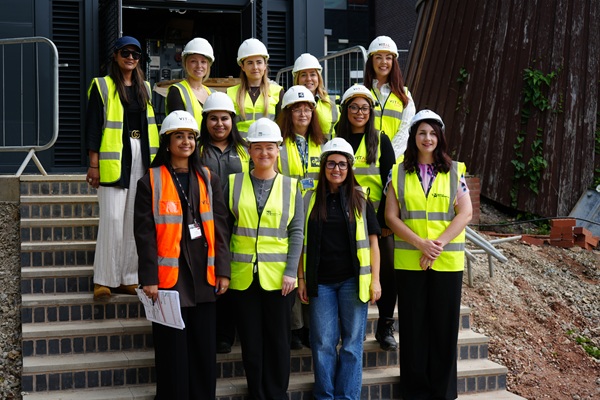
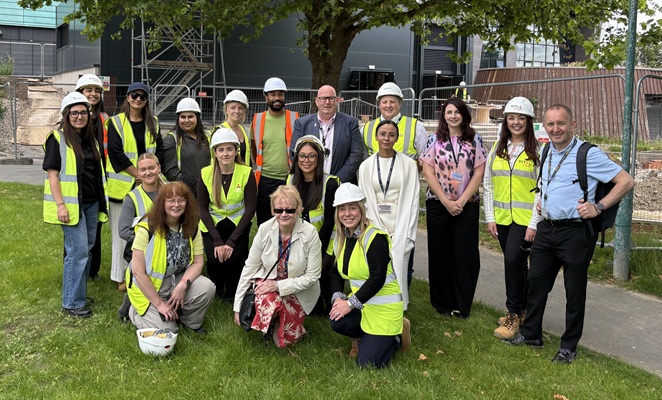
University of Wolverhampton marks Women in Engineering Day with industry event championing diversity and decarbonisation
The University of Wolverhampton is marking International Women in Engineering Day by bringing together leading organisations in building services engineering to champion diversity and showcase collaborative approaches to decarbonisation.
The event, hosted at the University, united professionals, academics, and students for a programme of technical presentations, expert talks and an exclusive site visit to a pioneering decarbonisation project delivered in partnership with Vital Energi, Couch Perry Wilkes and BMSi.
A key focus of the event was supporting women in the engineering sector, highlighting the importance of creating inclusive pathways into the profession and enabling more women to join, progress and lead within the industry.
Championing women in engineering
The event supported the work of the Chartered Institution of Building Services Engineers (CIBSE) Women in Building Services Engineering (WiBSE) network, which is committed to inspiring the next generation and building a strong, inclusive support network across the sector.
Through initiatives such as this, WiBSE showcases diverse role models, creates meaningful networking opportunities, and provides a platform for knowledge sharing and career development.
Narinder Rehal, Director of 1313 and Board Member of WiBSE, said:
“It’s been fantastic to meet so many women from diverse backgrounds at the Walsall Campus and to showcase this decarbonisation project. However, there is still more to do to change perceptions of what can be seen as a traditionally male-dominated industry. In my role, I am always proud to support and champion women to take on leading roles in construction projects. The industry is evolving, and it is vital that we continue to support and uplift one another to drive lasting change.”
Sophie Drinkwater from Briggs & Forrester, added:
“The industry is changing for women, and we’re seeing more female apprentices coming through, which is really encouraging. I would say to any woman considering a career in construction that there are far more opportunities than you might think, and not all roles are site-based. There are so many exciting pathways within the industry including my own role in marketing.”
Showcasing innovation in sustainability
Alongside its focus on diversity, the event also explored practical strategies for reducing emissions, integrating sustainable technologies and overcoming the real-world challenges of delivering large-scale, low-carbon projects.
Attendees were given a first-hand look at the University’s own decarbonisation initiative through a guided site visit, demonstrating how collaborative, multidisciplinary expertise can transform existing infrastructure into more energy-efficient systems.
Speakers included Charlotte Baker, Sustainability Manager at the University, alongside representatives from industry partners, who shared technical knowledge and project insights.
Charlotte Baker, Sustainability Manager at the University of Wolverhampton, said:
“International Women in Engineering Day is an important opportunity to recognise the contribution of women across the sector and to inspire future generations. Events such as this demonstrate the power of collaboration; not only in advancing decarbonisation, but also in creating an environment where everyone feels supported, valued and empowered to succeed.”
The University continues to work closely with industry partners to support the transition to net zero while ensuring engineering careers remain accessible, inclusive and representative of the communities they serve.
About CIBSE
The Chartered Institution of Building Services Engineers (CIBSE) is the professional body supporting the advancement of building services engineering, promoting excellence in the design, installation, and operation of sustainable building systems.
To a university like Wolverhampton which has a proud record of serving its communities going back over 180 years, the issues of Equality, Diversity and Inclusion are of paramount importance. Find out more at the Equality, Diversity and Inclusion.
University of Wolverhampton hosts Net Zero and Green Technology (NZGT) Conference
08/09/2025
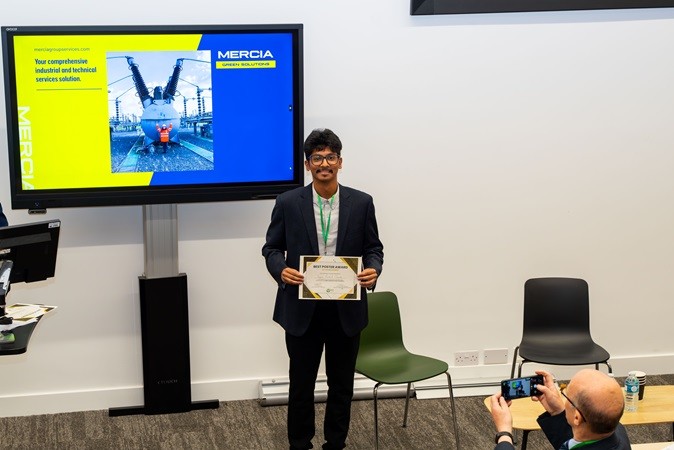
The University of Wolverhampton hosted the Net Zero and Green Technology Conference (NZGT) on Thursday 4 September 2025, bringing together leading voices in sustainability, innovation, and climate action for a dynamic day of discussion, discovery, and collaboration.
Held at the Lady Aruna Building, Springfield Campus, attendees explored the latest advances in green technology, from renewable energy and sustainable fuels to smart cities and circular economy solutions.
Organised in collaboration with Mercia Green Solutions, the Black Country Chamber of Commerce, Oxin Company, and Ecobrain, the event was led by Dr Tohid Borhani of the University of Wolverhampton. Committee members included Mr Jamie Fereday, Kevin Kent, Jane Stevenson, Richard Hobbs, Gail Arnold, Helen Fortune, and Marco Longhi.
Dr Tohid Borhani, conference chair and expert in sustainable engineering, said:
“The NZGT Conference is a platform for bold ideas and practical solutions. As we face the urgent challenge of climate change, this event brought together academia, industry, and policy to accelerate our journey to net zero. We are proud to have hosted this conversation in Wolverhampton, where innovation and impact go hand in hand.”
The conference featured keynote speakers, panel sessions, and a guided tour of the National Brownfield Institute (NBI) labs, offering a behind-the-scenes look at cutting-edge research in sustainable construction and remediation.
The event also featured a two-hour poster session, giving attendees the opportunity to present their research and work. The three best submissions received £100 each. The winners included:
Samaneh Gholami, Lancaster University. Hydrogen storage by bio-based molecules
Fayez Rashid Qureshi, Cranfield University (Pictured to the right). Photo Electrochemical Swing Carbon Capture and Removal
Maryam Awode, University of Nottingham. Chemical Looping Gasification of Biomass: A Pathway to Efficient Syngas Production
Students dig in to help the environment flourish for Earth Day 2024:
A group of Early Childhood Studies degree students got their spades stuck into supporting the University of Wolverhampton’s Sustainability goals by planting trees across Walsall Campus.
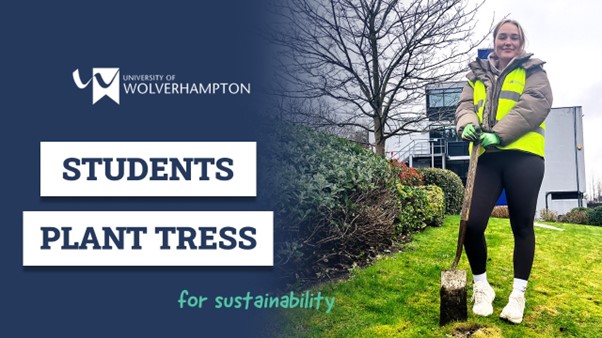
The tree planting exercise came to fruition when Dawn Jones, Programme Lead for the Early Childhood Studies degree, and Charlotte Connor Sustainability Manager in Estates joined forces to embed the UN United Nations (UN) Sustainable Development Goals into the Early Years course programme.
Charlotte jumped at the collaboration, recommending a Woodland Trust scheme aimed at engaging schools and communities in getting millions more trees growing nationwide in an effort to help the UK reach its 2050 carbon net-zero target.
The green fingered students, who joined us at the start of this academic year, joined in the project as part of their level 4 Role of Play module.
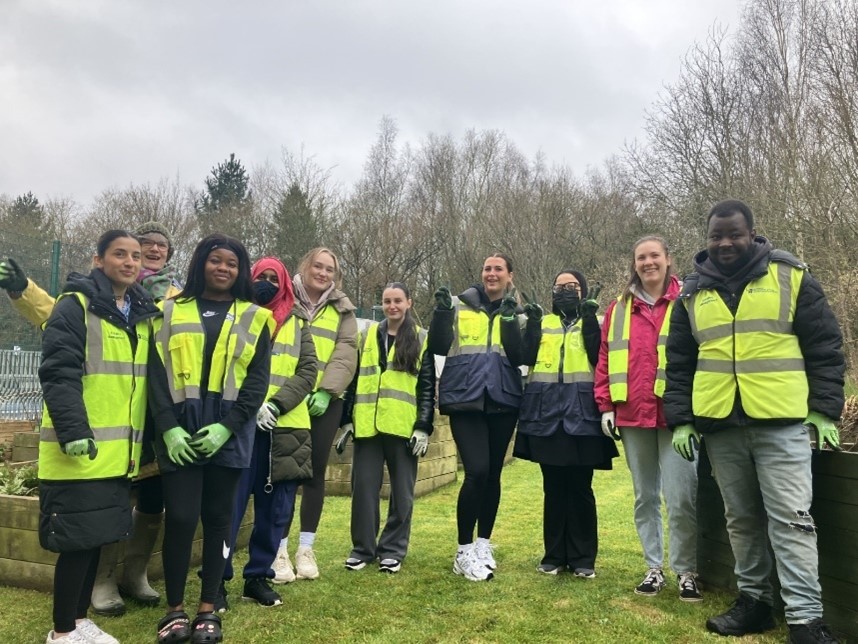
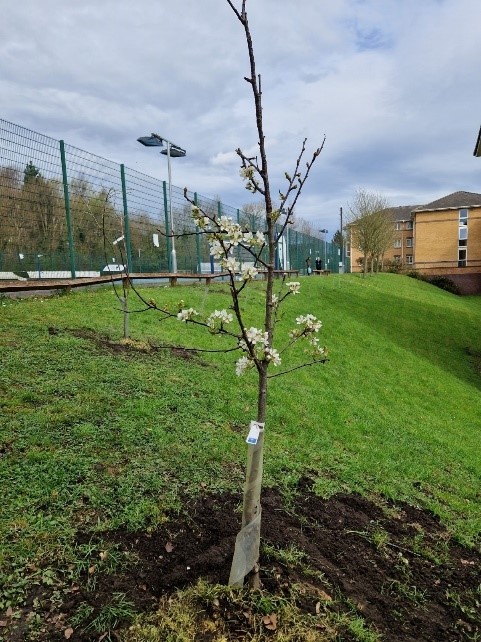
The activity, which is part of the University’s wider Sustainability Programme, allows students to actively contribute to improving the environment they learn in by increasing nature and biodiversity; whilst developing a skill set and values which they can pass on when they start to teach future generations
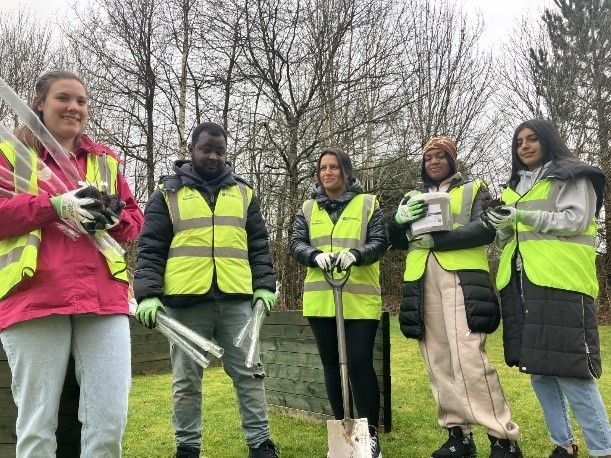
Dawn said: “It’s all about embedding sustainability values and capturing people at a young age. We want our graduates to be at the cutting edge of that knowledge so they can take that out into these settings and into their practice.”
Charlotte said: “It’s a really good exercise for the students and assists them in understanding the implications of Carbon and the alternative routes to make a difference, supporting biodiversity, and the insects and small wildlife that are within our campus. In a few years, these trees will be grown and contributing towards the environment, absorbing carbon, helping to support our journey to deliver our sustainability goals at the University.”
40 trees were planted over two sessions and include: rowan saplings, which grow berries that attract birds; silver birch saplings, which will naturalise with the existing trees around campus; and wild cherry saplings which also grow fruits and have pretty blossom in the spring. On the second session larger, more established fruit trees (cherry, apple, pear, plum, gage) were planted, giving a welcome boost to the scenery around the Walsall Campus grounds.
Dawn said: “I’m really pleased with what the students have got out of it. We’ve been able to think about how this relates to the Role of Play module, how it supports children’s learning, especially sustained shared thinking. And they’ve all gone away smiling and have really embraced the activity.”
Selina Hall, Lecturer in Early Childhood Studies, said: “There are many other benefits to developing the students’ social skills, emotional health and wellbeing, and giving them the confidence and self-assurance to lead these activities with children out in their placement settings.”
It’s not unusual for Faculty of Education Health and Wellbeing students and staff to be found enjoying the benefits of community gardening. A few years ago, the School of Nursing established an allotment next to the sport courts at Walsall Campus, which staff and students from different courses now contribute to maintaining.
Dawn said: “We’re very lucky that we collaborate with the School of Nursing on maintaining this lovely allotment space. We’ve come on board, and we bring the students out here at least every fortnight for a range of modules across levels 4, 5 and 6 and we agree to develop this space as a site for outdoor learning.”
Charlotte has identified that across the University, there’s a lot of work in the background in looking into various ways the University can be more Sustainable in support of the UN Sustainable Development Goals. Look out for more updates on the Sustainability Programme later in the year.
Of course, every one of us has a role to play in helping the environment.
Charlotte and Zainab, both University Sustainability Managers in the Estates and Facilities department, offer advice to all staff and students on the many things you can do to contribute, big or small.
“Look out for guidance on various initiatives from correct recycling; to energy saving and making sure you off switch your lights, computers and monitors when not in use; to bringing your own re-usable water bottles and coffee cups to campus to reduce waste.
“You don’t have to drastically change your lifestyle, even a series of little changes can really add up and make a difference at the University and to the environment.”
Earth Day 2025!
There were opportunities to learn about the carbon footprint of different items as well as the carbon impact of different forms of travel through our game.
There were also lots of planting activities around the campuses to boost wellbeing and increase biodiversity. The sunshine was a welcome addition!
A big thank you to so many people who took part and made the day a success.
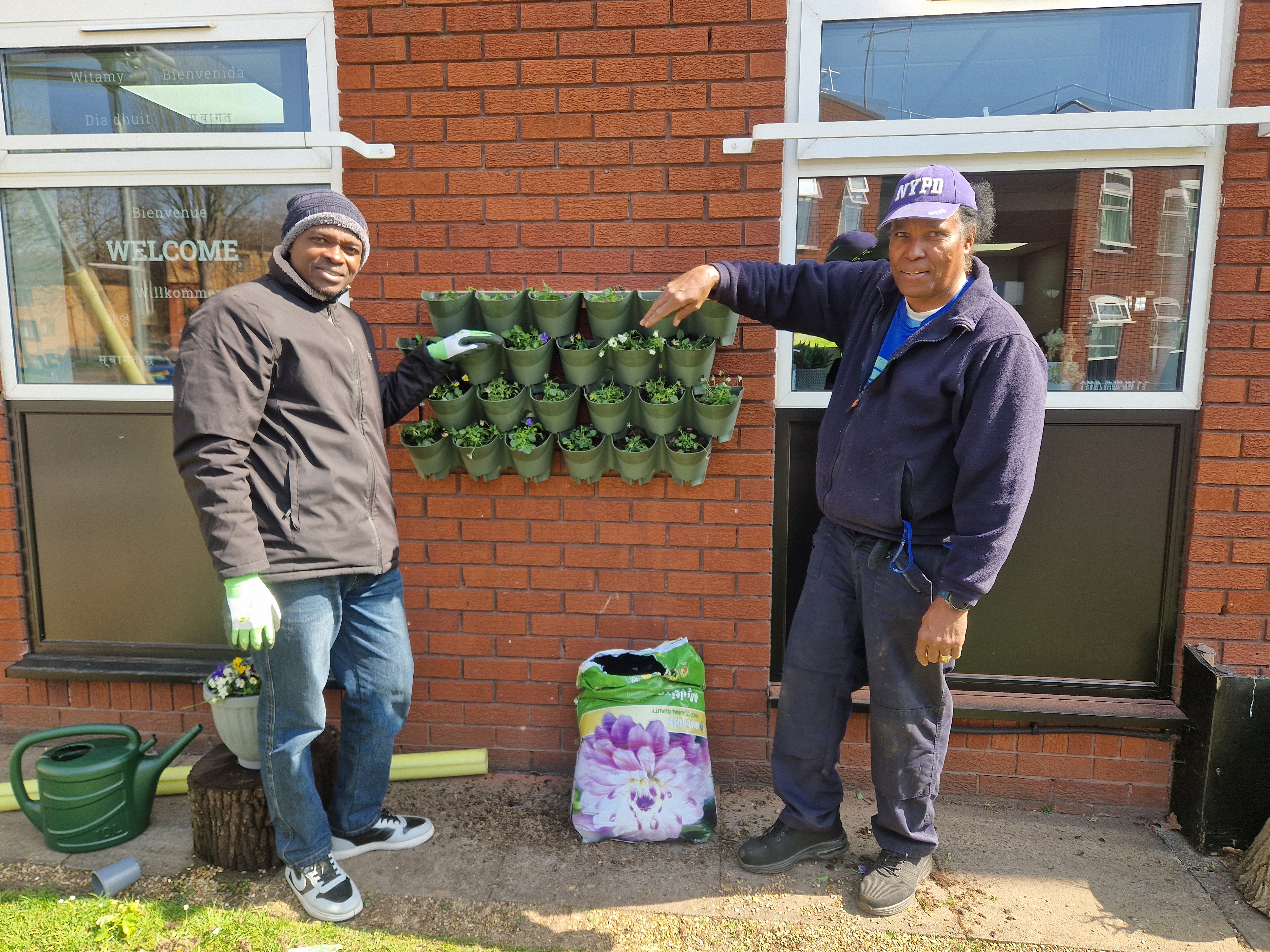
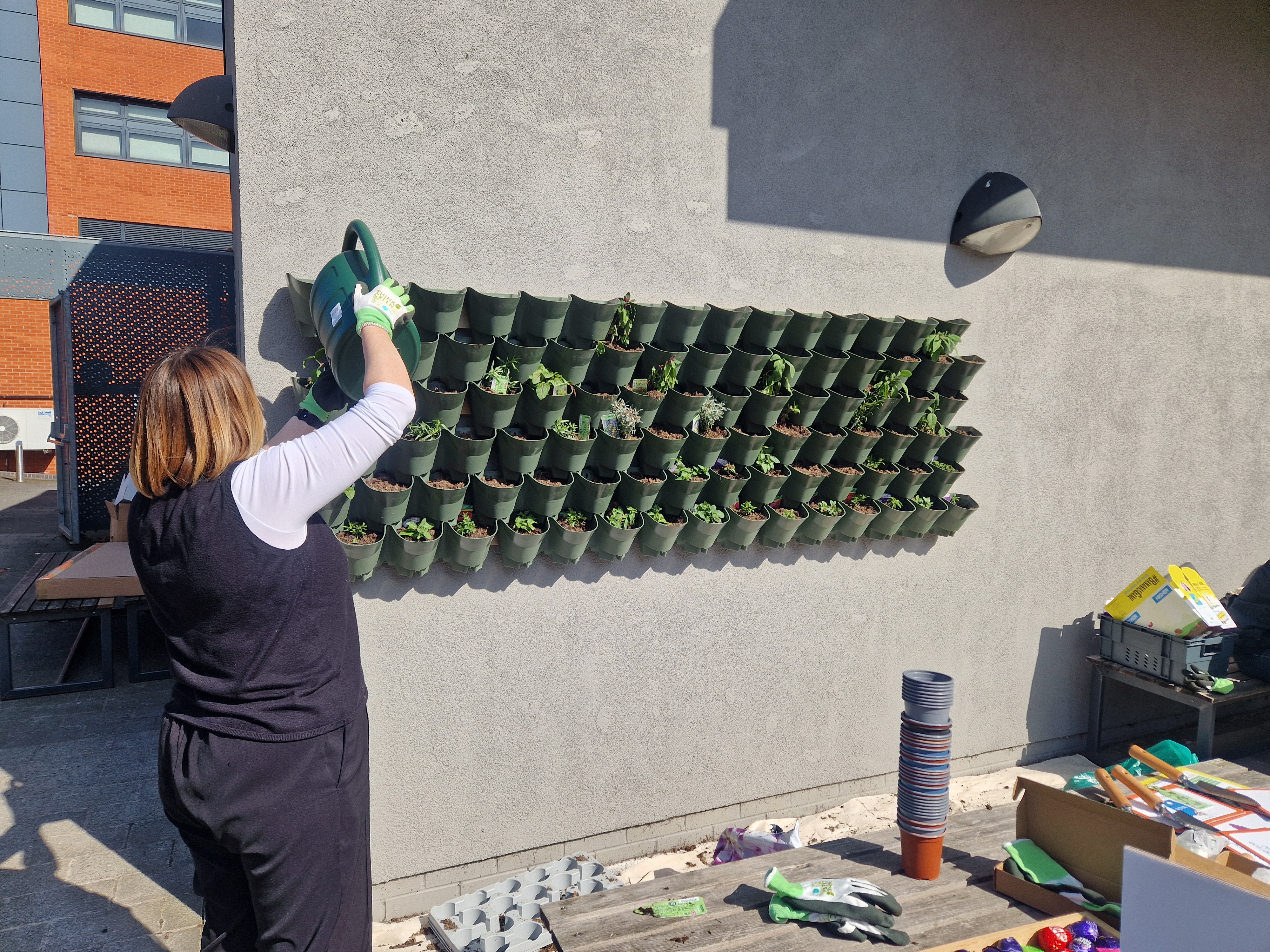
In November 2025, students, staff and visitors collaborated to plant saplings from the Woodland Trust
Planting the future at Springfield
The University of Wolverhampton is committed to Education for Sustainable Development.
Embedding Education for Sustainable Development in the Curriculum
Education for Sustainable Development is systematically embedded within course and module design at the University of Wolverhampton. Through our Curriculum Framework, all courses are designed to integrate sustainability, social responsibility, and global challenges as core components of learning.
A Structured Approach to Embedding Sustainability
Education for Sustainable Development is embedded through a structured and institution-wide approach. Course teams must demonstrate how sustainability and global challenges are addressed through Course Specifications and Module Development Templates, ensuring consistency and accountability.
Embedding Sustainability in Our Graduate Attributes
Sustainability is embedded within the University of Wolverhampton’s Graduate Attributes Framework. Graduates are expected to be sustainability-driven, ethically aware, and socially responsible global citizens capable of contributing positively to society.
Supporting Staff to Embed Sustainability in Teaching
Academic staff are supported to embed sustainability in curricula, utilising our 'Course Designers Toolkit', which includes a dedicated chapter to 'Future Ready Education', which provides guidance on embedding sustainability and global challenges into learning outcomes, teaching, and assessment.
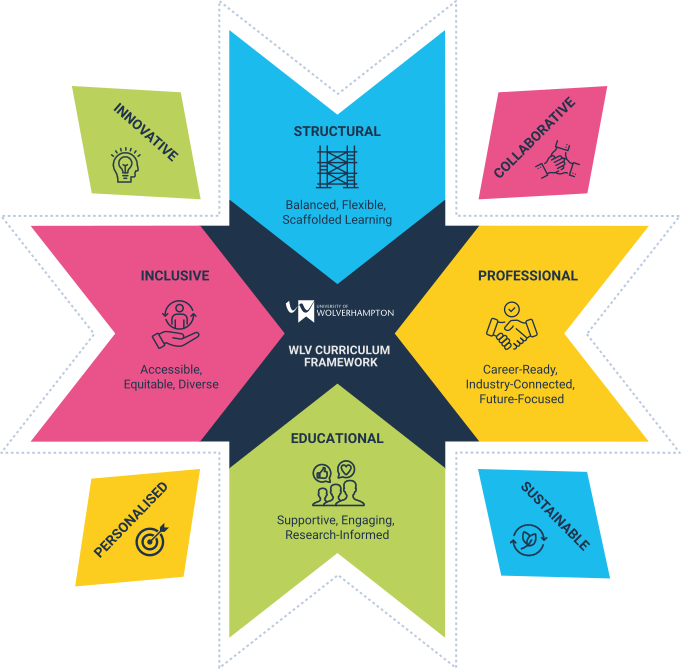
University of Wolverhampton is demonstrating commitment to Education for Sustainable Development through the Future Ready Curriculum Framework where all courses re-validated demonstrate the inclusion of Sustainable Development. More information can be found: Curriculum Framework - University of Wolverhampton
The University is providing training and support to academic staff for ESD through the Canvas curriculum framework guidance, in-person sprints and the Environmental Sustainability E-Learning module.
University internal auditors PwC commended the university faculties for embedding sustainable development into their teaching activities.
Find out more from the Student Success team:
“From a graduate outcomes and student success perspective, sustainability sits firmly at the heart of everything we do at the University of Wolverhampton and our strategy for educational sustainable development. It underpins our curriculum, our actions, and our strategic commitment to preparing students for meaningful futures as graduates.
We embed the United Nations Sustainable Development Goals (UNSDG's) across our teaching and learning, and our co-curricular/extra-curricular activities, empowering students and staff to become recognised champions of sustainable development through our physical and digital badge scheme. This enables individuals to carry forward their recognition and commitment not only during their time at the University, but also beyond graduation into their future professions, workplaces, and everyday lives.
Through actively funded projects and initiatives, including our funded impactful Earth Day student engagement and employability focused sustainability projects, we create interdisciplinary opportunities for our community to connect global challenges with real-world practice. These experiences support students in developing career aspirations while encouraging reflection on personal and academic discipline-specific approaches to sustainability.
We are committed to ensuring that our graduates not only understand sustainability, but can confidently articulate and demonstrate the behaviours and values needed to contribute to a more sustainable future. Our strategy for Education and Sustainable development is reflected in our graduate attributes framework. Through diverse reporting mechanisms, collaborative working groups, and data-informed reflection, we continue to celebrate our successes and identify opportunities to further strengthen our practice.
Our Education for Sustainable Development strategy remains central to both our internal priorities and our external partnerships, including our Green Innovation Corridor expansion, ensuring that our graduates are equipped to lead positive and lasting change in a rapidly evolving world with increasing sustainability needs.”
Dr Laura Nicklin, Student Success and Graduate Outcomes Lead
- In 2024, it was announced that The University of Wolverhampton has signed a Memorandum of Understanding (MoU) with the United Nations Institute for Training and Research (UNITAR) to drive sustainable development education and research and enhance global collaboration. Read full article.
- At the heart of our commitment to sustainable practices, we've introduced a fundamental sustainability module to all Business School Students. This module is designed to provide our students with essential knowledge and skills that not only enhance employability but also prepare them for future work opportunities. Read full article.
- The School of Architecture, Computing and Engineering embeds Sustainability into many of its courses, inviting guest lecturers to run themed events (such as Biophilic Design in December 2023).
- The university launches Green Horizons initiative to advance global green engineering and sustainability February 2026 | University launches Green Horizons initiative to advance global green engineering and sustainability - University of Wolverhampton
- The School of Architecture Construction Management Degree offers a module in Sustainable Construction BSc (Hons) Construction Management - University of Wolverhampton.
Sustainability Research
Sustainability is at the heart of research undertaken at the University. Research - University of Wolverhampton
Here are some highlighted research features:
- Research from the Faculty of Science and Engineering explores sustainable solutions for revitalising Indian villages, through 'smart villages':
- Environmental and technical impacts of floating photovoltaic plants as an emerging clean energy technology
- Technical potential of floating photovoltaic systems on artificial water bodies in Brazil
- From collapsed coal mines to floating solar farms, why China's new power stations matter
- Evaluating floating photovoltaics (FPVs) potential in providing clean energy and supporting agricultural growth in Vietnam
- Emission control and carbon capture from diesel generators and engines: A decade-long perspective
- Accelerating the low-carbon energy transition in sub-saharan Africa through floating photovoltaic solar farms
- Being green or being seen green? Strategies of eco regime resilience in Qatar
Mapping of the Architectural Design Technology Course to the United Nations Sustainable Development Goals (SDGs)
BSc (Hons) Architectural Design Technology SDGs mapping
ESG is a core research strength of the University of Wolverhampton find out more about our pioneering research.
- The University encourages reducing, recycling and reusing as part of our commitment to the environment and sustainability. Find out more how our waste is recycled here.
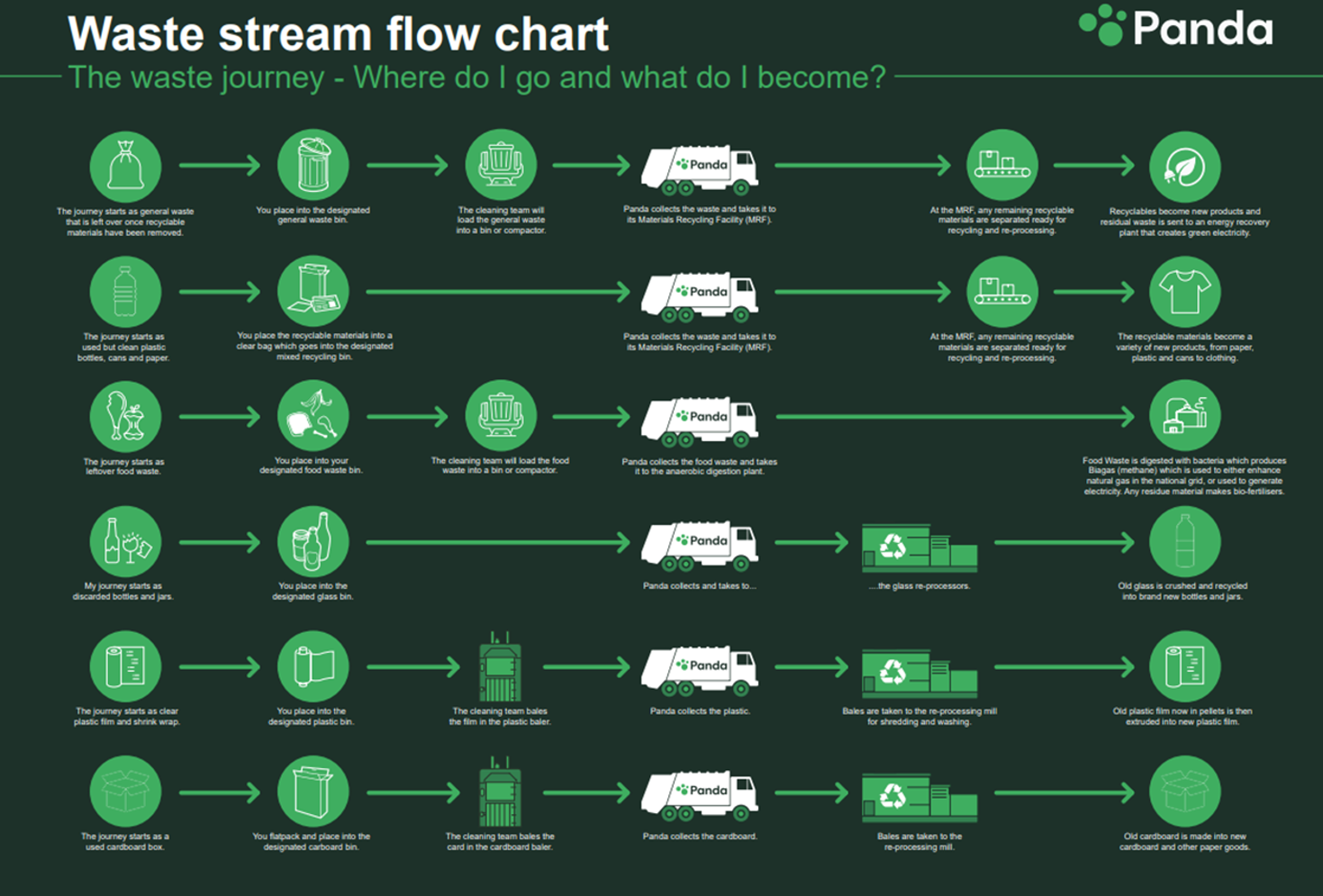
- B&M are the University's domestic and general waste contractor. B&M collects general waste, paper and cardboard, dry mixed recycling, and food waste for the University. Pay attention to signage above bins providing detail about the items to place in each bin.
- What can go into Recycling Bins?
- Clean, dry plastic bottles
- Clean, dry tin cans
- The University recycles mixed glass from the Students Union and within Student Accommodation waste streams.
- Food waste recycling:
- Our Catering teams separate food waste on our campuses and this is collected by B&M. This food waste is delivered to an anaerobic digestion plant where it is converted into renewable energy in the form of biogas and organic fertiliser. We also recycle our cooking oil via Olleco which is converted into renewable energy.
- Coffee Cup Recycling:
- Look out for coffee cup bins located in each Catering Outlet across Campuses. Coffee cups can’t be recycled in the recycling bins as they are coated with plastic and require specialist recycling. To reduce the waste from these, we have introduced coffee cup bins to collect cups and recycle them separately. Please take care to tip your liquid out in the marked spot before placing your cup in the bin.
- Printer Toners:
- All used MFD (Multi-Functional Devices) toner cartridges should be returned to Digital Print Services in MKb Building, they are returned to Ricoh for recycling.
- Restore Data Shred Ltd collect our confidential paper waste and recycle it to produce other reusable products such as tissues and recycled copy paper.
- The WEEE waste is all collected by Stone, you must Log a call on Planon and fill in a WEEE Collection Request Form.
- What do I do with batteries?
- Batteries must be disposed of as hazardous waste and must not go into general waste. They damage the environment if they go to landfill. We have 15 location points/boxes on campus for disposal of household batteries. We are part of a battery compliance scheme with a company called Ecobat. Please see attached document for your nearest locations and what you can do.
- Batteries disposal procedure Jan 2020(Word doc 113k)
- If you have any questions about waste management, please contact the Estates and Facilities Commercial Team on f.commercial@wlv.ac.uk
Locate EV Car Chargers and Bike Racks from the Campus maps
EV Charger and Bike Rack Locations - City Campus
EV Charger and Bike Rack Locations - Telford Campus
EV Charger and Bike Rack Locations - Walsall Campus
EV Car Chargers:
There will be instructions on the chargers; users will need to download an app or purchase an RFID card from the respective management organisation.
Chargers are managed by Project EV and Blink.
The charging rate will be 45p per kWh, and users must move their vehicle to a non-charging car parking space within 30 minutes of the charging session ending to avoid overstay fees.
Electric Car Charging spaces are reserved for electric vehicles.
All other university electric vehicle car chargers are under review.
EV Staff Lease Scheme:
The University has teamed up with Tusker to bring you a fully inclusive motoring package through your employee benefits, which lets you choose a brand new fully maintained electric or plug-in hybrid car.
This is a great way to drive a new car while saving on tax and enjoying peace of mind with everything included.
See FAQs for details about the scheme. THE CAR BENEFIT SCHEME
- The university operates a Cycle to Work scheme
- There are West Midlands bikes available to hire at the Walsall Campus and the City Molineux Campus
- Find more information about Campus travel: https://www.wlv.ac.uk/university-life/campus-travel-and-transport/
- At the University of Wolverhampton, we are committed to Sustainability and reducing our impact on the environment.
- Please pledge to adopt some sustainable habits. Examples include…
- I pledge to conserve energy by turning off lights and electronics when not in use.”
- “I pledge to conserve water by taking shorter showers and reporting any leaks promptly.”
- “I pledge to recycle diligently and reduce waste.”
- “I pledge to opt for reusable containers and avoid single-use plastics.”
- “I pledge to reduce my plastic waste by carrying a reusable water bottle and shopping bags.”
- “I pledge to recycle diligently and properly sort my waste.”
- “I pledge to choose sustainable transportation options like walking, cycling, or public transit whenever possible.”
- Recycling is a simple yet powerful way to reduce waste and protect our environment. At our student halls, we've made it simple for you to recycle and do your part for the environment.
- Start off by placing items in the correct bin inside; check the label on your bin! You should always have 2 bins; one for general waste and one for mixed recycling. General waste goes in black bags and recycling goes in clear bags. You can be a recycling pro in no time:
- Give bottles, jars, cans, and tins a rinse first to avoid contamination
- In the dry mixed recycling, you can place-
- Plastic bottles
- Paper and cardboard
- Glass bottles and jars
- Metal cans and tins
- Large cardboard boxes should be folded or flat-packed and placed near the appropriate bins.
- Any items that currently cannot be recycled, such as food, plastic films, used tissues, crisp packets, should go into the general waste bins.
- When your bins are full, be sure to take them down to the waste/recycling zones outside your accommodation and check the signs to place the bags in the correct zone. If you are unsure; please ask the Student Accommodation team!
- Consider donating reusable items to nearby charity shops, such as the British Heart Foundation, which supports life-saving research and offers pick-up services for larger donations. Why not pick up a British Heart Foundation Charity Bag from The Accommodation Hub and donate your unwanted goods.
- If you come across a bin with different colours or symbols, look for guidance on what can be disposed of in that particular bin. Remember, proper separation is key to ensuring that recyclable items don't end up in landfills.
- For any niche items that require special recycling, like batteries and electronics; the University provides designated drop-off points.
- Let's work together to divert waste from landfills and support a circular economy!
- Plastic bottles? Recycle them! Empty, crush, and replace the lids.
- Give containers a quick rinse before recycling, but no need to scrub them spotless.
- Remove any chunks of food from paper and cardboard packaging.
- Use the scrunch test for paper: if it stays scrunched, it's recyclable.
- Give cans and plastic bottles a quick squish to save space in the bins.
- Don't forget to recycle from the bathroom (toothpaste boxes, toilet roll tubes, aerosols, shampoo bottles, etc.).
- Leave lids on glass jars and bottles.
- You can also visit the Chaplaincy who run pre-loved item events. You can collect items that you need including kitchenware and you can also donate kitchen items such as pots and pans that you no longer.
- The university also works to reduce energy consumption and you will notice that the heating in your rooms is timed to come on during mornings, lunch times, evenings and weekends. We ask that students turn off lights, chargers and other electrical items when not in use. Portable heaters and fans are not permitted for fire safety reasons and to prevent interference with the heating system.
- By following these simple guidelines, you'll be doing your part in reducing waste and supporting a more sustainable future. Let's work together to improve our recycling rates and create a greener campus community!
- Living sustainably doesn't have to be complicated. Here are some eco-friendly hacks to help you reduce your environmental impact:
- Energy Efficiency: Unplug electronics when not in use, only put as much water as you need in the kettle, don’t use portable heaters or fans, use LED bulbs, and take advantage of natural lighting.
- Water Conservation: take shorter showers, report leaky taps and toilets, turn off the tap while brushing your teeth, and fill up the washing machine when washing your clothes.
- Reduce, Reuse, Recycle: Opt for reusable containers and shopping bags, donate or sell unwanted items, and recycle everything you can.
- Sustainable Transportation: Walk, bike, or use university transportation whenever possible.
- Conscious Consumption: Buy pre-loved, support eco-friendly brands, and reduce impulse purchases.
- By adopting these sustainable practices, you'll not only reduce your carbon footprint but also save money and contribute to a healthier planet. Together, we can make a difference!
- Embrace these eco-hacks and share your own tips with your fellow residents!
- Together, we can create a sustainable living environment that inspires positive change and paves the way for a brighter future.
- The National Brownfield Institute hosted Sustainability West Midlands for a Nature Recovery Innovation Lab on 4th October 2024
- The University is collaborating with Wolverhampton City Council on the Green Innovation Corridor
- The University of Wolverhampton is committed to capacity strengthening via the Centre for International Development & Training (CIDT).
The University of Wolverhampton is committed to creating impactful contributions towards the United Nations Sustainable Development Goals (UNSDGs).
The University of Wolverhampton is working ‘glocally’ for the Sustainable Development Goals via CIDT
“As part of our effort to communicate Sustainability challenges and successes, we have developed a Dashboard to share key information and updates each quarter.
The dashboard contains information about ESG updates, events, energy use, recycling rates, and challenges for Sustainability Champions.”
Sustainability Dashboard - City Molineux March 2026
Sustainability Dashboard - City Molineux March 2026
City Accommodation September 2025
City Accommodation December 2025
Sustainability Dashboard - City Accommodation March 2026
City Accomodation June 2026.pdf
Sustainability Dashboard - Springfield March 2026
Sustainability Dashboard - Walsall March 2026
Sustainability Dashboard - Telford March 2026

Heat pumps, solar PV, and a heat network are just some of the technologies being introduced at the University of Wolverhampton Walsall Campus as part of an £11m project to accelerate our journey to net zero.
The University has joined forces with Vital Energi to deliver the multi-technology energy solution at their Walsall Campus, which will reduce carbon emissions by over 1,000 tonnes each year, contributing to university KPIs to reduce our impact on the environment.
Gas-fired equipment and end of life boilers will be replaced with an air to water source cascade heat pump system, which recovers heat from the air and boosts it to higher temperatures to provide low carbon heating and hot water to campus buildings.
Solar photovoltaics systems will be installed across a number of rooftops to allow for on-site renewable electricity generation. Energy efficiency measures will also be installed, such as air conditioning controls, pipework insulation, and improved heating and cooling controls. An underground network of district heating pipes, known as a heat network, will be installed, which will supply low carbon heat to five campus buildings.
The programme is being delivered in partnership with Vital Energi, who are leading the installation of the multi‑technology solution. As part of the works, a ‘Living Lab’ will also be created, offering students, staff and researchers a unique real‑world environment in which to study sustainability technologies, monitor energy performance and contribute to ongoing improvements across the estate.
The project was made possible thanks to funding from the Phase 3c of the Public Sector Decarbonisation Scheme totalling £8.6m, which is delivered by Salix Finance on behalf of the Department for Energy Security and Net Zero.
As part of the University's Environmental, Social and Governance (ESG) Strategy 2035, we are pleased to announce the launch of a new mandatory Environmental Sustainability training module for all staff as part of the induction process, titled "Environmental Sustainability". This training forms part of the agreed outcomes within our ESG Strategy, reflecting our collective commitment to embedding sustainability across all aspects of our institution.
This training is designed to support the implementation of our ESG Strategy and to increase awareness of our environmental impact and the role each of us plays in building a more sustainable future. All colleagues are required to complete this training once every three years.
The Environmental Sustainability training will familiarise staff with the University's ESG Strategy, our environmental commitments, and the wider global context of the United Nations Sustainable Development Goals. It is designed to equip staff with an understanding of our institutional vision, the practical actions being taken to reduce our environmental impact, and how each individual can contribute meaningfully. The course highlights the responsibilities we share, the power of small, everyday changes, and how our collective efforts can help shape a more sustainable future for the University and beyond.
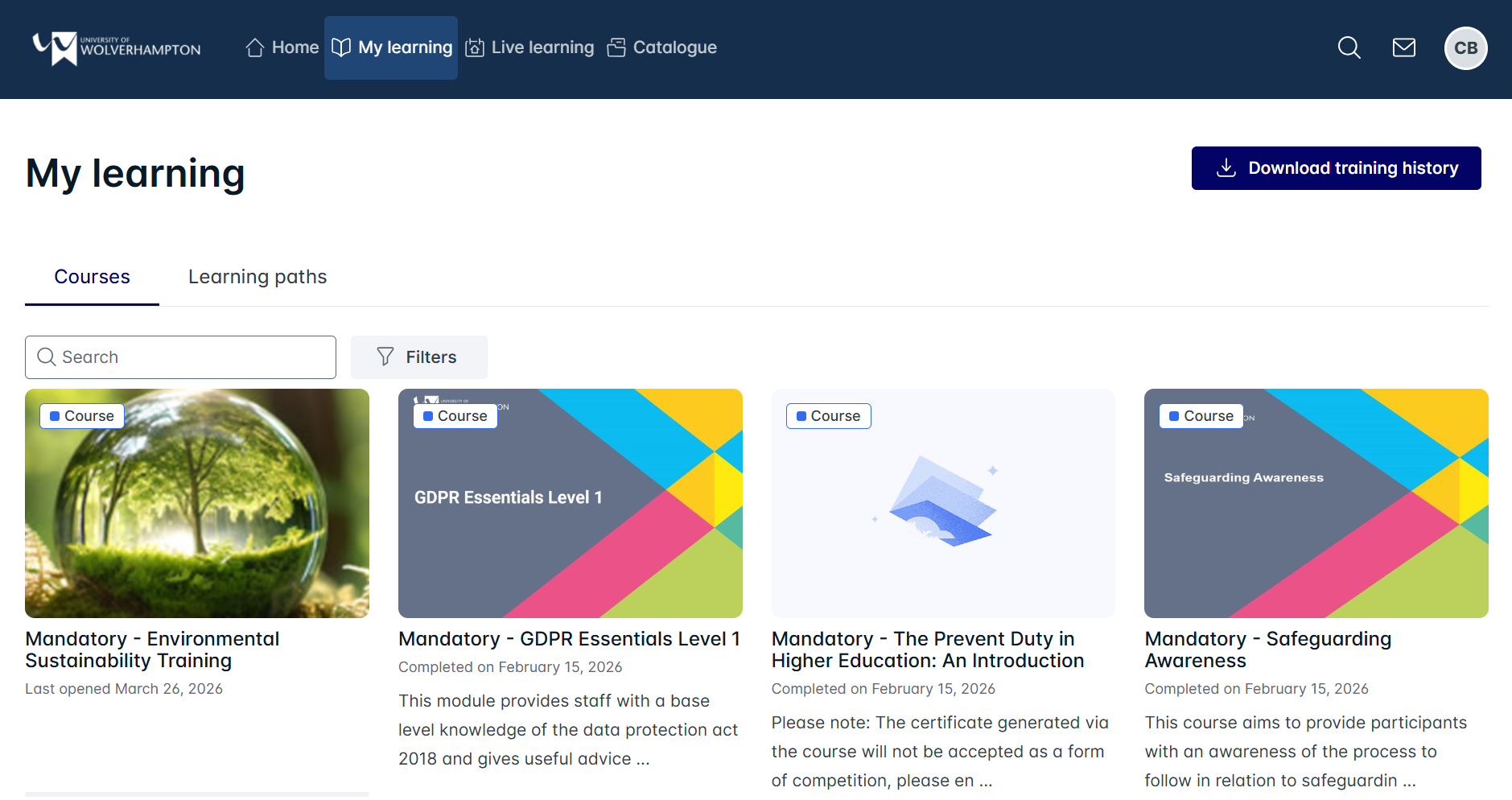
Wildlife is all around us.
A bumblebee feeding on a flower beside a pathway. A bird nesting in a hedge. A butterfly searching for nectar between lectures. Many species live alongside us every day, often without being noticed.
WildWLV aims to create more opportunities for wildlife to thrive while helping people discover, appreciate, and support the nature around them.
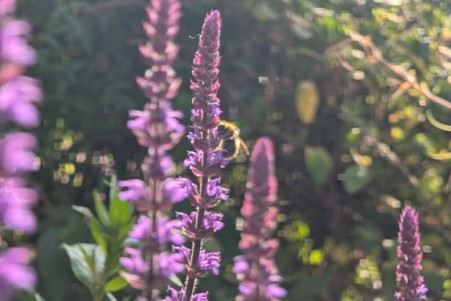
A bird nest box placed as part of a WildWLV project.
What is WildWLV?
WildWLV is a wildlife-focused staff and student initiative that supports biodiversity through habitat creation, habitat enhancement, environmental stewardship, education, and community participation.
The initiative encourages practical action that benefits wildlife while creating opportunities for staff, students, visitors, and community partners to get involved.
Whether your interests lie in wildlife, gardening, sustainability, food growing, photography, volunteering, or simply learning more about nature, WildWLV aims to provide opportunities to participate and make a positive difference.
Why It Matters
Wildlife across the UK faces increasing pressures from habitat loss and environmental change.
Universities have an opportunity to help
Across our campuses, there are trees, gardens, green spaces, growing areas, and opportunities to create and enhance habitats that support pollinators, birds, and other wildlife.
WildWLV aims to demonstrate how practical, achievable projects can contribute towards healthier ecosystems while helping people engage more closely with the natural world.
Projects in Action
WildWLV supports a growing range of practical biodiversity and sustainability projects.
Tree Planting at Walsall Campus
Helping create future habitat, support biodiversity, and provide opportunities for people to get involved with practical conservation activities.
Crescent Pollinator Bed
A pollinator-friendly planting scheme designed to provide nectar and pollen resources while demonstrating how even relatively small spaces can support wildlife.
Turning Waste into Resources
Repurposed planters, composting initiatives, and resource reuse projects that support wildlife while promoting sustainability and environmental stewardship.
Stay Informed
WildWLV is still evolving, and future projects will be shaped by the people, ideas, and opportunities that emerge along the way.
If you would like to:
- Stay informed about future projects and events
- Learn about opportunities to get involved
- Share ideas for wildlife-friendly initiatives
- Contribute photographs, observations, or expertise
- Follow the progress of WildWLV
We would love to hear from you: Contact: wildwlv@wlv.ac.uk
Small Actions Can Make a Meaningful Difference
Every tree planted.
Every habitat created.
Every pollinator-friendly flower bed.
Every person who takes the time to notice and support the wildlife around them.
Together, these actions can help create healthier habitats, stronger ecosystems, and more opportunities for people to connect with nature.
Why WildWLV Exists
Wildlife across the UK faces increasing challenges from habitat loss, fragmentation, pollution, and other environmental pressures.
Many species depend upon networks of suitable habitats to feed, breed, shelter, and complete their life cycles.
Universities have an opportunity to help.
Across our campuses there are green spaces, trees, gardens, planters, hedgerows, growing spaces, and opportunities to create new habitats or enhance existing ones.
WildWLV was created to encourage and support practical action that benefits wildlife while helping people notice, understand, and engage more closely with the natural world around them.
What We Do
WildWLV supports a wide range of nature-positive projects and activities.
Habitat & Wildlife
- Wildlife-friendly planting
- Pollinator projects
- Tree planting
- Habitat creation and enhancement
- Ecological restoration
- Wildlife-friendly landscape improvements
Sustainable Growing
- Fruit and vegetable growing at the Chaplaincy
- Allotments
- Sustainable gardening
- Composting
- Nature-positive growing practices
Resource Reuse & Environmental Stewardship
- Repurposing materials for habitat projects
- Circular economy initiatives
- Resource reuse and recovery
- Waste reduction through practical action
- Creative reuse of existing materials
Learning & Engagement
- Community participation
- Student and staff engagement
No single project will solve every challenge facing wildlife.
However, many smaller projects working together can help create meaningful positive change over time.
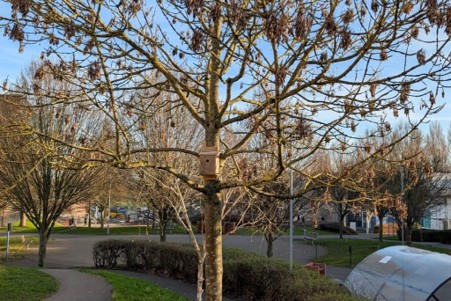
A bird nest box placed as part of a WildWLV project
Our Approach
WildWLV aims to encourage practical, achievable action.
Projects do not need to be large, expensive, or complicated to have value.
A pollinator-friendly flower bed.
A newly planted tree.
A composting system that turns waste into a resource.
A reclaimed planter built from materials that might otherwise have been discarded.
An orchard that provides blossom for pollinators and fruit for people.
A student discovering a bee species for the first time.
Each action may seem small on its own.
Together they can help create healthier habitats and stronger connections between people and nature.
What We Hope to Achieve
Through practical action, WildWLV aims to contribute towards:
- More habitat for wildlife
- Increased biodiversity
- Greater support for pollinators
- Improved ecological awareness
- Increased engagement with nature
- Enhanced wellbeing and connection to the outdoors
- More opportunities for learning and participation
- Increased environmental stewardship
- Support for the University’s ESG 2035 ambitions
- Contribution towards relevant United Nations Sustainable Development Goals
These outcomes are interconnected and often reinforce one another.
When people become more connected to nature, they are often more likely to care for it.
When habitats improve, wildlife benefits.
When wildlife thrives, opportunities for learning, wellbeing, and engagement often grow too.
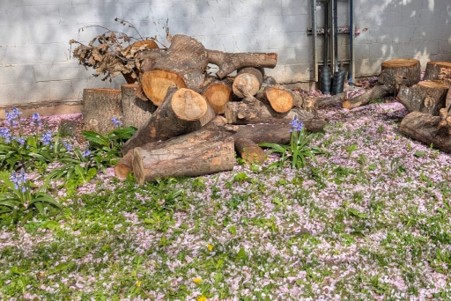
Supporting Wider Sustainability Goals
WildWLV supports the University of Wolverhampton’s ESG 2035 ambitions by encouraging biodiversity enhancement, environmental stewardship, sustainability, education, wellbeing, and community participation.
Through practical projects and local action, WildWLV aims to demonstrate how positive environmental outcomes can be achieved through collaboration, creativity, and long-term thinking.
Many projects seek to support wildlife while also promoting resource reuse, sustainable growing practices, and the responsible use of materials, helping deliver benefits for both nature and people.
Get Involved
WildWLV is an evolving initiative and there are many ways to become involved.
You might be interested in:
- Supporting wildlife
- Gardening and growing
- Sustainability
- Nature photography
- Volunteering
- Learning new skills
- Citizen science
- Environmental education
- Improving the places where you study, work, or visit
Whatever your starting point, there is room to contribute.
Curiosity, enthusiasm, and a willingness to learn are often the most valuable things people can bring.
Tree Planting and Wildlife Corridor Creation: Creating Habitats for the Future
Supporting wildlife through long-term investment
Trees are among the most valuable habitats we can create for wildlife.
While a flower bed may begin attracting pollinators within a few months, trees provide benefits that develop over years and decades. As they establish and mature, they can offer nectar, pollen, berries, fruit, shelter, nesting opportunities, and important habitat connections for a wide variety of species.
In recent years, a series of tree-planting initiatives have taken place across Walsall and Springfield Campuses. These projects have involved staff, community groups, schools, and volunteers working together to create habitats that will continue to develop for the long term.
Although many of the trees are still young, they represent a long-term investment in creating a greener and more wildlife-friendly campus.
Creating the Foundations of a Wildlife Corridor
As biodiversity projects developed across the campus, discussions began about how habitats could be linked together rather than existing as isolated pockets.
This led to the development of the first dedicated wildlife-corridor planting project at Walsall Campus.
A wildlife corridor is an area of habitat that helps wildlife move more easily between different locations. By improving connections between habitats, corridors can help animals, birds, and insects access food, shelter, and breeding sites across a wider landscape.
As part of the Woodland Trust programme, a wildlife-focused tree pack was selected and ordered for the campus.
The pack contained 105 saplings, including:
- Downy Birch (Betula pubescens)
- Hazel (Corylus avellana)
- Holly (Ilex aquifolium)
- Goat Willow (Salix caprea)
- Crab Apple (Malus sylvestris)
The aim was to create the foundations of a future wildlife corridor while increasing habitat diversity across the campus.
Planting the Seeds of WildWLV
The value of these projects extends beyond the trees themselves.
Tree planting activities brought together staff, community groups, schools, and volunteers to take practical action for wildlife. In doing so, they created opportunities for people to share ideas, learn from one another, and consider how biodiversity could be better supported across campus.
Alongside other biodiversity and sustainability activities taking place across University of Wolverhampton campuses, these experiences helped build knowledge, confidence, and connections among people who shared an interest in supporting wildlife and improving green spaces.
By November 2025, WildWLV had already been proposed as an initiative to support wildlife and biodiversity through practical action, education, and community involvement. The wildlife corridor planting project therefore became one of the first opportunities to put some of those ideas into practice through collaboration between the Sustainability Team, caretaking staff, and external community groups.
In that sense, the project represents both a continuation of earlier environmental work and an early example of the collaborative approach that WildWLV hopes to encourage in the future.
Acknowledgements
WildWLV would like to thank all staff, community groups, schools, volunteers, and sustainability colleagues who contributed to these planting projects
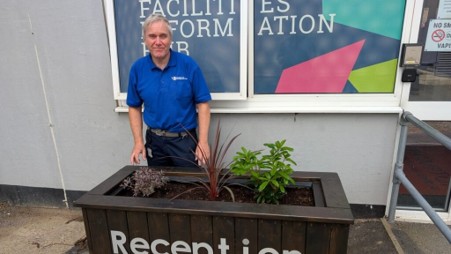
Turning Waste into Resources
Supporting Wildlife Through Resource Reuse and Practical Action
Supporting wildlife through creativity, teamwork, and practical action
Creating habitats for wildlife does not always require large budgets, specialist equipment, or brand-new materials. Sometimes the resources needed are already on site.
At Walsall Campus, members of the caretaking team have been finding practical ways to support wildlife while making better use of materials that might otherwise have been discarded. Through a combination of creativity, teamwork, and resourcefulness, redundant filing cabinets have been transformed into pollinator-friendly planters, while fallen leaves collected across campus are being composted and returned to future planting projects.
The result is a series of projects that aim to support wildlife, reduce waste, create wildlife-friendly planting spaces, and encourage pride in the places where people work, study, and spend their time.
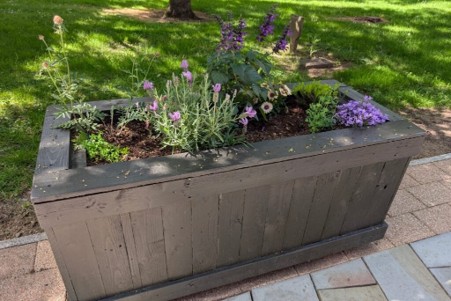
One of several planters created from redundant filing cabinets and reclaimed timber as part of an ongoing effort to support wildlife and improve the campus environment.
Project Summary
Project Type: Resource Reuse, Biodiversity Enhancement & Composting
Location: Walsall Campus
Status: Ongoing
Theme: Supporting Wildlife Through Practical Action
Key Activities
- Repurposing filing cabinets into planters
- Reusing pallet wood
- Producing leaf compost on site
- Pollinator-friendly planting
- Retaining valuable resources on campus
Main Objectives
- Support wildlife and pollinators
- Retain useful materials on site
- Reduce unnecessary waste
- Enhance campus green spaces
- Encourage practical sustainability through everyday action
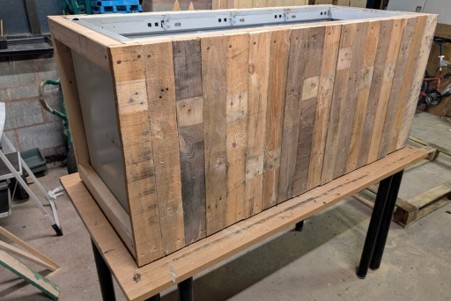
Redundant filing cabinets were repurposed and clad with reclaimed pallet wood to create bespoke campus planters.
Seeing Potential in Waste
The project began with a simple idea: before throwing something away, could it be reused for a useful purpose?
During 2025, members of the caretaking team identified an opportunity to repurpose redundant filing cabinets rather than send them for disposal.
Mike Brackstone and Paul Shearwood led the planter construction using old filing cabinets as a structural base. The cabinets were clad in reclaimed pallet wood and finished with paint supplied by Estates.
Several planters have now been created, with more units in development.
Rather than seeing the filing cabinets as waste, the team saw an opportunity to create something useful that could support wildlife, enhance green spaces, and demonstrate practical reuse of resources.
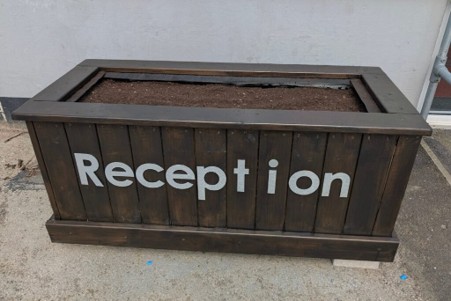
Repurposed filing cabinet / bespoke campus planter outside of WA goods in entrance, ready for planting.
Planting for Pollinators
The completed planters have been used to grow a variety of ornamental and pollinator-friendly plants.
Some species were grown from seed at the campus allotment before being planted into the finished containers, including:
- Bird’s-foot Trefoil (Lotus corniculatus)
- Wild Marjoram (Origanum vulgare)
- Lavender (Lavandula angustifolia)
These plants were selected for the resources they can provide to wildlife, while also contributing seasonal interest and variety within the planters.
Bird’s-foot Trefoil is an important larval food plant for several butterfly species and provides nectar for pollinating insects. Wild Marjoram is highly attractive to bees, butterflies, and hoverflies, while Lavender can provide a long flowering period and valuable nectar resources.
Additional planting has included species such as Alliums, Salvia, Scabious, and other flowering plants chosen to extend the availability of nectar and pollen throughout the growing season.
While the planters occupy relatively small spaces, they demonstrate how even modest planting areas can support pollinators and other beneficial insects.
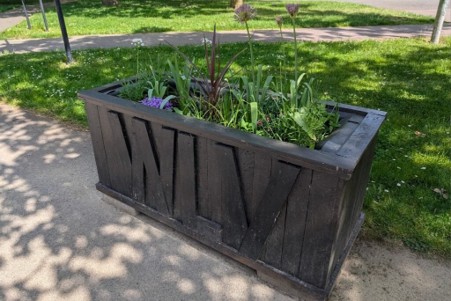
Spring-flowering alliums contribute seasonal interest while providing nectar and pollen resources for pollinating insects.
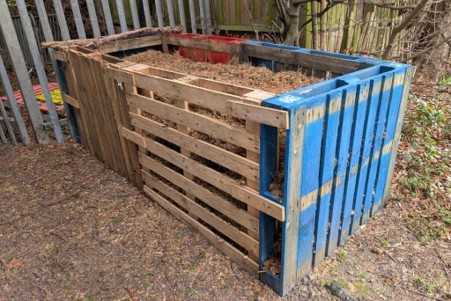
Leaf composting station made from reclaimed pallets, near WE building.
Keeping Resources on Campus
The planter project forms part of a wider effort to retain and reuse materials generated on campus.
Alongside the planters, members of the caretaking team have established a network of leaf composting stations built primarily from reclaimed pallets.
Caretaker, Paul Shearwood, has played a leading role in developing the composting infrastructure, while the wider caretaking team contributes by collecting and managing fallen leaves as part of routine grounds maintenance.
Currently, three leaf composting stations operate around campus, with a fourth supporting the allotment and polytunnel area. A further composting station is planned near the Student Village to help manage future autumn leaf collections.
Rather than treating fallen leaves as waste, the project seeks to retain this valuable resource on campus and return it to future planting projects through composting and reuse.
This creates a simple but effective cycle:
- Trees produce leaves.
- Leaves are collected and composted.
- The resulting leaf mould is returned to flower beds, trees, and planting projects as mulch and soil improver.
- Those planting projects then continue to support wildlife and enhance campus green spaces.
Compost from the first station has already been used around Student Village tree-planting projects and flower beds, helping to improve soil conditions while reducing the need for imported materials.
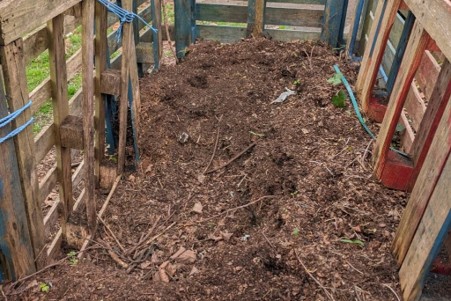
Leaves collected during routine grounds maintenance are composted and returned to campus planting projects as mulch and soil improver.
A Team Effort
Although individual members of staff have led different aspects of the project, its development has relied on contributions from across the caretaking team.
Mike Brackstone and Paul Shearwood led the construction of the filing-cabinet planters, while Paul also played a leading role in developing the leaf composting stations.
The wider caretaking team has contributed through moving planters into position, filling them with soil and compost, planting them, watering them, maintaining them, collecting leaves, and supporting the ongoing composting process.
The project demonstrates how practical improvements can often be achieved through collaboration, with different people contributing their skills, time, and effort towards a shared goal.
More Than One Benefit
Supporting wildlife remains an important aim of the project, but the benefits extend beyond biodiversity alone.
The planters help introduce seasonal interest and wildlife-friendly planting into highly visible campus locations. The composting initiative helps retain valuable resources on site. Reclaimed materials are given a second life rather than being discarded.
The project has also helped generate a small amount of funding for additional planting. Following a scrap metal collection initiative organised by members of the caretaking team and supported by arrangements made by Mark Porter from the Estates and Facilities team, funds were reinvested in additional plants for the campus, including species such as Salvia, Scabious, Cordyline, and others.
Together, these activities demonstrate how relatively small actions can contribute to multiple positive outcomes simultaneously, including support for wildlife, sustainability, campus green spaces, well-being, and pride in place.
Importantly, they also show that people do not need to be wildlife experts to make a positive difference. Whether someone is interested in gardening, sustainability, improving the campus environment, or supporting local wildlife, practical action can often achieve several goals at once.
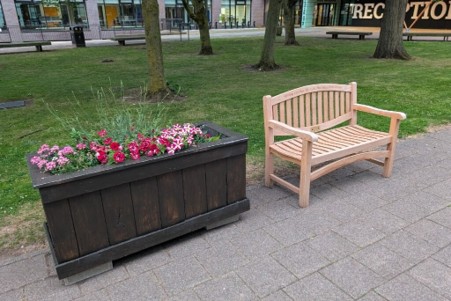
As the planting develops, the planters continue to provide seasonal resources for pollinating insects while contributing to campus green spaces.
Looking Ahead
The project continues to evolve.
Additional planters are planned, composting capacity is being expanded, and opportunities are being explored to make greater use of resources already generated on campus.
The long-term aim is not simply to build planters or produce compost. It is to encourage a mindset that sees potential in materials that might otherwise be overlooked, while helping create a campus environment that is richer in wildlife, more sustainable, and more enjoyable for the people who use it.
In many ways, the project reflects a simple idea: small actions, repeated over time, can help create positive change.