

/prod01/wlvacuk/media/departments/digital-content-and-communications/submitted-news-images/Beyond-Futures-awards.jpg)
/prod01/wlvacuk/media/departments/digital-content-and-communications/submitted-news-images/nss2026_800x400-1.jpg)
/prod01/wlvacuk/media/departments/digital-content-and-communications/submitted-news-images/Indian-weightlifting-team.JPG)
/prod01/wlvacuk/media/departments/digital-content-and-communications/Adopting-AI-for-Business.jpg)
/prod01/wlvacuk/media/departments/digital-content-and-communications/submitted-news-images/54505138639_670536a9d0_c.jpg)
/prod01/wlvacuk/media/departments/uctelford/image/pexels-monstera-5842114.jpg)
Unlocking Progress in ARPKD by Closing Critical Knowledge Gaps
Unravelling the Molecular Mechanisms of Autosomal Recessive Polycystic Kidney Disease (ARPKD) is an ongoing funded project which began in 2016 lead by Dr Paraskevi Goggolidou, Reader at the University of Wolverhampton in Molecular Genetics as part of the university's Research Institute in Healthcare Science (RIHS). Research areas within the project include: Molecular Genetics; Rare Kidney Disease; Polycystic Kidney Disease; Ciliogenesis; Wnt Signalling.
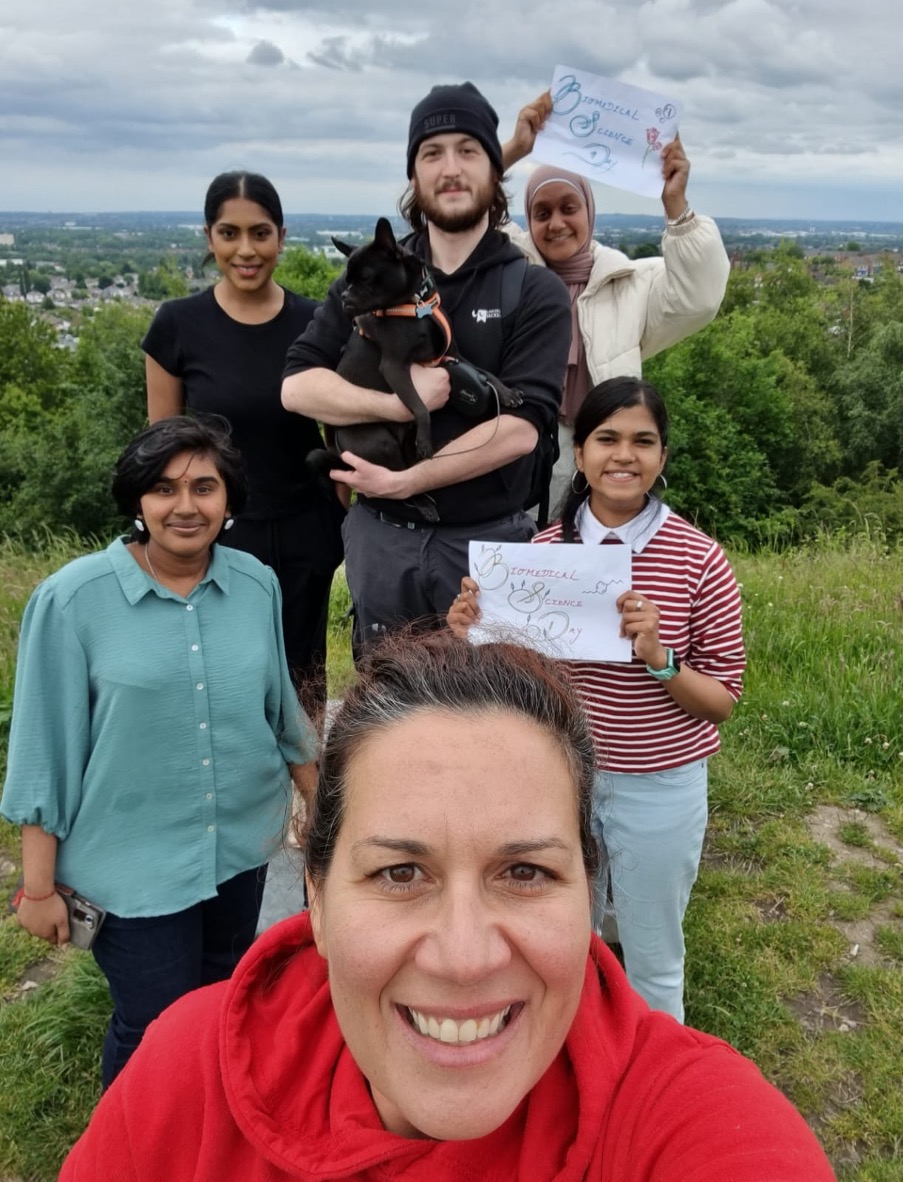 The project looks into Autosomal Recessive Polycystic Kidney Disease (ARPKD) one of the most serious rare kidney diseases affecting children, often causing life-threatening kidney and liver complications from birth. Despite its severity, the molecular mechanisms driving the disease, the biological processes that cause kidneys to develop cysts and fail have remained poorly understood. There is currently no cure and treatment options are largely supportive rather than targeted.
The project mission is to understand what goes wrong at the genetic and cellular level, as this is critical to developing better diagnostics and, ultimately, disease-modifying therapies. ARPKD is caused by mutations in the PKHD1 gene, but why some patients have more severe disease than others and what other genes or pathways modify outcomes has been largely unknown. This knowledge gap has limited progress in predicting prognosis and identifying new treatment targets.
Our real world impact
This research has direct relevance to the families and children affected by ARPKD across the UK and internationally. By identifying the molecular pathways that drive disease severity, the work is helping to lay the scientific groundwork for targeted therapies and improved diagnostics. Dr Goggolidou has engaged directly with patient communities through PKD charity-supported family days and ARPKD family conferences, translating research findings into accessible information for those living with the condition.
The programme has informed clinical practice through collaboration with the RaDaR national registry and Birmingham Women’s and Children’s Hospital, contributing to better understanding of disease epidemiology and patient outcomes at a national level. Dr Goggolidou holds a Home Office project licence for in vivo research and is a founding member of the ARPKD RaDaR Renal Disease Group, underscoring the clinical and translational reach of the work.
The research has also had a significant capacity-building impact, supporting the training of multiple PhD students and postdoctoral researchers, and attracting external competitive grant funding. Dr Goggolidou’s appointment to the Genomics and Phenotyping co-Lead role within the Kidney Research UK/PKD Partnership Scientific Committee signals growing national influence. The development of AI-based predictive tools for paediatric kidney disease has the potential to transform clinical decision-making and patient management in rare disease settings.
Conducting the research
Dr Goggolidou’s research programme uses a combination of molecular genetics, mouse models, genomics and transcriptomics to investigate the biological pathways underlying ARPKD. A central focus has been the gene ATMIN and its role in modulating the expression of PKHD1 — the primary ARPKD gene — through altered Wnt/Planar Cell Polarity (PCP) signalling, a pathway involved in how cells organise themselves during development.
The team has developed and characterised novel CRISPR/Cas9 mouse models that replicate aspects of ARPKD, enabling precise investigation of disease mechanisms in vivo. Next generation sequencing and bioinformatics approaches have been applied to patient and animal data to identify novel genetic modifiers and disease pathways, including WNT signalling, Rnd3 and SPIRE2. More recently, the programme is incorporating artificial intelligence to model and predict disease severity in paediatric patients and is developing kidney cell type-specific human cell models to further dissect disease biology.
The research is conducted collaboratively with clinical partners including Birmingham Women’s and Children’s Hospital and the UK RaDaR rare kidney disease registry, ensuring that laboratory findings are linked to real patient data and clinical outcomes.
Findings
The research has produced a series of significant findings published in leading journals. Dr Goggolidou’s group demonstrated that ATMIN modulates PKHD1 expression and that disruption of non-canonical Wnt/PCP signalling is a key mechanism in ARPKD severity. The team has identified WNT signalling as a significant pathway in ARPKD manifestation, and has characterised novel genetic modifiers including Rnd3 — a gene newly implicated in polycystic kidney disease — and variants in SPIRE2.
Next generation sequencing studies have shed new light on how genetic variation influences disease severity, opening up potential avenues for more personalised prognostic assessment. The programme has also generated a novel CRISPR/Cas9 Pkhd1 mutant mouse line that provides a valuable preclinical model for future therapeutic studies. Current work is advancing the use of computational modelling and AI algorithms to better predict paediatric kidney disease manifestation, as well as exploring the involvement of ARPKD in lung pathology — an underappreciated dimension of the disease.
Collectively, this body of work has contributed over 25 peer-reviewed publications and a co-edited book, Cilia in Development and Disease (Taylor & Francis, 2018), establishing the University of Wolverhampton as a recognised centre of expertise in rare kidney disease research.
The project team
The project brings together key partners and funders: PKD Charity UK, Birmingham Women’s and Children’s Hospital, Institute of Biomedical Science, Genetic Engineering Mice for Medicine (GEMM), RaDaR (UK National Registry of Rare Kidney Diseases), UCL Centre for Nephrology, Mary Lyon Centre, MRC Harwell
Alison Taylor, CEO of PKD Charity UK commented
“Dr Goggolidou’s research is making a real difference to our understanding of ARPKD. The charity has supported a number of projects. Visiting the lab and meeting the talented and dedicated group working on ARPKD projects under Dr Goggolidou’s leadership was a truly inspiring experience. Her work is helping us to better understand the disease and, ultimately, to develop better treatments for children and families affected by this devastating condition. In addition, it provides hope for a better future.”