

/prod01/wlvacuk/media/departments/digital-content-and-communications/submitted-news-images/Josh-Helen-Pride26-speeches-closeup.png)
/prod01/wlvacuk/media/departments/digital-content-and-communications/images-2024-25/250630-SciFest-1-group-photo-resized-800x450.png)
/prod01/wlvacuk/media/departments/digital-content-and-communications/submitted-news-images/Kiran-Gulia.jpeg)
/prod01/wlvacuk/media/departments/digital-content-and-communications/images-2026/QS-Five-Star.jpg)
Football and War Network - 2016-2026: 10th Anniversary
19/05/2026 - 2.59
Alex Alexandrou
On the 13th May, the Football and War Network celebrated the tenth anniversary of its foundation.
To celebrate this milestone, the Network organised a free seminar event at the University of Wolverhampton, where the Network is based within the Centre for Historical Studies. The event took place in the Lord Swarj Paul Building.
Dr Alex Alexandrou, Chair and Co-Founder of the Football and War Network and Professor John Buckley of the Centre for Historical Research welcomed the attendees.
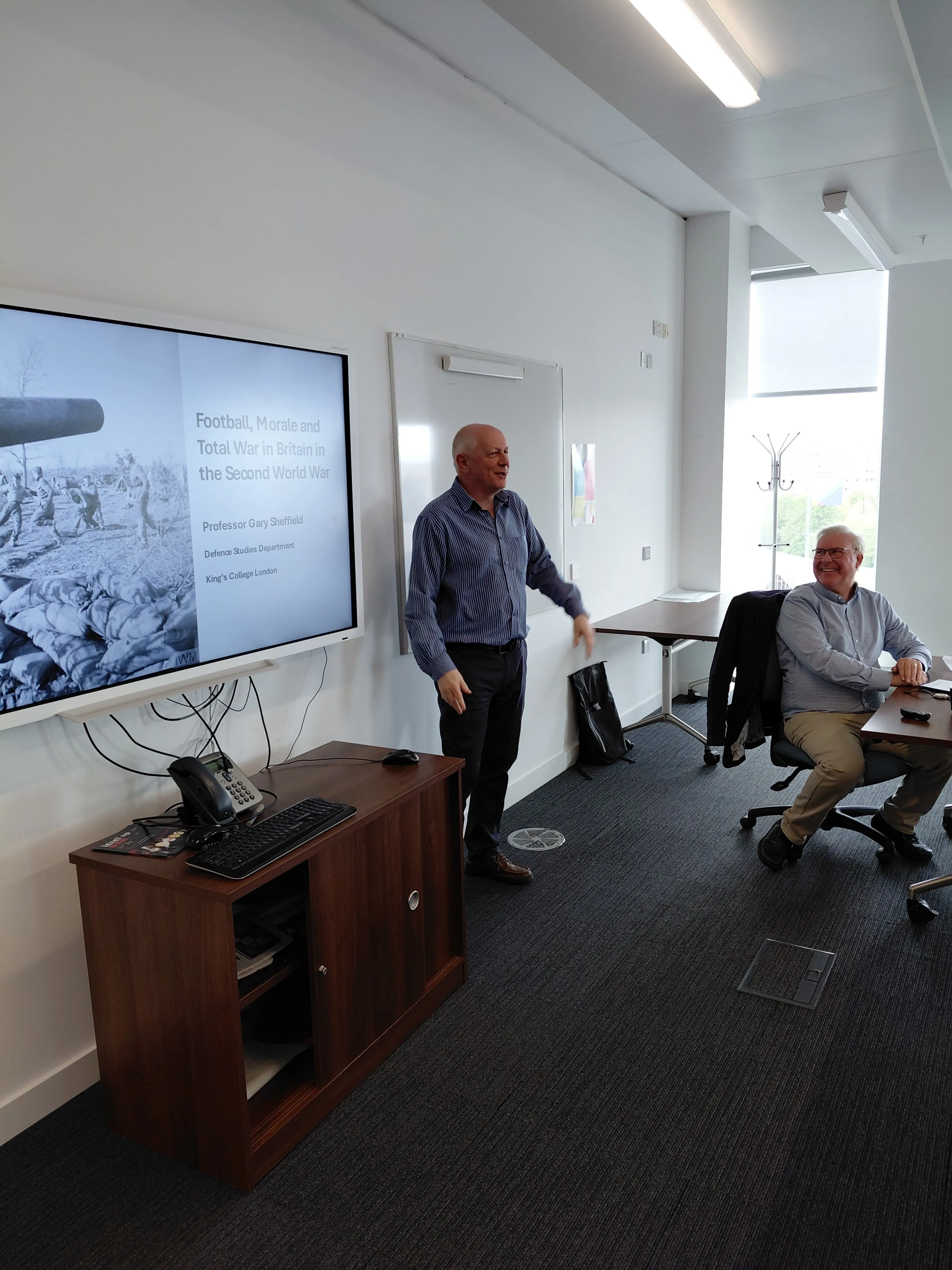
Professor John Buckley (standing) and Professor Gary Sheffield (seated). Source: Author's Collection
Both highlighted various aspects of the journey the Football and War Network has been on over the past decade.
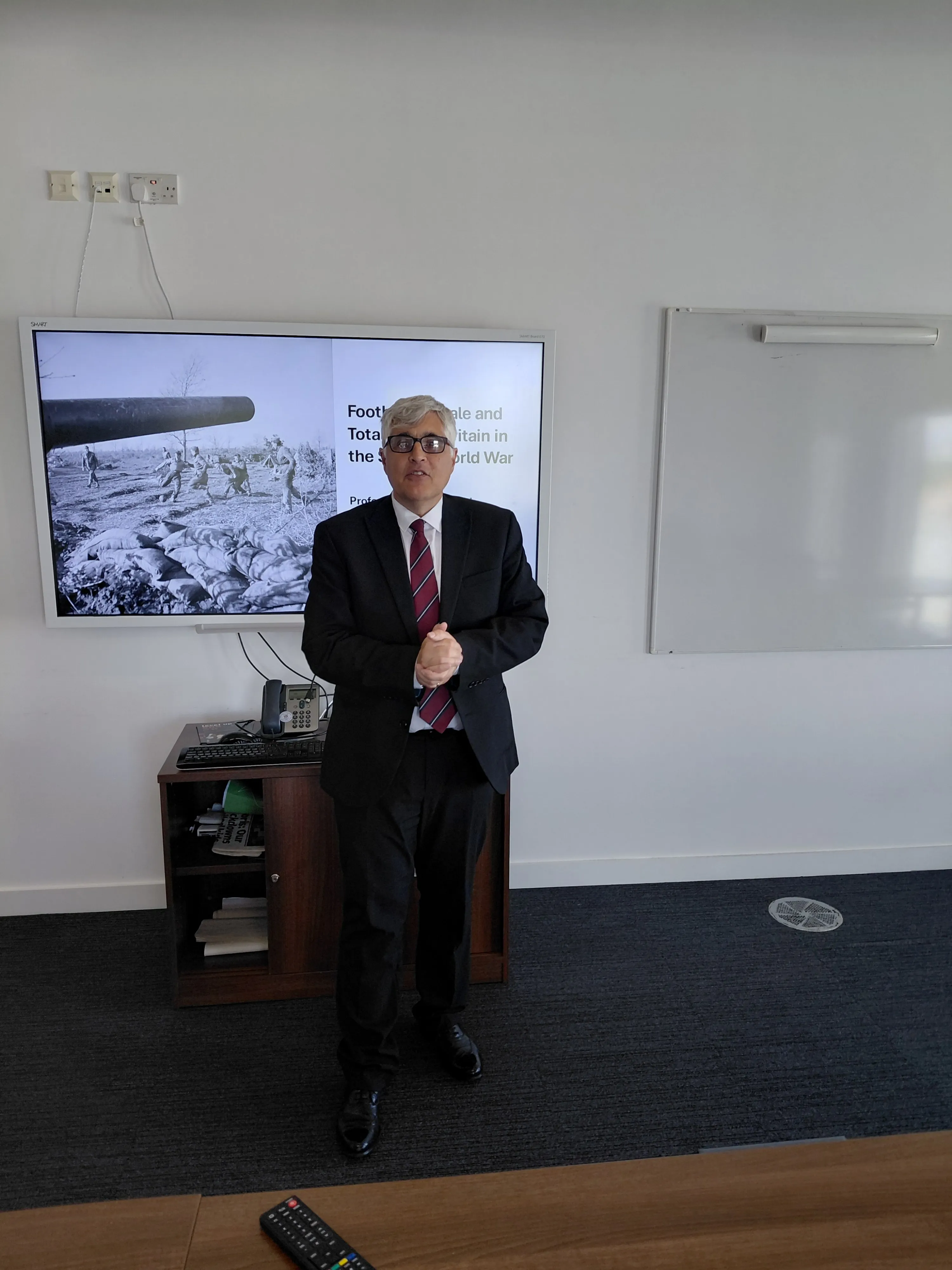
Dr Alex Alexandrou. Source: Author's Collection
The Keynote Speaker was Professor Gary Sheffield, the Co-Founder and Vice-President of the Football and War Network. Professor Sheffield is based at the Defence Studies Department, King’s College London and his talk was entitled – Football, Morale and Total War in Britain in the Second World War.
Professor Sheffield in his wide-ranging and in-depth talk examined a number of factors that included - where football was from both a civilian and military perspective at the start of the Second World War; how football developed during the war, again from both a civilian and military perspective; the contested concept of total war and the more controversial aspect that World War Two is billed as the “People’s War”, then finally turning back to examining the significance of football to civilians and military personnel, discussing elements such as the impact on morale. This included case studies of firstly, individual players such as Wally Barnes who had joined the Army prior to the outbreak of the war, continued his service throughout the conflict and eventually signed professional forms for Arsenal in 1943. Secondly, teams such as the star-studded Arsenal team of the1943-44 season that apart from Wally Barnes, included players such as Bernard Joy, Denis Compton and Ted Drake, all of whom were serving either with the Army or Royal Air Force.
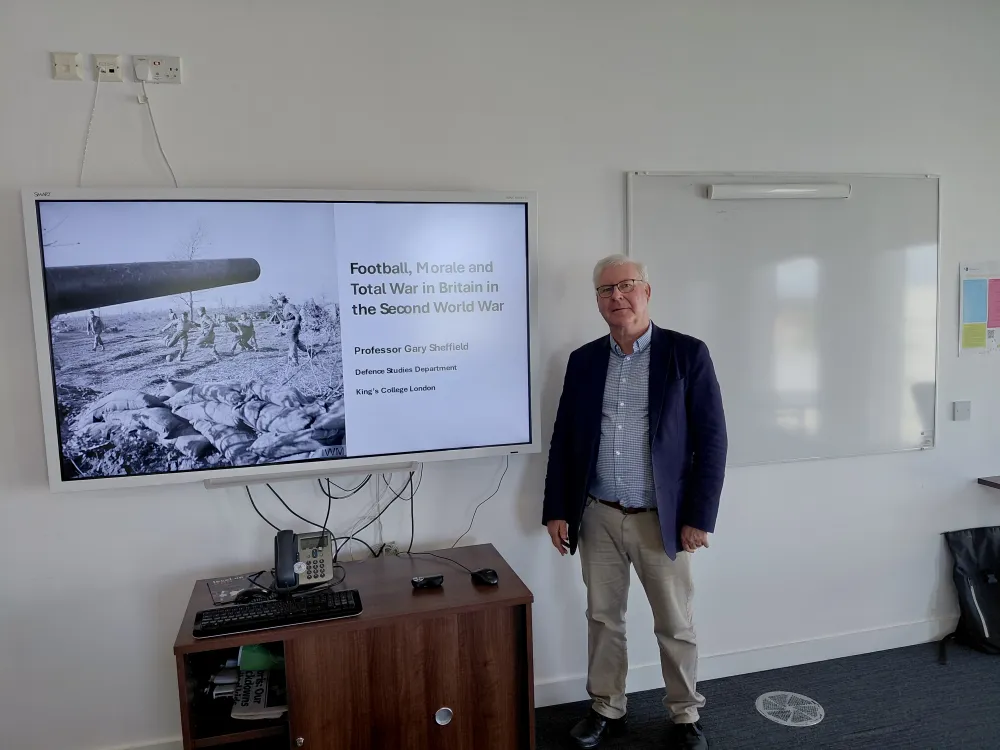
Professor Gary Sheffield. Source: Author's Collection
Following the presentation, there was a question and answer session which was wide-ranging and covered issues such as the important role footballers in uniform played in terms of maintaining and raising civilian and military morale; and how much better organised, accepted and less alienating and politicised football was during the Second World War compared to the Great War.
There then followed a panel discussion chaired by Professor John Buckley. The Panel consisted of Professor Gary Sheffield, Dr Alex Alexandrou and Mr Peter Crump, who is a Curator of the Wolves Museum and Club Historian.
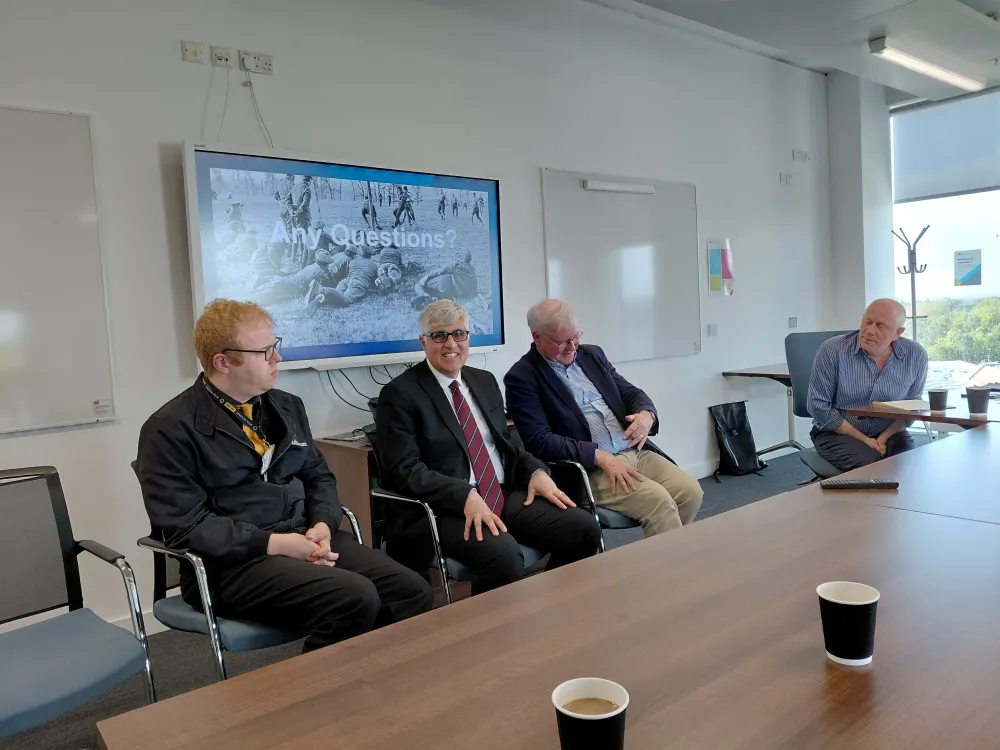
The Panel, Left-to-Right - Mr Peter Crump, Dr Alex Alexandrou, Professor Gary Sheffield and Professor John Buckley. Source: Author's Collection
The panel discussed the importance and significance of the legendary Wolves manager, Major Frank Buckley during his tenure and beyond. As Peter Crump highlighted, Buckley laid the foundations for the club to flourish in the post-war period and into the 1950s, where Wolves were a dominant force in English football. He also went on to highlight how Buckley played an integral role in developing the likes of Stan Cullis and Billy Wright who became club and England legends
The panel then went on to discuss the accomplishments, impact and future direction of the Football and War Network. It was highlighted that since its inception, the Network has helped to organise and run almost 40 events ranging from firstly, University of Wolverhampton seminars and individual club seminars, heritage walks and film nights with clubs such as Charlton Athletic, Dulwich Hamlet, Exeter City, Leyton Orient, Maidenhead United, Solihull Moors, Southampton, Wealdstone and Wolverhampton Wanderers. Secondly, exhibitions and talks with museums such as the National Army Museum, Fusiliers Museum, Warwick, Valence House Museum and the Tower of London. Thirdly, running school-based educational projects with Dunstable Town and Oxford United and community-based projects with Solihull Moors.
It was noted that the early development of the Network would not have been possible without the financial support of Darryl Eales when he was firstly, Chairman of Oxford United and then when he became Chairman of Solihull Moors.
In turn, the Network has recently developed strategic partnerships with the Army Football Association and the Western Front Association, that has led to a series of events being run in conjunction with the National Army Museum, as part of the Army FA’s Heritage and Community Project.
Significantly, it was highlighted that the international profile of the Network has been enhanced through is involvement with the National WW1 Museum and Memorial based in Kansas City, USA, in relation to its two football-based initiatives linked to this year’s World Cup, that being the bespoke exhibition – The Beautiful Game and the online symposium entitled - The World’s Game: Football and WWI. This is due in no small measure due to the work of Network stalwart Clive Harris - military historian and Charlton Athletic Museum trustee. He has played an integral role as a senior contributing scholar and interpretive advisor in terms of assisting the Museum in curating the exhibition.
As for the future, the panel firstly, discussed the development of a publication strategy that should include seeking to edit and publish a collection of essays based on the highly popular Football and War Blog Article Series published on the Network’s website. Secondly, the perennial issue of working towards putting the Network on a sustainable long-term financial footing, to ensure it can continue to grow and impact the study of this niche area of football, military and social history.
Biography
Dr Alex Alexandrou is the Co-Founder and Chair of the Football and War Network.