

/prod01/wlvacuk/media/departments/digital-content-and-communications/submitted-news-images/Josh-Helen-Pride26-speeches-closeup.png)
/prod01/wlvacuk/media/departments/digital-content-and-communications/images-2024-25/250630-SciFest-1-group-photo-resized-800x450.png)
/prod01/wlvacuk/media/departments/digital-content-and-communications/submitted-news-images/Kiran-Gulia.jpeg)
/prod01/wlvacuk/media/departments/digital-content-and-communications/images-2026/QS-Five-Star.jpg)
The ‘Colditz Olympics’- The Great Escape!
05/05/2026 - 7.36
Bill Williams
Situated on a cliff overlooking a small East German town in the state of Saxony, Colditz Castle was used by Nazi Germany during World War Two, specifically to hold Allied officers who were deemed ‘incorrigible’ and by Christmas 1940, there were 60 Polish officers,50 French, 30 British and 12 Belgians, incarcerated in the camp.
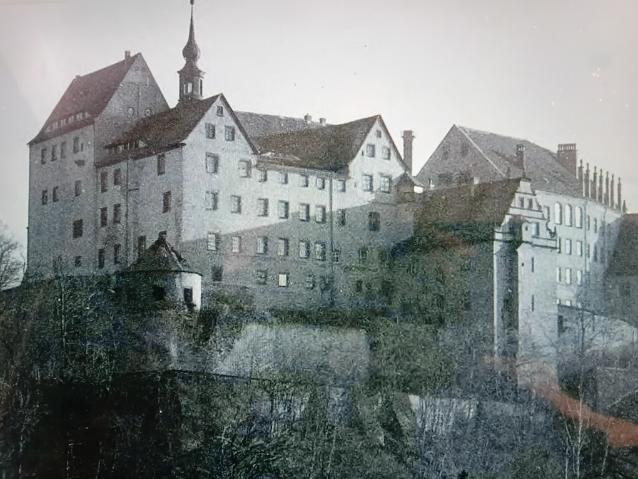
Colditz Castle, Circa 1940: Source: Key Military - Heroes and Villains
The camp was designated for officers who were ‘repeat escape offenders’, deemed too dangerous or troublesome to hold in standard Prisoner of War (POW) camps, forcing the German High Command to isolate them in one place, creating an ‘officers only’ camp; although bizarrely a small number of enlisted men were also kept there to act as orderlies or ‘batmen’ for higher-ranking officers!
Run by the German Army, Colditz was governed by the ‘Geneva Convention’, which stated that POWs were to be treated in ‘a certain way’, which included access to minimum levels of medical care, accommodation and food.
Camps like Colditz were inspected by the International Red Cross who reported however, that ‘…the camp was too small which restricted the needs of recreation and exercise and was NOT suitable for a prisoner of war camp!’
Such poor conditions led to extremely low morale and as Ben Macintyre describes in his fascinating book, Colditz- Prisoners of the Castle (2022), ‘Most wore their sadness in secrecy, or vigorously repressed it and even the most optimistic felt their spirits start to sag as the months and years passed.’
When the Polish Officers suggested that they would organise the first ‘Colditz Olympics’ in late August 1941, it served to raise everyone’s spirits and acted as a ‘great escape’ from the utter boredom they were experiencing inside the hilltop fortress.
‘Men might be able to survive, at least for a time, without women, pubs and freedom’, writes Ben Macintyre, ‘But they could not live without sport!’
‘Sport’, wrote one prisoner, ‘…Acted as a balm to utter boredom and it made the time pass more quickly, whether we were spectating, playing or discussing the events we had witnessed.’
When it was requested, the Germans allowed equipment to be shipped out by the YMCA and distributed by the International Red Cross to enable the games to take place in order for ‘The Ministry of Propaganda’ to exploit it for their own purposes.
They wanted to demonstrate how well they were treating the prisoners, countering rumours of brutality at the camp.
So it was then, that on August 31st 1941, at 11.00 am, an ‘opening ceremony’ of sorts took place in the main courtyard, which included fanfares, national costumes and flags, which each of the five competing nations marching out in preparation for a competition that would see them take part in football, boxing, handball, hockey, netball, cricket and chess over a three- week period, which also offered as an interesting reflection of national character: ‘The Poles’ argues Ben Macintyre, ‘Were deadly serious; the French exuberant; the Dutch were solemn; the Belgians followed the French and the British just laughed, typically cheering the worst competitors loudest!’
‘There was much clapping and cheering as the ‘national sports presidents’ stepped forward to notify their countries’ entry in each of the events’, says former prisoner Patrick Reid in Colditz: The Full Story (1983); Reid would later escape crossing the border into Switzerland in late 1942.
The first game (Poles v French at Volleyball) then took place, followed by several football matches, which in order to increase the number of events, involved teams of different strengths with seven, nine and eleven-a-side matches taking place; at the end of the first day, not surprisingly due to their relaxed attitude, the British were in last position with four losses out of four!
Football was the key morale-boosting activity at the camp and brought out intense rivalries, with the Poles being described as ‘…very focused and competitive’ and it also produced a ‘key match’ between the Poles and the Dutch, which provided the ‘camouflage’ around a manhole cover where two Dutch officers used to escape; two ‘dummies’ nicknamed ‘Max and Moritz’ had been fashioned to appear during the headcount that took place in the courtyard, thus fooling the Germans into believing that all were present and correct on parade!
On the afternoon of the 20th September, the football teams and their supporters assembled in the courtyard and a screen formed around the manhole and work began to remove nuts and bolts which took longer than planned, but with only ten minutes of the match remaining, the cover was eventually opened.
Major Cornelis Giebel and 2nd Lieutenant Oscar Drijber, climbed inside and waited until it was dark to make their escape and by the time the ruse had been discovered by the guards, they were 36 hours ahead and well on their way to the Swiss frontier, which they successfully crossed on 23rd September 1941!
The British approach to life in the camp and sporting competition, was built on humour and ‘ironic detachment’ from German attempts to organise their time, treating it all as a satirical joke and they considered escape to be their primary duty and preferred to invest their energies in planning escapes rather than playing organised games.
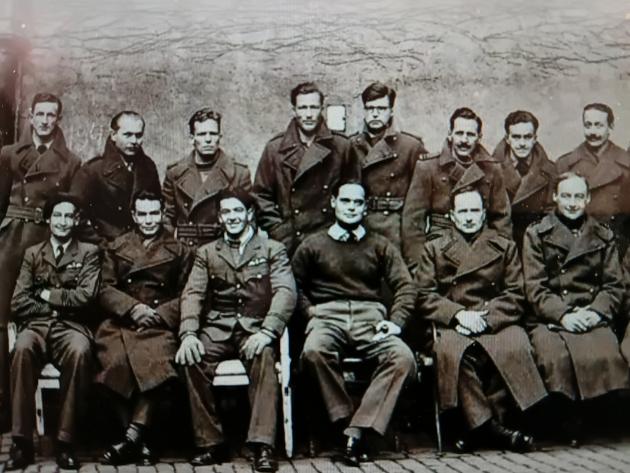
British RAF Officers at Colditz, Circa 1941. Source: Key Military- Heroes and Villains
This would continue across all events in the days to come, as they flatly refused to take any of the contests seriously and under ‘Bertie Boustead’s leadership, The British Officers’ team finished in last place on the medal table.
However, these games did serve as a significant morale booster and a way to maintain defiance and physical fitness within the ‘escape proof fortress’, which would become the setting for the 1963 film, The Great Escape, a fictionalised version of the mass escape by British and American Prisoners of War at the castle, starring Steve McQueen, James Garner and Richard Attenborough.
Besides the Olympics, prisoners invented a version of ‘Stoolball’ in the courtyard - a mix of rugby and football, designed to entertain while fostering physical activity and described as ‘…a cross between rugby and cage fighting’ and could include up to thirty players on each team, who were allowed to kick and bite each other; it was often so raucous and rowdy that it would cover any noises from the tunnelling that invariably went on below ground!
Famous prisoners included ‘fighter ace’ Douglas Bader, Patrick Reid the man who made Colditz famous through his post-war books, David Stirling one of the founders of the SAS and Airey Neave, the first British officer to escape, who in 1979 was blown up by the Irish National Liberation Army (who had broken away from the IRA), because as an MP and key proponent of a hardline security policy against Irish Republican Paramilitaries, he was seen as a major threat to their ‘…armed struggle against the British state.’
While stories like the ‘Olympics’, the construction of a glider (built in total secrecy in a hidden attic) and numerous escape attempts (over 30) created legendary status for the camp, the prisoner experience was also marked by strict surveillance, frequent searches and intense psychological pressure and ‘would-be’ escapees were often punished with solitary confinement.
The games were viewed by Allied prisoners as an extraordinary, morale boosting moment of defiance and while organised with the reluctant permission of the Germans, they saw it as a triumph and a way to maintain their emotional and physical health.
On April 16th 1945, Colditz Castle was liberated by the US Army, following a two-day battle to secure the town and as American troops approached the camp, prisoners displayed a French Tricolour and a British Union flag from the castle windows to signal their presence and prevent a heavy bombardment of the fortress; immediately following the rescue, the prisoners were all repatriated and most of the British reached home within a few days.
Later in May, the Soviet occupation of the region began and the castle eventually became part of what would become East Germany.
Today, the castle is a multi- purpose site, functioning primarily as a youth hostel, cultural venue and ‘Escape Museum’ dedicated to the Allied officers who were imprisoned there between 1939 and 1945.
Biography
Born and bred in Merthyr Tydfil, Bill was Head of Physical Education and Sport at Burford School in Oxfordshire and taught A Level Physical Education for over 25 years.
After retiring in 2019, he has spent his time researching and writing articles for the A Level PE Review magazine and the Playing Pasts Sports History Website.
Bill has a specific interest in the growth of sport in the 19th and early 20th centuries.
-640x853.jpg)