

/prod01/wlvacuk/media/departments/digital-content-and-communications/submitted-news-images/Mr-Speaker-2.jpeg)
History of English Women’s Football Since World War One Exhibition
31/07/2026 - 2.41
Alex Alexandrou
Whilst the country was gripped by the England team’s progress in the Men’s World Cup, the Elmswell History Group based in Suffolk, celebrated Women’s Football in partnership with the Football and War Network. On the 11th July, at the Wesley Chapel, it hosted an exhibition that charted the History of Women’s Football since World War One.
The experienced women’s football historian Steve Bolton, curated this exhibition, which told many stories through artefacts, images, posters and fascinating narratives.
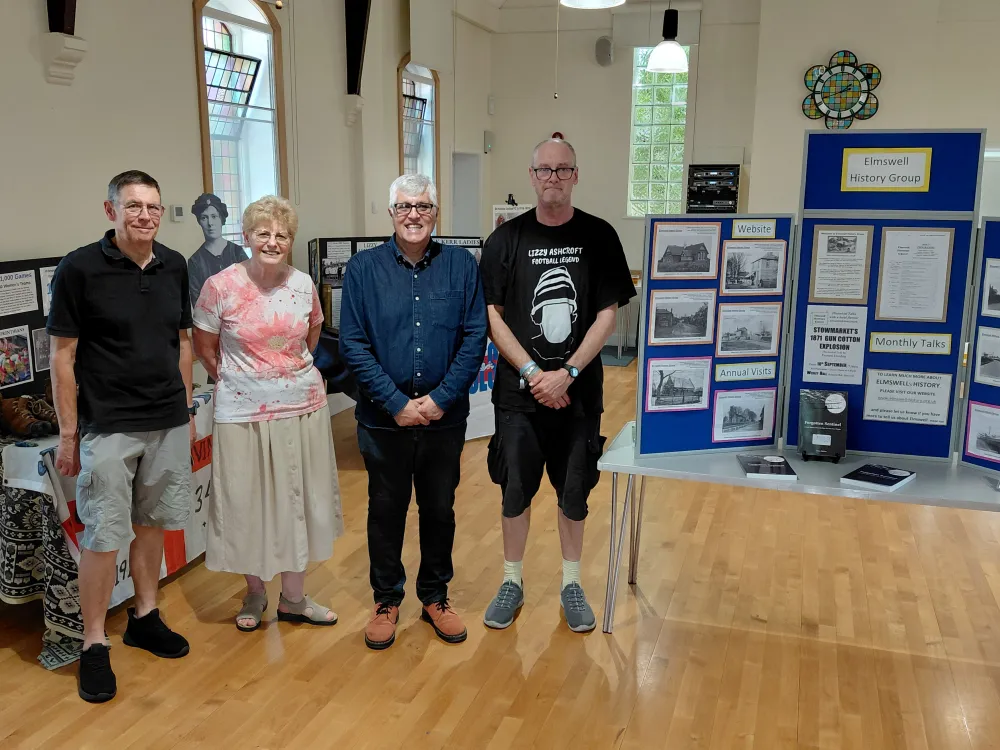
Elmswell History Group Committee Members, Author and Steve Bolton. Source: Author’s Collection
These included - an explanation of the 1902 and 1921 Football Association Women’s Football Bans, which were not officially lifted until the early 1970s; the Essex Women’s Football Scene during World War One; famous female footballers such as sisters Ada and Gladys Fairman and Lizzy Ashcroft; famous teams such as the Sterling Ladies, known as the “Invincibles”, as during their two years of existence, were unbeaten and the most well-known, the Dick, Kerr Ladies; potted histories of teams such as Chelmsford Ladies, Marconi Ladies, St Helens Ladies and Manchester Corinthians; a collection of old style footballs, boots, studs and rattles; as well as modern day women’s footballs, artefacts and publications.
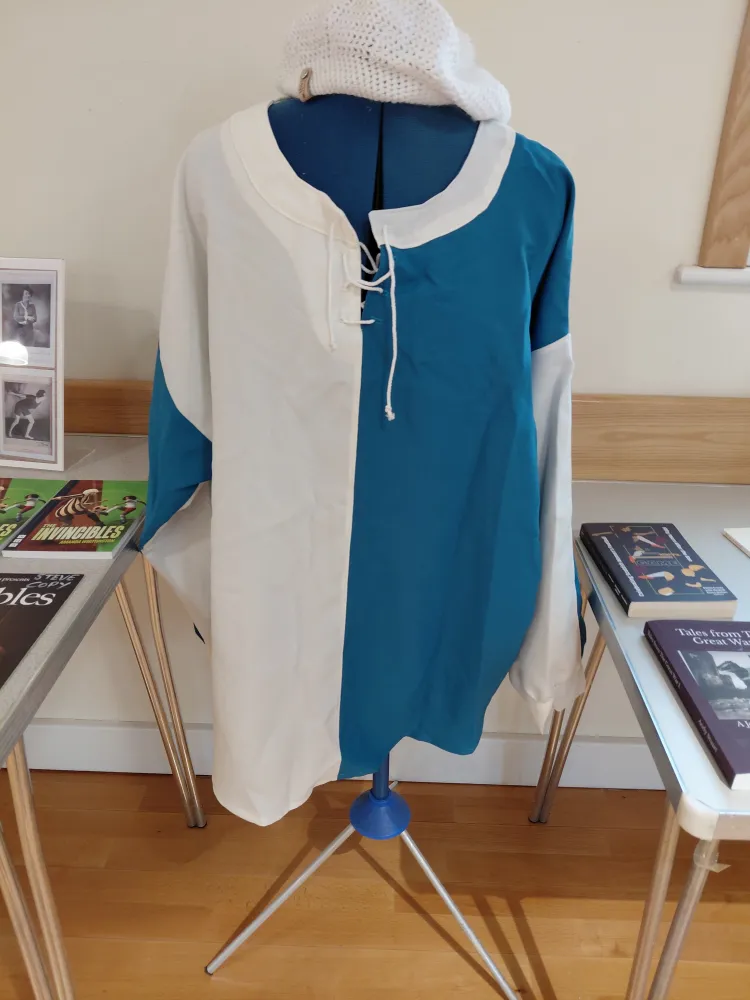
Sterling Ladies Cap and Shirt. Source: Author’s Collection
Additionally, the film entitled Granny was shown. It depicts the life of Lizzy Ashcroft, who also happens to be the grandmother of Steve Bolton and was one of the most famous female footballers of the Post-World War One era Steve Bolton, was in attendance throughout the duration of the exhibition to talk through his displays and answer questions.
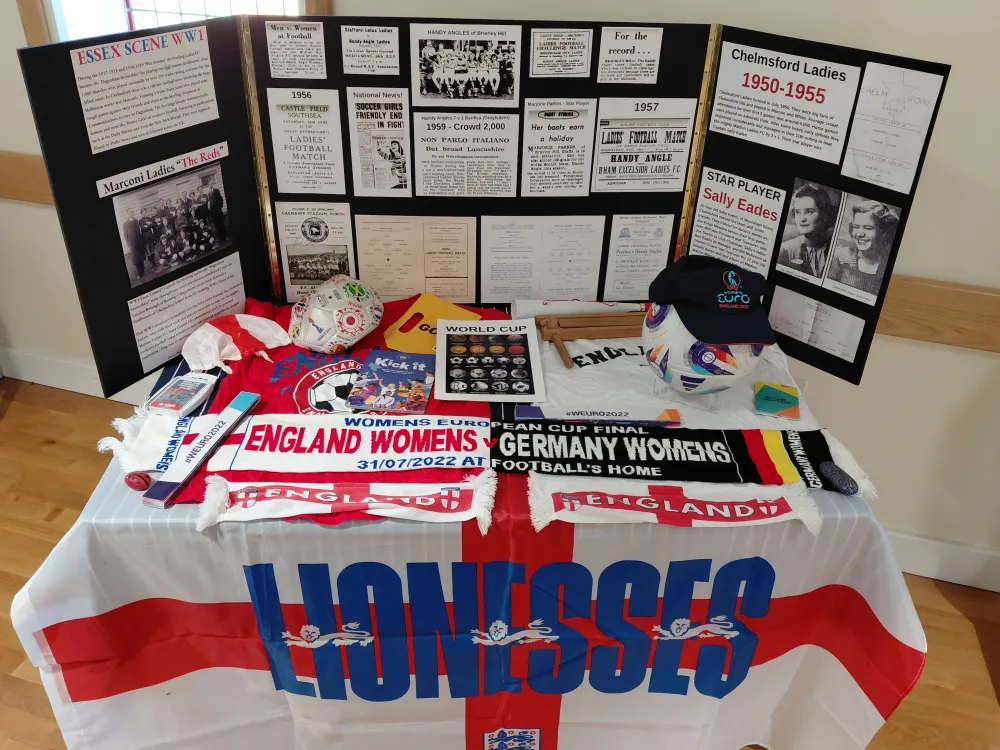
Exhibition Stand Featuring Early and Modern Women’s Football Artefacts and Stories. Source: Author’s Collection
It was wonderful to see a family that included three generations and as one attendee stated: “…there was a wide age range of visitors, who all showed a real interest in the exhibits The older visitors reminiscing about the old leather boots and the heavy footballs and the young fascinated by the separate boot studs of different types, all of which had to be replaced at regular intervals. All very different to today's equipment!”
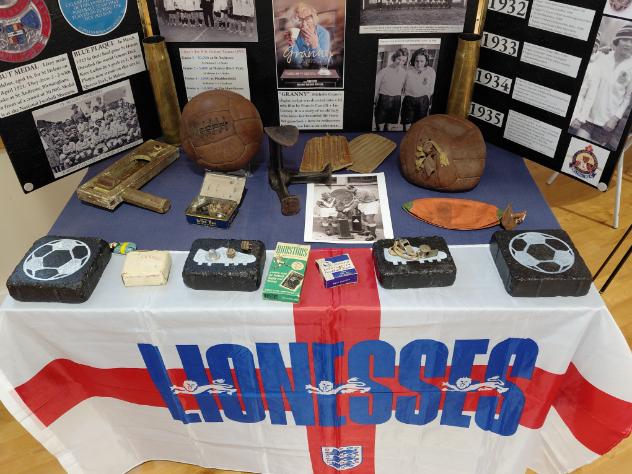
Exhibition Stand Featuring Old Football Equipment and Kit! Source: Author’s Collection
Whilst Steve Bolton stated: “I must admit that I didn’t know what to expect on a warm Saturday afternoon but I had an amazing time. There were a large number of visitors from different backgrounds and multiple generations. What really impressed me was how all of the visitors took a great deal of time to carefully look at all of the displays and exhibits and then watch the short Film about my Granny, which we had on a loop.”
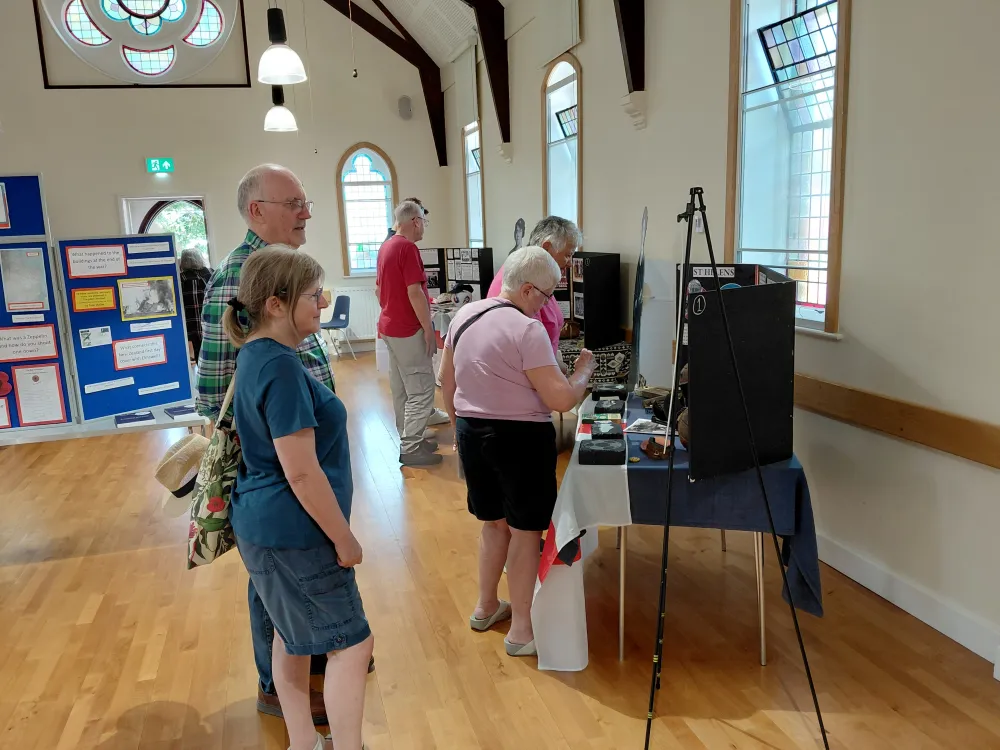
Exhibition Attendees Learning About The History of Women’s Football. Source: Author’s Collection
Steve went on to say: “I had some fascinating conversations with some really interesting and probing questions. The highlight was one of the historians from a local village who was clutching an old photograph of a women’s football team. Apparently, it had been donated to their history group several years ago in amongst a bunch of random photos and they had never been able to identify the team. I was not surprised, as I am often asked about these types of photo and it is rarely possible to identify the team. I casually suggested that Stowmarket had a women’s team in WW1, something which I had recently seen in a newspaper report from the 1960s. The lady went off and returned twenty minutes later having found the exact same photo on the Stowupland History site. They were from the local Gun Cotton Munitions Factory!”
However, that was not the end of the story, after the exhibition, Steve carried out further research that weekend by going through the Bury St Edmunds Newspaper from World War One and as he describes, “…I found the same team in a very high profile match with a team list to identify the players. This doesn’t happen very often and was a real highlight!”
Biography
Alex Alexandrou is the Co-Founder and Chair of the Football and War Network