

Sir Alf Ramsey: Ipswich Town and England Football Legend
16/10/2026 - 4.24
Alex Alexandrou
During October, the Football and War Network in collaboration the Elmswell History Group based in Suffolk, welcomed Grant Bage, author, educator and Honorary Fellow of the Historical Association. He gave a presentation on the life and achievements of Sir Alf Ramsey, the 1966 World Cup winning England manager and Ipswich Town legend.
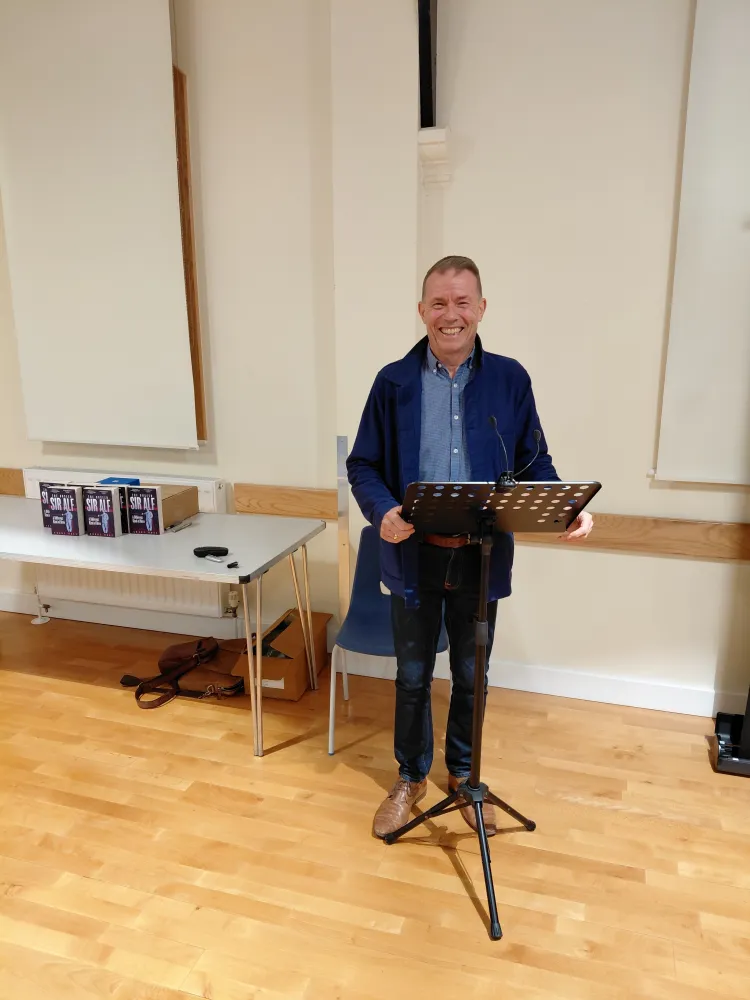
Grant Bage. Source: Author's Collection
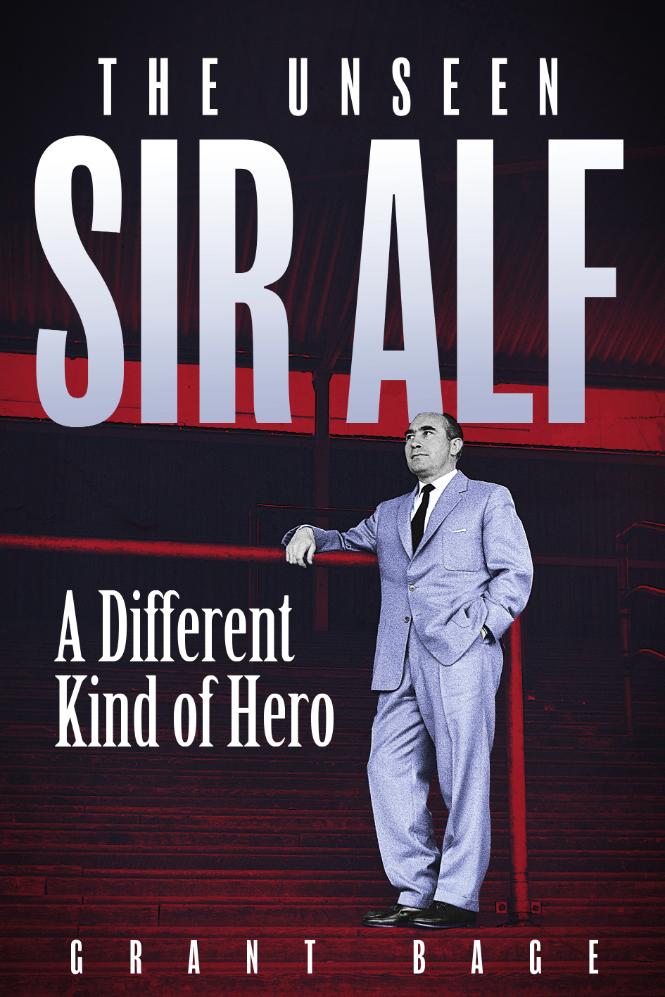
Grant Bage has been researching Sir Alf Ramsey for a number of years and in 2025, this research culminated in the publication of a new biography of him entitled- The Unseen Alf: A Different Kind of Hero (published by Pitch Publishing).
The talk shone a new light on Sir Alf, who throughout his playing and managerial career was much maligned and not fully accepted by either the football establishment or supporters, because as Grant highlighted, he would not play the media game, shunned publicity and was very protective of his family and privacy. What did come to the fore was his patriotism, will to win and his ability to not only get the best out of his players but develop a loyal bond with them.
The audience learnt much that was new about Sir Alf, particularly the obstacles he had to face and overcome in order to have a successful career in football, particularly in his early life. We learnt that he was born into rural poverty which was hard on him and his family, and significantly that he had to overcome racism throughout his life, because of his perceived gypsy heritage.
From a football perspective, it took Sir Alf a long while to establish himself as a professional footballer. Once he left school and gained an apprenticeship at the local Co-Op, there were limited opportunities to continue to play competitive football due to the hours and days he worked. This led him to become a football renegade by playing Sunday football, which was banned at the time by the FA, for a team called Five Elms Traders!
However, this was to change, when Sir Alf was called up to serve in the Army with the Duke of Cornwall Light Infantry, during the Second World War. He served on the Home Front, followed by a short sojourn at the end of the war in Palestine. Grant Bage highlighted, it was the Army that made Sir Alf the man, footballer and manager he became.
Through playing representative football in the Army, this led to him being signed as an amateur, then a professional by Southampton. Later he was transferred to Tottenham Hotspur winning, both the old Second and First Division titles, as well as becoming an England international winning 32 caps.
The Army would continue to impact on Sir Alf directly and indirectly during his managerial career. As he would identify, sign and select players based not just on their footballing abilities but also on their behaviour and character, with many players he worked with having been shaped by their Army service.
In 1955, he was appointed Ipswich Town manager, and he led the club to the Third Division South, Division Two and Division One titles by 1962. Today, this is equivalent to winning the League One, Championship and Premier League titles. In part, this success was down to the prolific scoring of the legendary Town striker, Ted Phillips. Phillips also had an Army background, having served as a National Serviceman with the First Battalion, The Suffolk Regiment, with most of his service in the uncompromising theatre of Malaya.
Here is a little description of Ted Phillips’ National Service experiences as provided by The Friends of the Suffolk Regiment:
Ted's strength was not only in his legs. He was the only man in B Company who could fire the grenade-firing EY rifle from the shoulder; a weapon that was designed to be fired from a kneeling position on the ground (due to its ferocious recoil). After operations with 4 Platoon, B Company, Ted returned home and went onto the reserve list.
After a scout spotted him playing at Leiston Town, he was offered a contract at Ipswich in 1953. He initially refused, as the wages offered were less that he was then earning as a gardener, but after much negotiation, he accepted a higher wage together with travelling expenses from Leiston to Ipswich to train with the team.
Ted’s T.A. service - which lasted until 1956, sometimes caused great difficulties when he was playing for the Town. On one occasion, he could not make annual camp as the team were playing away, but he was granted a special dispensation and instead, made his time up instead, by teaching football at the Army School of Physical Training for a fortnight.
However, if it was not for Sir Alf, both he and his star striker may not have experienced such success. It was Sir Alf, who stood by Ted Phillips, who was experiencing difficulties that would have led to a lesser man than Sir Alf jettisoning him. These difficulties could have destroyed not only the career but the life of Phillips. However, Ramsey saw enough in Phillips, both as a player and human being to stick by him and give him a chance, which Phillips grabbed with both hands. He repaid Sir Alf’s faith with goals aplenty that contributed to all three league title successes.
Then came the England job. As Grant Bage explained, Sir Alf did not apply for the job and was not first choice. He was finally appointed in 1962 but did not fully take up his role until 1963, once Ipswich Town’s season came to an end.
The rest they say is history, as Sir Alf bravely stated that England would win the World Cup, which they did in 1966, with a team that included five National Servicemen who all served with the Army. These were Gordon Banks, Bobby Charlton, Jack Charlton, Roger Hunt and Ray Wilson.
During his tenure, England also won the British Home Championship on nine occasions; the bronze medal at the 1968 European Championships and were unlucky not to go all the way in the 1970 World Cup.
Sir Alf was truly an Ipswich, Suffolk and England hero, who was mainly unseen.
Note: Thanks to Taff Gillingham of the Great War Huts (https://www.greatwarhuts.org) for additional information on Ted Phillips.
Reference
The Friends of the Suffolk Regiment - https://www.friendsofthesuffolkregiment.org/2018-archive.html
Biography
Alex Alexandrou is the Co-Founder and Chair of the Football and War Network